
Last updated November 15, 2026
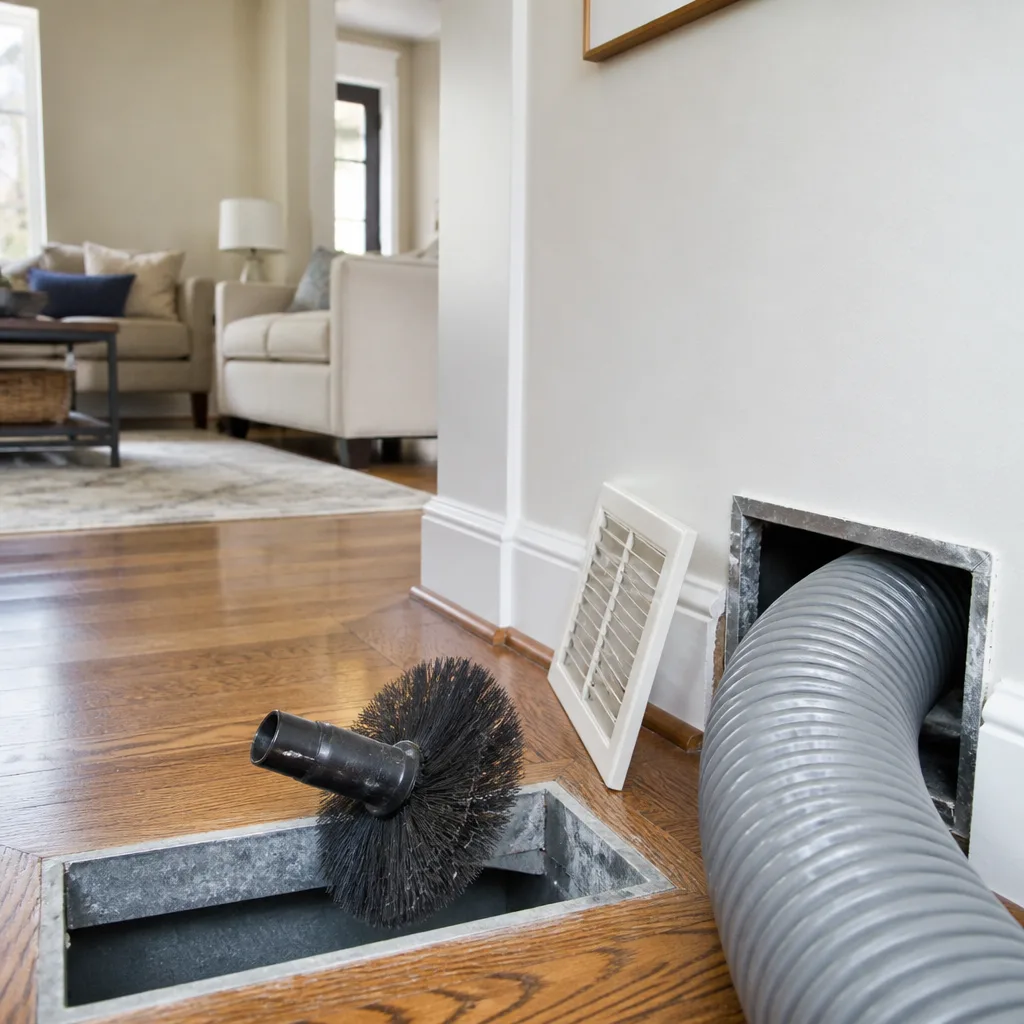 Whole-home duct cleaning
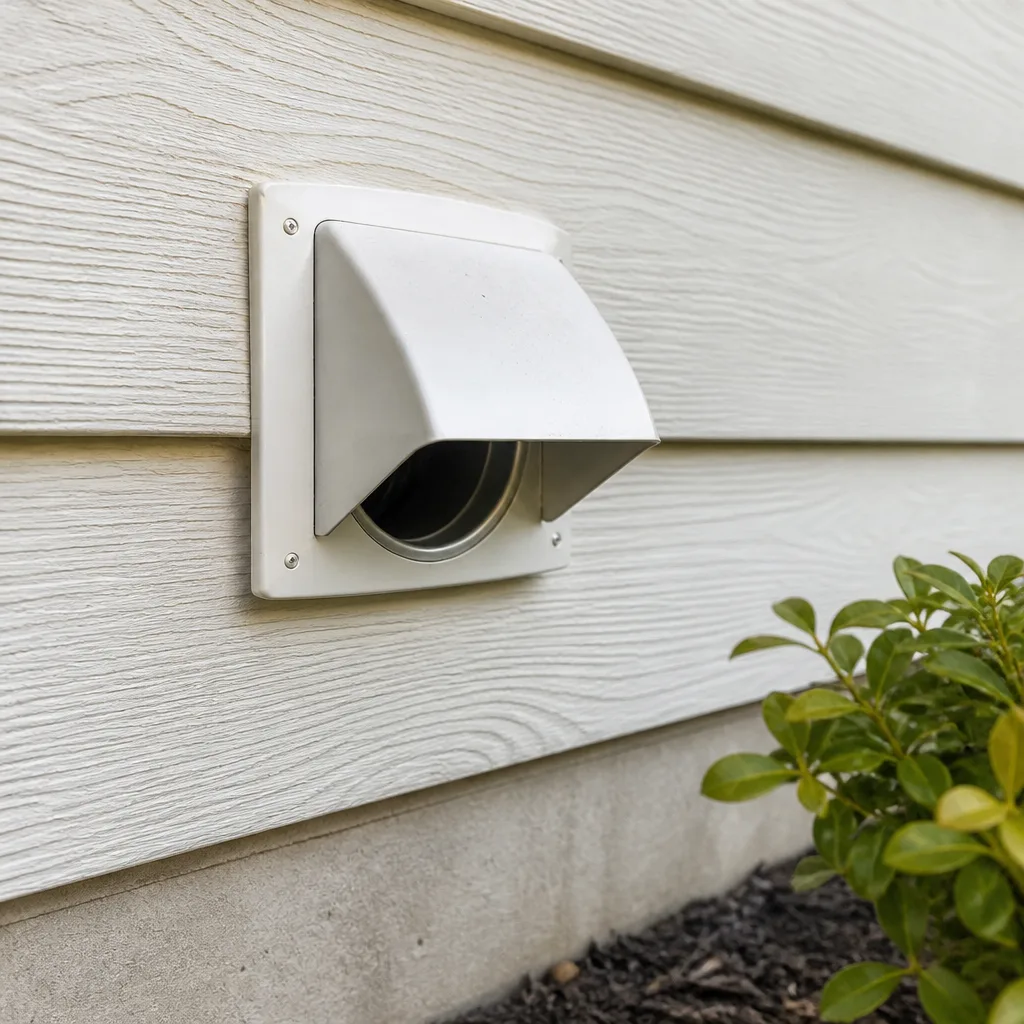 Dryer vent cleaning
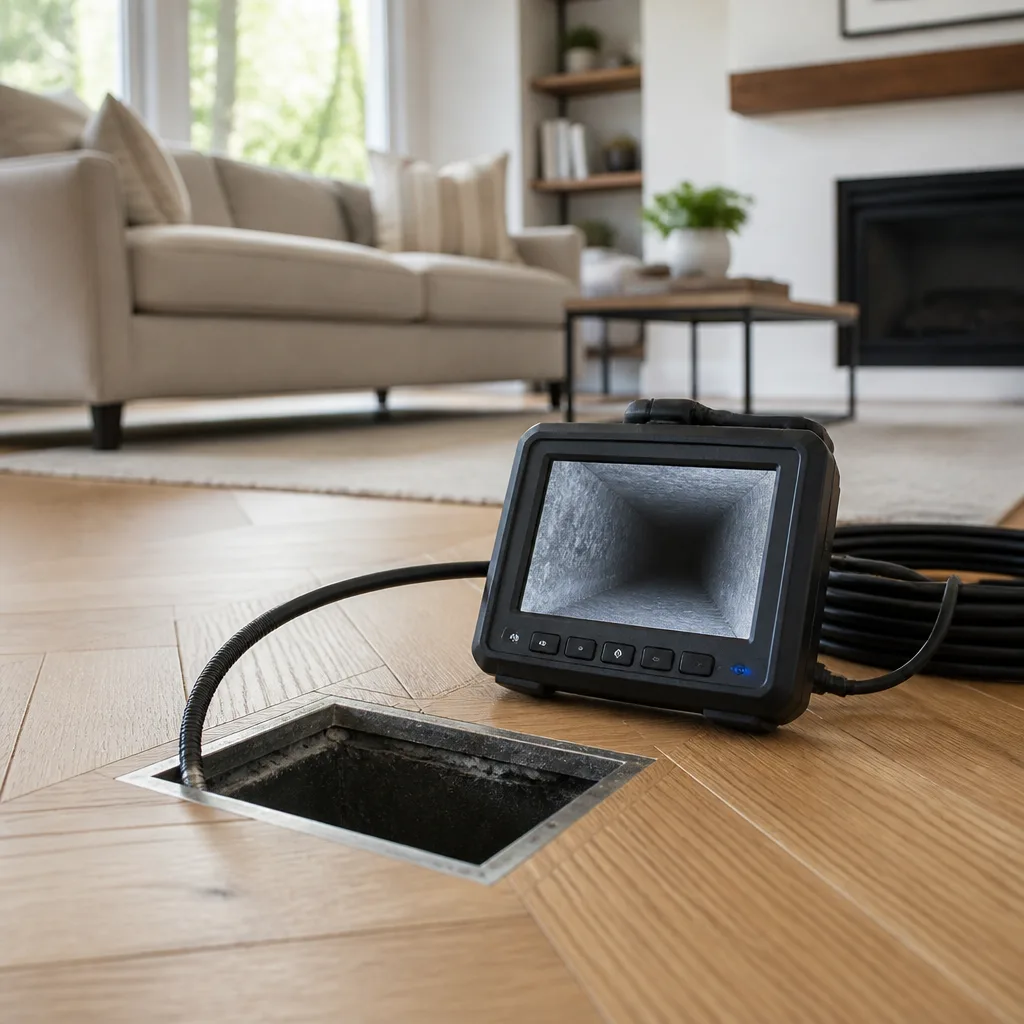 Camera inspection
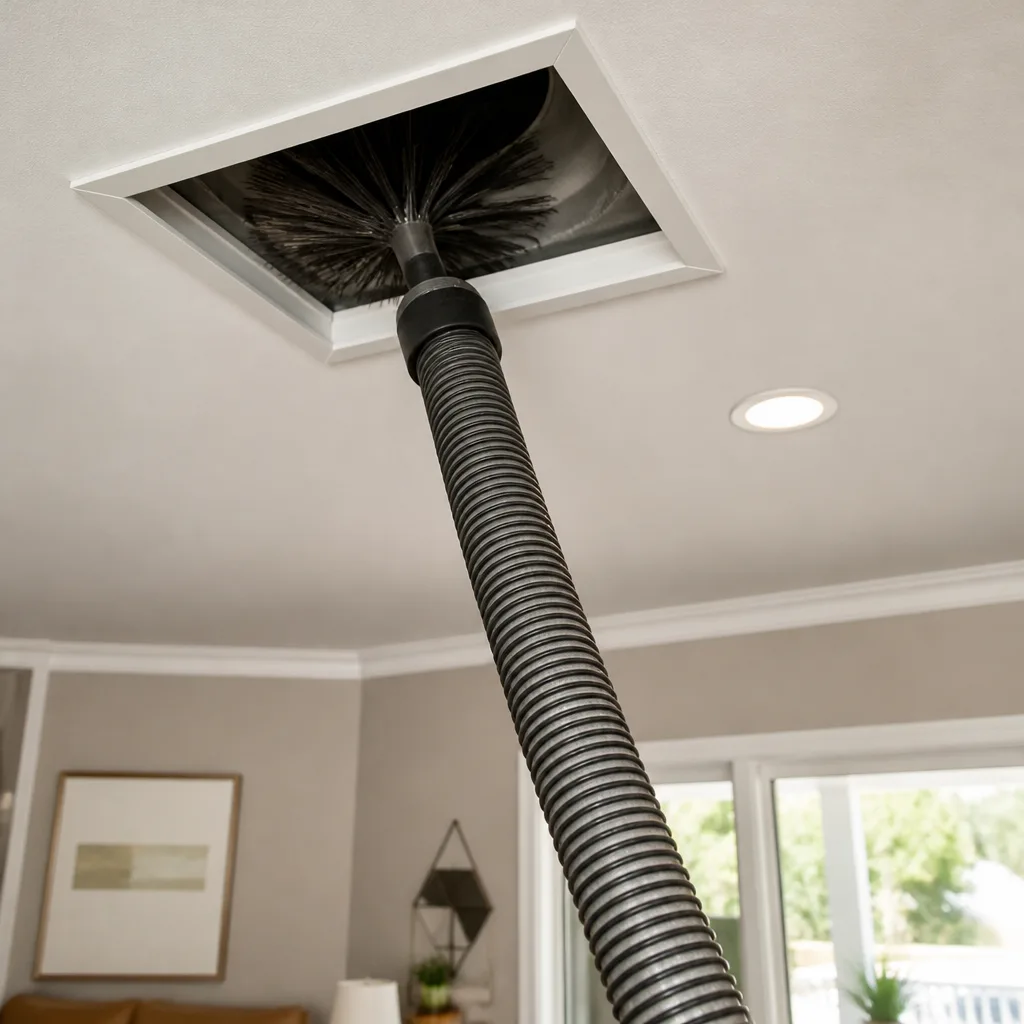 Sanitizing & deodorizing
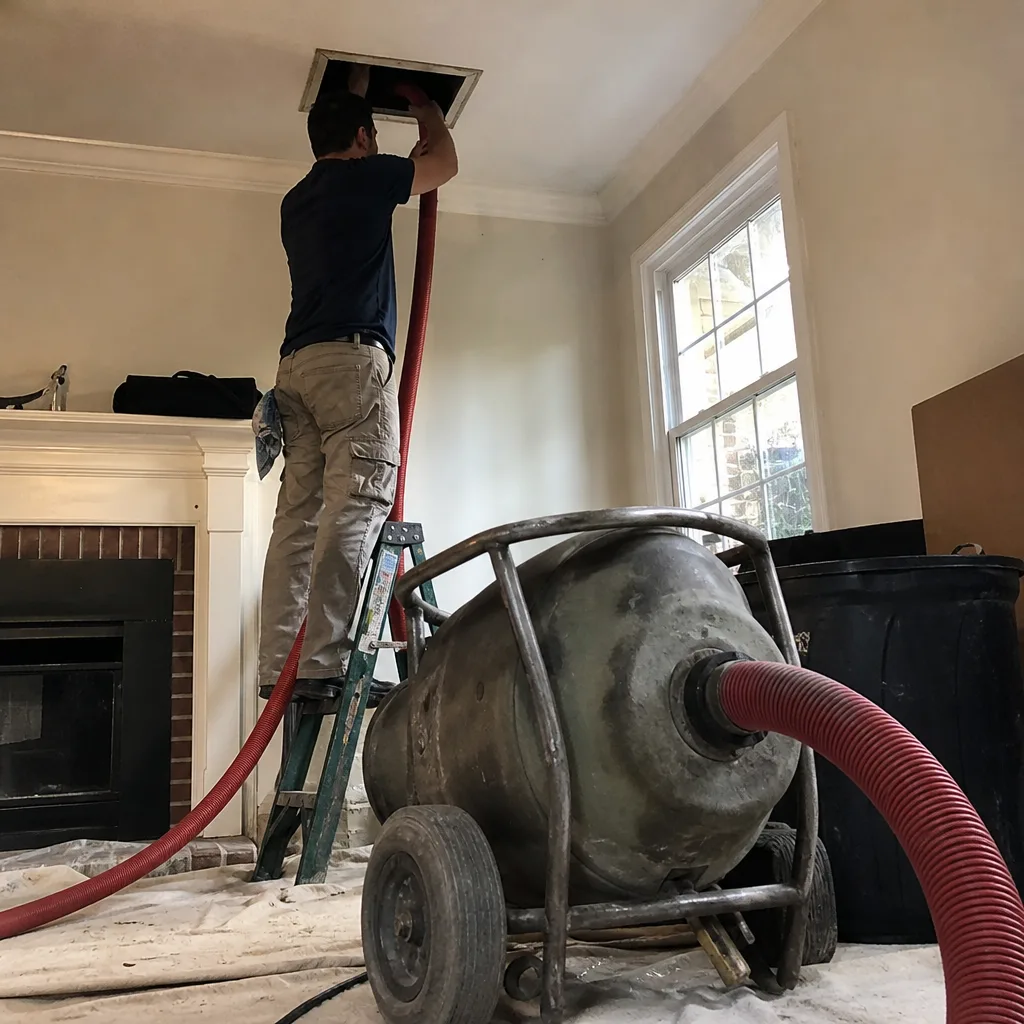
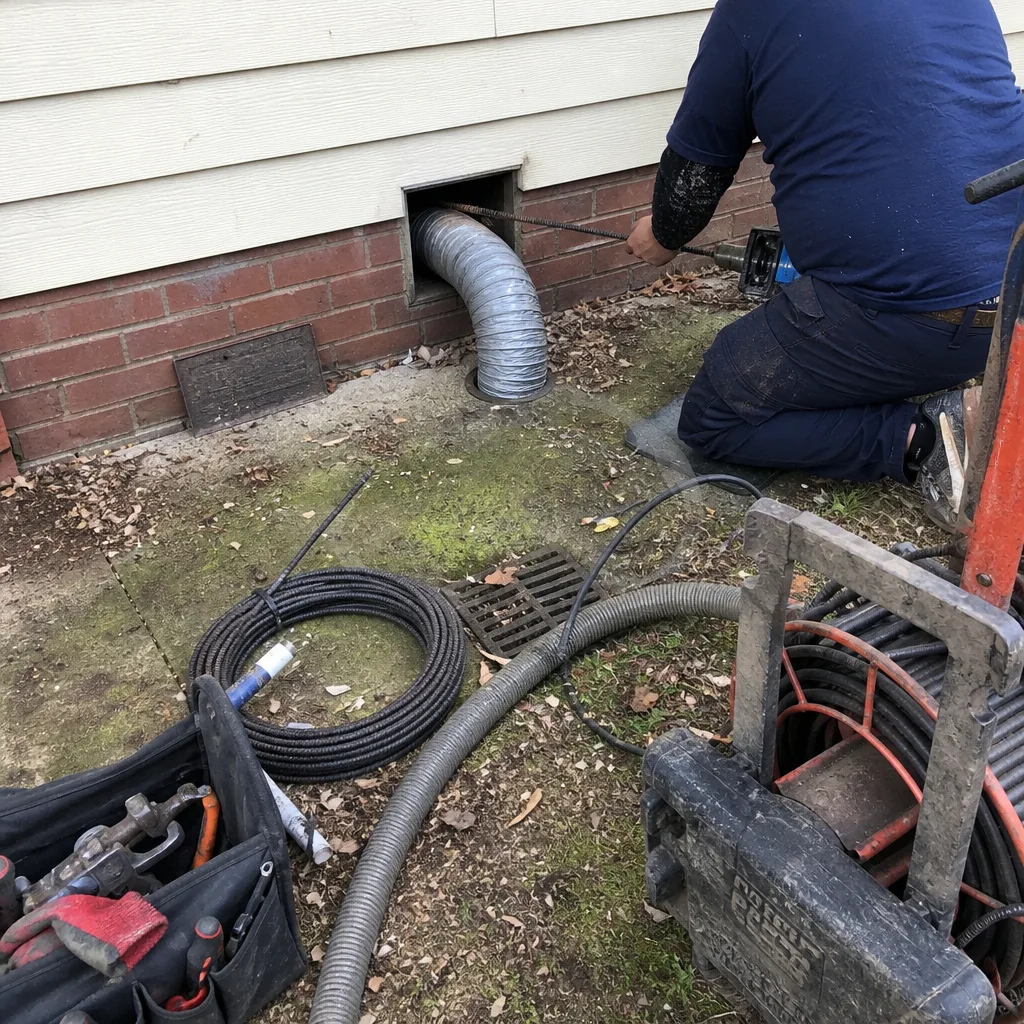
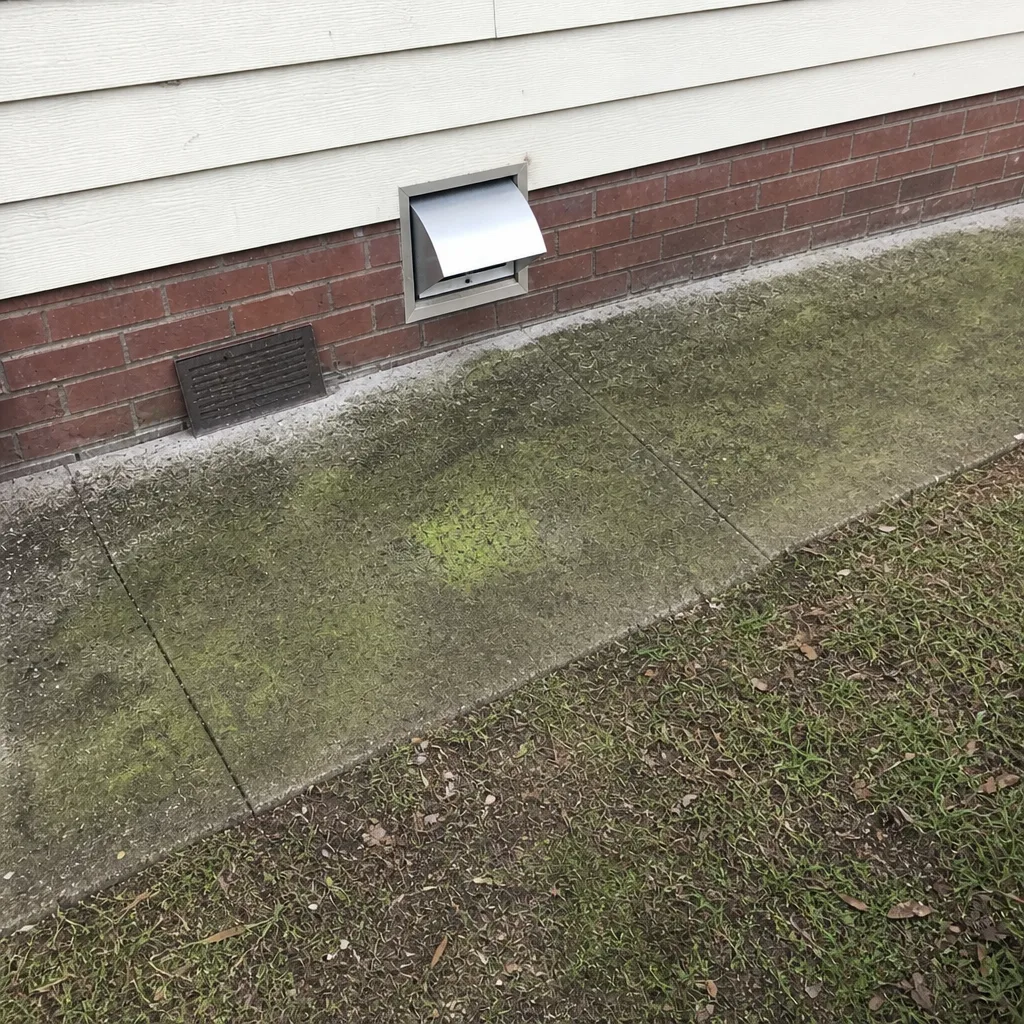
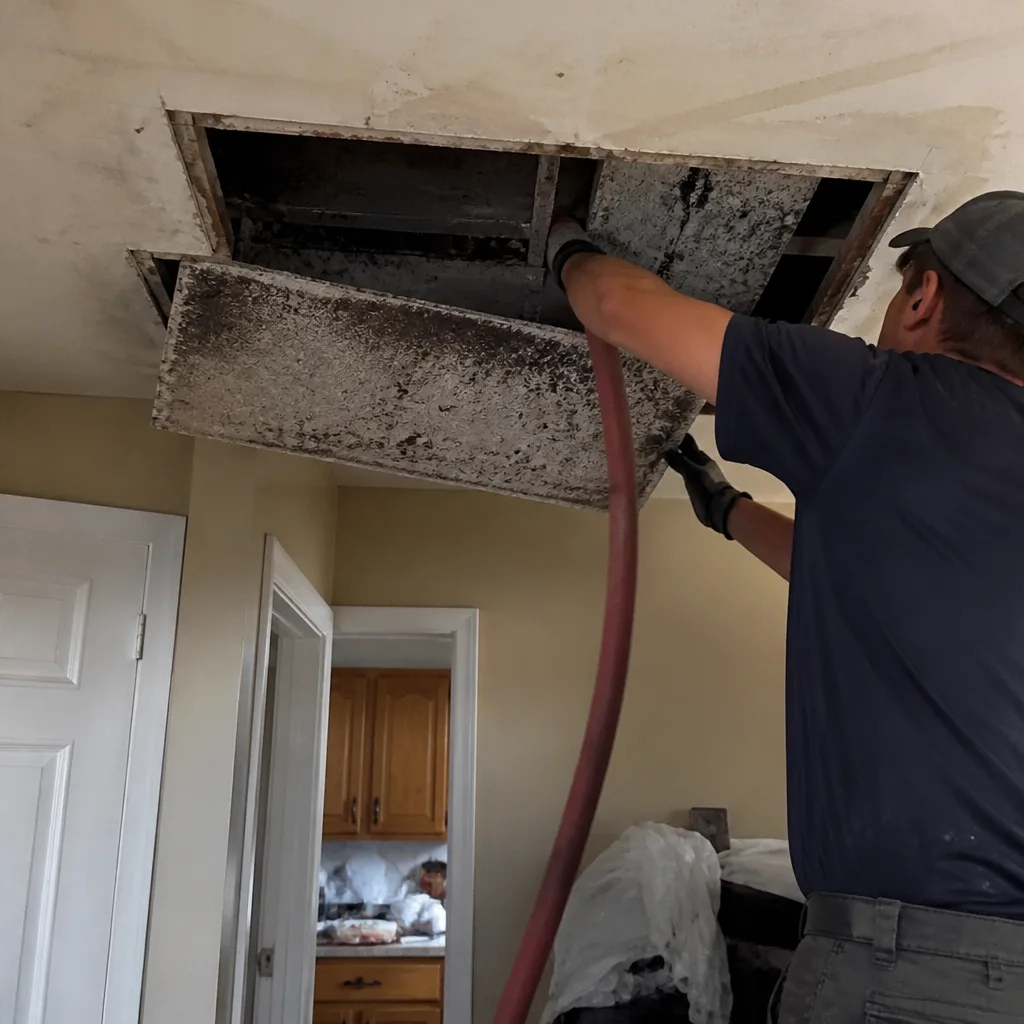
Whole-system duct and dryer vent check with before-and-after photos - you see exactly what came out of your vents
That "$99 whole-house special" is a bait ad - the real number appears once they are in your hallway, or the "clean" is a shop-vac at the register. We photograph the inside of your ducts before and after instead.
Air Duct Cleaning Maintenance Schedule: What to Do and When
The “3 to 5 years” interval you keep reading about wasn’t calculated from your home. It was averaged across millions of homes, then rounded into a single number that gets repeated everywhere. That average is almost certainly wrong for your house. A Newport News home with two dogs, a crawl space that stays damp into June, and a bathroom fan venting into the attic is on a very different clock than a slab-foundation condo with no pets and a whole-house filter. What follows is a scheduling framework built from conditions rather than a fixed number, so you can work out an interval that actually fits how your home lives.
Quick Answer
Most Newport News homes need professional air duct cleaning every 2 to 4 years, not a flat 3 to 5. Homes with pets, crawl space moisture, recent renovation dust or an occupant with allergies or asthma should plan on 12 to 24 months. Homes with flex duct in a vented crawl space sit at the short end of that range. The right interval comes from your home’s specific conditions, and it’s worth rechecking it after any major renovation or change in occupancy.
Styles & brands we work with
- Whole-home duct cleaning
- Dryer vent cleaning
- Camera inspection
- Sanitizing & deodorizing
Table of Contents
- Why Generic Duct Cleaning Intervals Fail
- The Conditions That Shorten or Stretch Your Schedule
- How Newport News Humidity Shapes Duct Condition
- Flex Duct vs. Hard-Pipe Sheet Metal: Different Clocks
- What to Do Between Professional Cleanings
- Building a Maintenance Log That Actually Helps
- Common Mistakes to Avoid
- When to Call a Professional
Why Generic Duct Cleaning Intervals Fail
The published “every 3 to 5 years” recommendation is a population average. It tells you roughly what a house like the statistical average house needs. It doesn’t know your house has a return run that passes through a humid crawl space, or that you sanded and refinished floors in the spring, or that your furnace filter is a cheap fiberglass panel swapped every six months instead of a pleated one changed on schedule. Those details move the interval more than any general guideline does.
Averages also tend to reflect a mild, dry climate that doesn’t match ours. Our part of Virginia runs humid for a meaningful stretch of the year, and that humidity doesn’t stay politely outside the ductwork. It loads the return side with moisture the supply side doesn’t see, and moisture is what turns ordinary settled dust into something that sticks to duct walls and stays there. In our experience in Newport News, the homes that genuinely hold a 5-year interval are the exception: no pets, slab foundation, sealed ducts, well-maintained filtration, and no renovation work in recent memory. Most homes need a shorter gap.
Here’s the practical takeaway. Treat any single-number recommendation as a starting point, not a plan. The next section replaces that number with variables you can actually check in your own house.
The Conditions That Shorten or Stretch Your Schedule
Six conditions do most of the work in moving a cleaning interval one direction or the other. Read each one against your own home, and count how many apply.
- Pets, especially shedders. One or two heavy-shedding dogs or cats can pull a 3-year interval down to 18 to 24 months. Pet dander and hair don’t just settle; they mat into the return-side duct walls and hold other debris in place. A house with a long-haired dog and a cat typically belongs on a 2-year schedule.
- Crawl space moisture intrusion. Vented crawl spaces in the Peninsula’s humid months stay damp longer than most homeowners expect. If your supply or return runs pass through that space and the ducts aren’t sealed tight, moisture migrates in and settled dust turns into a nutrient layer. That pushes the interval toward 18 to 24 months. Visible water staining on duct wrap means you shouldn’t wait at all.
- Renovation history. Drywall work is the single biggest dust event a house goes through. Sanded joint compound is fine enough to travel anywhere air moves, and it settles in duct runs within days. Plan a cleaning within a few months of major drywall or flooring work, then resume your normal interval from that date.
- Occupant health. If anyone in the home has asthma, seasonal allergies or a diagnosed respiratory condition, shorter intervals make sense. Two years is a common starting point, and some households go to annual cleaning during allergy season.
- Filtration quality and discipline. A properly sized pleated filter changed on schedule stretches intervals. A cheap filter run long past its useful life shortens them, because everything it doesn’t catch lands in the ducts instead.
- Occupancy and use. A home with four occupants and an always-on HVAC system collects debris faster than a seasonal-use home. Recent new construction or a first year in a used home are also reasons to start with a baseline cleaning so you know what you’re maintaining from.
Rough adjustment: count how many of the first four conditions apply. Zero, and a 3 to 4-year interval is reasonable. One or two, and 2 years fits. Three or more, and 12 to 18 months is where we’d start, then extend if the follow-up inspection shows the ducts holding up.
How Newport News Humidity Shapes Duct Condition
Humidity is the variable most national guides leave out, and in Newport News it’s close to the top of the list. Our warm months carry enough moisture in the air that the gap between indoor and outdoor humidity narrows for weeks at a time. Add a cooling system that runs hard during those same weeks, and you get condensation on cold metal surfaces, damp duct wrap in vented crawl spaces, and a general rise in relative humidity inside the duct system itself.
Moisture matters for two reasons. The first is that porous duct liner and fiberglass board absorb it, and once they’re damp they stay damp longer than the surrounding air does. The second is that moisture plus accumulated organic dust forms the conditions where mold colonization can begin. No one can give you a reliable day count for that process: it depends on how wet the duct gets, how long it stays wet, and what’s already sitting on the liner. What we can say is that the timeline shortens in a humid climate, and it shortens most in exactly the ducts that stay cool and damp the longest.
Practical consequences for scheduling:
- Check the crawl space and attic duct runs visually at the start of the humid season. Damp duct wrap or condensation on metal is a signal to move the next cleaning up, not to wait out the interval.
- Keep the cooling system’s drainage clear and the condensate line flowing. A clogged drain adds humidity to the exact space where your ducts run.
- If you run a dehumidifier in the crawl space, that’s a genuine help. It doesn’t replace duct cleaning, but it slows the process between cleanings.
- After any flooding event or long power outage in a humid stretch, inspect before you assume the schedule still holds.
This is where good equipment matters. Debris that has bonded to damp duct walls doesn’t come off with a shop vac and a hose. It takes agitation from something like a Rotobrush rotary brush, paired with capture at the source. We run Nikro HEPA-rated vacuums alongside the rotary brush, and for heavier jobs we bring in Abatement Technologies negative-air equipment so the work area is held to real containment standards instead of letting dislodged material drift into living space. That’s commercial-grade equipment in your home, and it’s part of why the cleaning we do can hold a 2-year interval where a light surface job can’t.
Flex Duct vs. Hard-Pipe Sheet Metal: Different Clocks
The duct material in your house changes the schedule as much as anything else on this list. Flex duct and hard-pipe sheet metal are not on the same maintenance clock, and treating them the same is a planning error.
Hard-pipe sheet metal is smooth on the inside, which is its advantage. Debris settles on it but doesn’t easily cling, and cleaning brings it back to a known baseline. In a dry, sealed system with decent filtration, sheet metal can hold a 3 to 4-year interval. Its weak points are the seams, the takeoffs at registers, and anywhere the duct passes through an unconditioned space where condensation can form.
Flex duct is a different animal. Its interior is corrugated plastic over a wire helix, which gives dust and hair dozens of ridges to lodge against. It also sags. Every low spot in a flex run becomes a collection pocket, and in a vented crawl space that pocket gathers moisture along with debris. Flex duct in a crawl space warrants shorter intervals, commonly 18 to 24 months, and it needs a technician who uses low-speed settings and doesn’t tear the liner. A rotary brush run too aggressively through flex will shred it, which is why the technique matters as much as the tool.
Many Newport News homes have a mix: sheet metal trunks with flex branches out to the registers. In that case, schedule for the flex branches, because they set the pace. If your crawl space contains visible flex runs with condensation or sag, plan the shorter interval. And if a technician finds crushed or disconnected flex while cleaning, that’s not something to put on a future list. We clean and repair in the same visit; Denali Air Duct Cleaning treats air duct cleaning and duct repair as one service, so a compromised run gets fixed rather than documented and left.
What to Do Between Professional Cleanings
The interval between cleanings is where most homeowners either hold their schedule or lose it. These steps take a few minutes each and do real work.
- Wipe the supply registers every few weeks. A damp cloth across the louvers removes the dust that would otherwise get pulled back into the run. If a register is visibly caked on the inside, note it; that register is telling you something about the run behind it.
- Track filter changes in writing. Write the change date on the filter edge itself or keep a note on the unit. A pleated filter that’s been in place twice as long as intended is the most common reason a cleaning interval gets cut short.
- Look through the registers with a flashlight. Pull one supply and one return grille and look inside with a light. A light film is normal between cleanings. Heavy buildup, visible debris piles, or anything fuzzy growing on the liner is a reason to move the cleaning up.
- Check condensation and dampness at the start of the humid season. Look at duct runs in the crawl space or attic. Damp wrap, water stains, or condensation on metal all mean moisture is getting somewhere it shouldn’t.
- Note any renovation dust immediately. If drywall work, sanding or floor refinishing happened, write the date down. It becomes the new starting point for the interval.
- Keep the return grilles clear. Furniture, rugs and boxes blocking return air raise static pressure and change how debris behaves in the system.
We use Guardsman surface-protection products during a cleaning so that furniture, floors and finishes around the work area stay protected. That’s not a scheduling step, but it’s worth knowing before you book: good preparation is part of what a professional cleaning includes, and it’s one more reason not to hand a wet vac to a helper and call it done.
Building a Maintenance Log That Actually Helps
Most homeowners keep no duct maintenance record at all, which is why every technician they hire starts from zero. A practical log doesn’t need to be elaborate. A single page, physical or digital, that answers five questions is enough to give the next professional real context.
- When was the last cleaning, and what was done? Note the date and whether it covered the full system, just the supply side, or a single branch. “Full system cleaned” and “two runs cleaned after a duct repair” are different starting points.
- What filtration is in place? Filter type, size and the last change date. If you upgraded filtration, that change alone can extend your interval.
- Any repairs or replacements? A sealed joint, a reconnected run, a replaced section of flex. Repairs change the air path, and the next cleaning benefits from knowing about them.
- Any moisture events? A crawl space that flooded, a condensate overflow, a humidifier leak. Moisture history is the single most useful thing you can tell a technician.
- Occupancy changes. New pets, a new baby, a family member diagnosed with asthma, or a renovation in progress. These are the conditions that move the interval, and they belong in the log.
When you have this in hand, the next technician can walk in, ask informed questions and focus on the inspection instead of spending the visit reconstructing your system’s history. That’s a better visit for everyone.
If you want a starting point for your Newport News home, the best first step is a full-system inspection and cleaning that establishes a baseline. After that, the log records how the system behaves, and the interval becomes something you can adjust with evidence rather than guesswork. That’s the opposite of the coupon-first approach you’ll see advertised, and it’s the one that actually helps you plan.
Common Mistakes to Avoid
- Applying the 3-to-5-year rule to a house with three pets. The average house has no pets and no crawl space moisture. Yours might have both. Count your conditions before you set a date.
- Skipping cleaning after renovation. Drywall dust is fine, mobile and settles everywhere. Cleaning months later is normal; waiting out a full interval after major work is not.
- Assuming the price you were quoted reflects the whole system. Some quotes are per vent, which means the total isn’t known until the technician is in the house. Ask for a flat price for the system before work starts, with photos of the actual ducts once it’s done.
- Cleaning the ducts while a duct leak or a crushed flex run goes unrepaired. A cleaning on a compromised system doesn’t hold. It’s worth asking whether the technician can repair what’s found, not just report it.
- Treating the dryer vent as part of “someday.” The dryer vent cleaning schedule is a fire-safety item and runs on its own shorter clock than the ductwork. It isn’t optional maintenance.
- Letting the crawl space go unchecked through the humid season. In Newport News, damp duct wrap and condensation are the most common reason an interval should have been shorter. A visual check costs nothing and tells you a lot.
- Ignoring odor and calling it seasonal. A musty smell that appears when cooling starts isn’t always the crawl space. It’s often the duct system telling you moisture has been there a while. A cleaning and inspection worth the name will tell you which.
When to Call a Professional
Some conditions mean it’s time to schedule rather than wait out an interval. Visible debris or dust blowing from registers when the system starts is an immediate call. Persistent musty odor that returns after filters are changed is another. If someone in the household has allergies or asthma that seem worse indoors, the ducts and the filtration are both worth inspecting. A recent renovation, a crawl space flood, or a system that’s never been cleaned in a home you just bought are all reasons to start now rather than plan for later. Denali Air Duct Cleaning offers free estimates, and our technicians have up to 11 years of experience on this equipment. If it turns out the ducts need repair rather than just cleaning, we handle both. Call (866) 942-7630. We answer 24/7. Fast dispatch from 7am to 7pm, Sunday through Friday.
See the difference
 Before
 After
 Before
 After
 Before
 After
Frequently Asked Questions
Most Newport News homes should plan on professional cleaning every 2 to 4 years, and closer to 12 to 24 months if the home has pets, a vented crawl space, recent renovation dust, or someone with respiratory sensitivities. The 3-to-5-year figure widely repeated online is an average across very different climates and homes, and it doesn’t account for our humid summers or your specific system. Start with an inspection to establish a baseline, then set the interval from actual conditions. Call (866) 942-7630 for a free estimate.
Yes, it shortens it. Long humid stretches keep damp crawl spaces and duct wrap from drying out, and moisture plus settled dust is what makes debris cling to duct walls instead of staying loose. That’s why homes with ducts running through vented crawl spaces in this area often belong on an 18 to 24-month interval rather than longer. A crawl space dehumidifier helps slow the process, but it doesn’t replace cleaning. Call (866) 942-7630 to schedule an inspection.
Yes. Flex duct has a corrugated interior that traps hair and dust in its ridges, and it sags into low pockets where debris and moisture collect. In a crawl space, flex runs warrant shorter intervals, commonly 18 to 24 months, and they need gentle cleaning technique so the liner isn’t damaged. Sheet metal trunks and branches are smoother and usually hold a longer interval. If your system is a mix of both, schedule for the flex branches. Call (866) 942-7630 for an assessment.
Pricing varies by system size, duct layout and condition, and it’s set per job by a written estimate before any work begins. A reputable company will quote a flat price for the system, not a per-vent rate, so you know the total up front rather than watching a low coupon number grow once the technician is on site. Ask for before-and-after photos of your own ducts as part of the job. Call (866) 942-7630 for a free estimate.
Cheap quotes are often per-vent teasers, or they’re built around a portable shop vac and a hose that stirs debris loose without capturing it. Both leave you with a bill that doesn’t match the number you were quoted, or a cleaning that didn’t remove much. Equipment matters. Rotobrush rotary brushes agitate debris off duct walls, HEPA-rated vacuums like Nikro capture it at the source, and negative-air containment keeps it out of your living space. Ask what equipment a company brings, then compare. Call (866) 942-7630 to talk through a free estimate.
Ask for before-and-after photos of your own ducts, not stock images. Photos are the simplest verification available, and a company that does thorough work will have no trouble providing them. You can also look inside a register yourself before and after the visit to see the change. If a crew can’t or won’t document the work, that’s worth taking seriously. Call (866) 942-7630 to book a free estimate.
The Bottom Line
There’s no single correct duct cleaning interval, and any guide that gives you one number is answering a different question than yours. Build your schedule from conditions: pets, crawl space moisture, renovation history, occupancy health, filtration discipline and duct material. In Newport News, the humid season and the prevalence of flex duct in vented crawl spaces push most homes toward the shorter end of the range. Keep a simple maintenance log, check registers and crawl space runs between cleanings, and repair what you find rather than cleaning around it. If you’d rather not work it out alone, an inspection gives you a baseline. Call (866) 942-7630. We answer 24/7. Fast dispatch from 7am to 7pm, Sunday through Friday. Estimates are free.
Written by the team at Denali Air Duct Cleaning.