
Last updated November 15, 2026
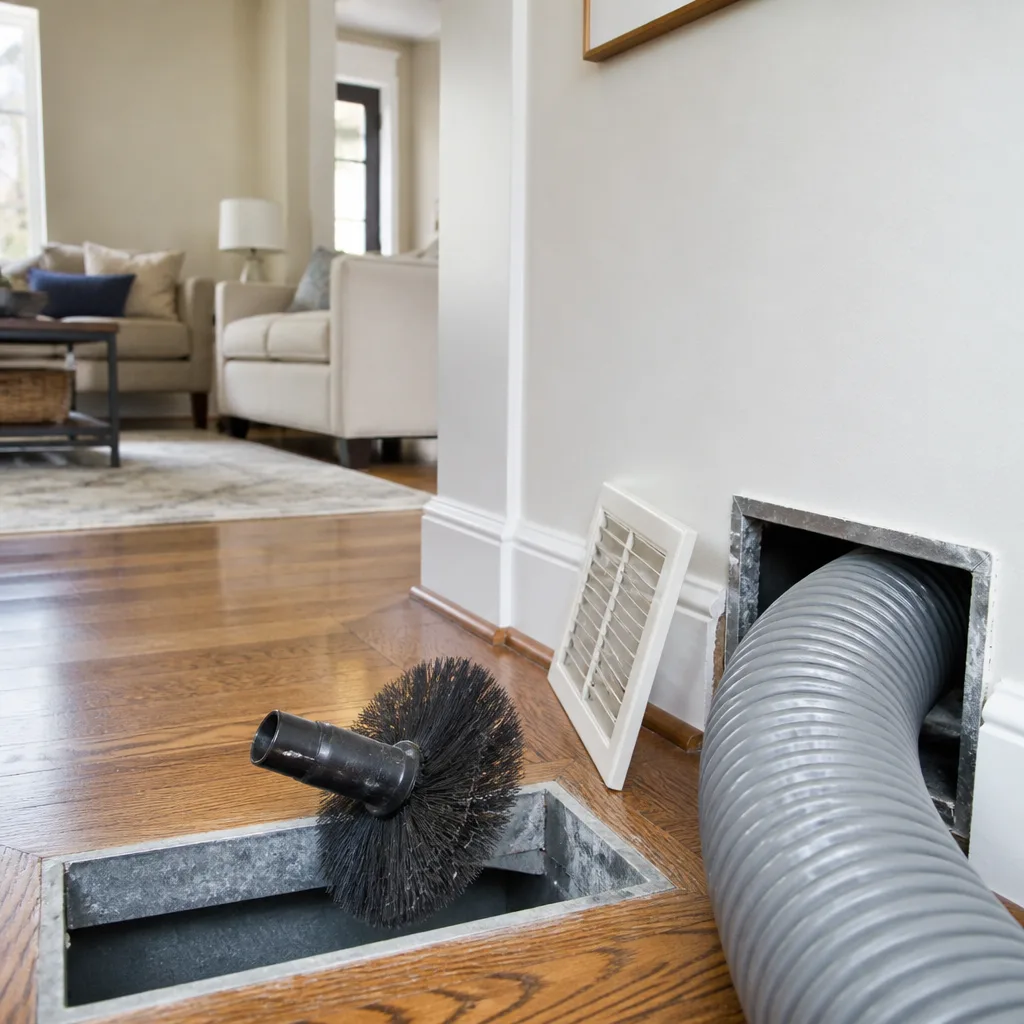 Whole-home duct cleaning
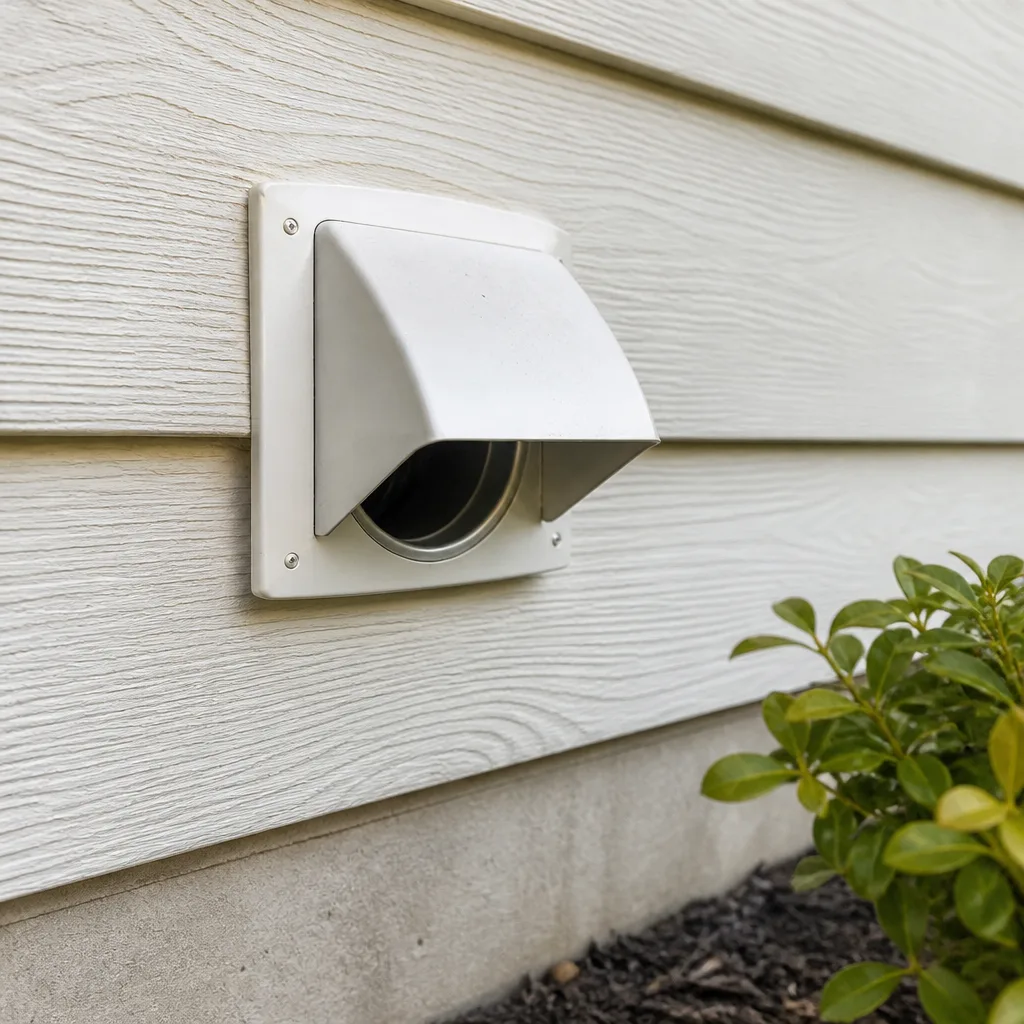 Dryer vent cleaning
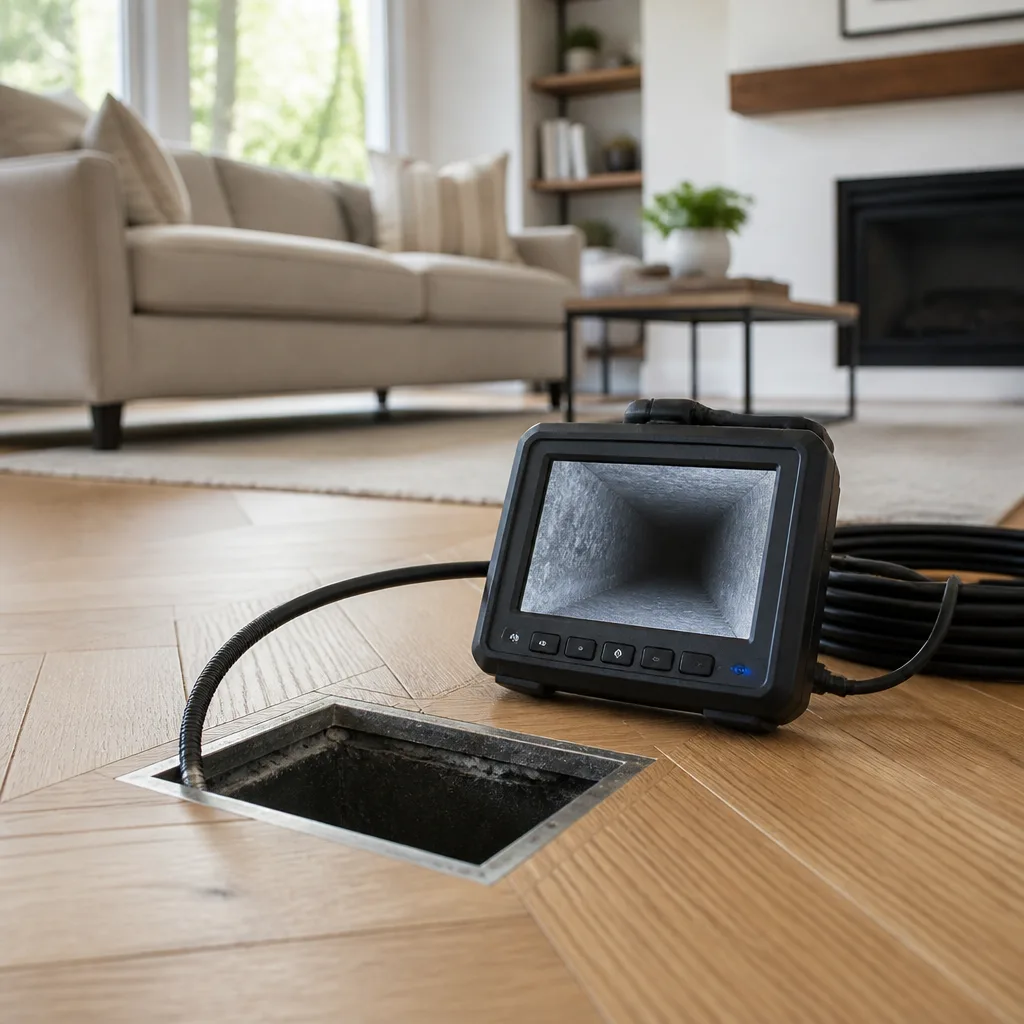 Camera inspection
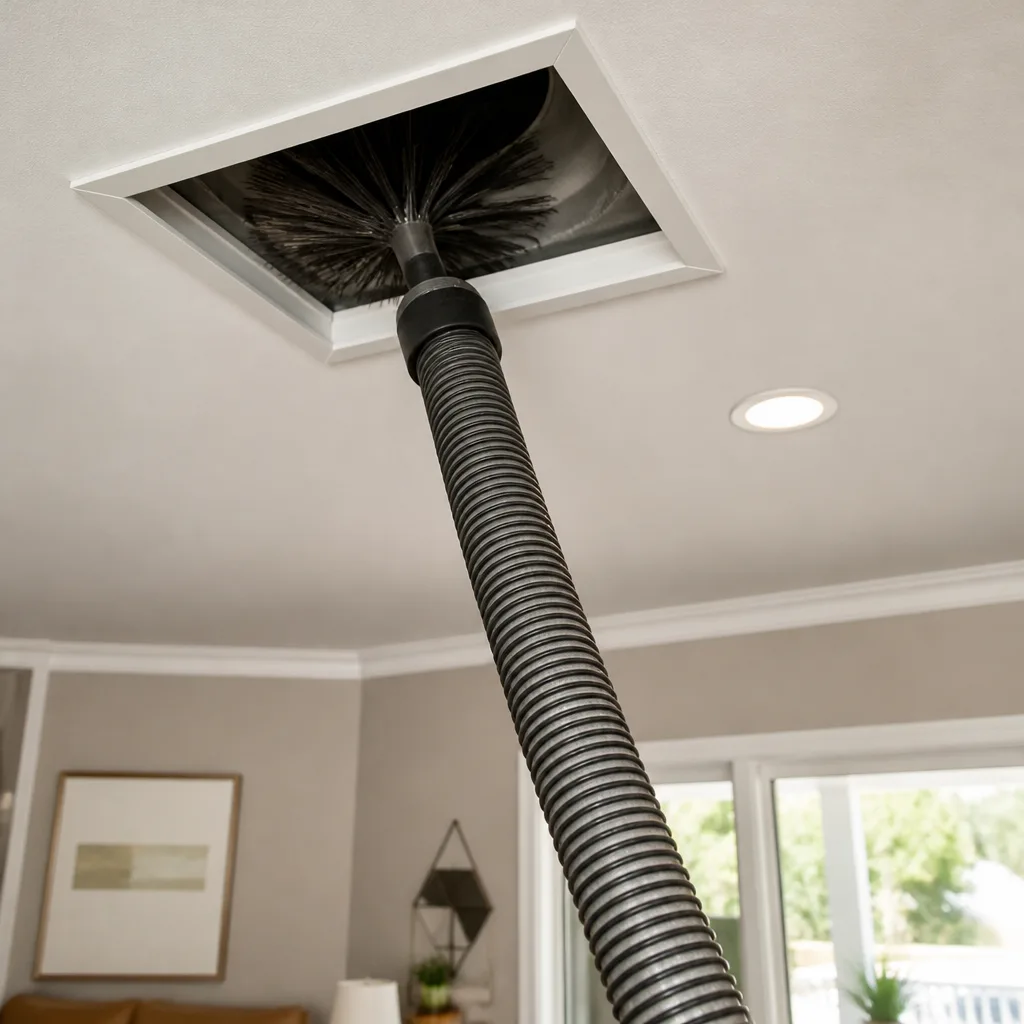 Sanitizing & deodorizing
Whole-system duct and dryer vent check with before-and-after photos - you see exactly what came out of your vents
That "$99 whole-house special" is a bait ad - the real number appears once they are in your hallway, or the "clean" is a shop-vac at the register. We photograph the inside of your ducts before and after instead.
Air Duct Cleaning Troubleshooting in Newport News: Common Problems and How to Fix Them
If cleaning your ducts didn’t fix the musty smell or the hot bedroom, the ducts probably weren’t the problem to begin with. That’s the uncomfortable truth most homeowners reach only after paying for a cleaning that changed nothing. Weak airflow, lingering odor, and uneven room temperatures have two very different possible sources: contamination inside the duct system, or a mechanical fault in the furnace, air handler, or coil. Confusing the two sends money in the wrong direction every time. In this guide we’ll walk you through the home checks that separate duct-side problems from HVAC-side problems, how Newport News humidity plays into duct liner wear, how to spot crushed or disconnected flex duct, and when a finding means you need a re-clean, a repair, or a call to a different trade.
Quick Answer
To troubleshoot air duct problems in Newport News, first separate symptoms that come from the ducts (odor, visible dust at registers, uneven airflow to specific rooms, debris after a renovation) from symptoms that come from the HVAC equipment (weak airflow everywhere, short cycling, refrigerant or coil issues). Cleaning fixes the first category. Repair fixes crushed, disconnected, or degraded duct runs. An HVAC technician is needed for the second category. The mistake that costs homeowners money is paying for a re-clean when the real problem is a mechanical fault, or paying an HVAC technician for a diagnosis when the ducts are simply blocked or torn.
Styles & brands we work with
- Whole-home duct cleaning
- Dryer vent cleaning
- Camera inspection
- Sanitizing & deodorizing
Table of Contents
- Duct-Side vs. HVAC-Side Problems: How to Tell Them Apart
- Simple Home Checks to Isolate the Cause
- What Post-Cleaning Symptoms Actually Mean
- How Newport News Humidity Degrades Duct Liner
- Checking for Crushed or Disconnected Flex Duct
- Re-Clean vs. Repair vs. Replacement
- Which Trade to Call and When
- Keeping the System Clean After the Fix
Duct-Side vs. HVAC-Side Problems: How to Tell Them Apart
Almost every air quality or comfort complaint a homeowner brings us falls into one of two buckets. Either the duct system is contaminated, blocked, leaking, or physically damaged, or the mechanical equipment that moves and conditions the air is failing. The symptoms overlap enough that people guess wrong all the time. A hot upstairs bedroom can mean a crushed flex run in the attic, or it can mean the blower isn’t moving enough air, or it can mean the refrigerant charge is low. Three different problems, three different trades, three different bills.
The cleanest way to sort this out is to think about what the duct system is actually responsible for. Ducts deliver air and remove it. They don’t cool it, heat it, or dehumidify it. So if the complaint is about the quality or distribution of air in specific rooms, suspect the ducts. If the complaint is about the air being the wrong temperature everywhere, or the system behaving erratically, suspect the equipment.
Duct-side symptoms typically include:
- Musty, dusty, or stale odor that’s strongest when the system first kicks on
- Visible dust streaks or dark staining around supply registers
- One or two rooms consistently weak while others are fine
- Debris blowing out of registers after a renovation or roofing project
- Whistling or rattling from specific registers
- Excess dust settling on surfaces within days of cleaning
HVAC-side symptoms typically include:
- Weak airflow from every register in the house
- System short-cycling or running constantly without reaching setpoint
- Air coming from registers that isn’t cold (or isn’t warm) enough
- Ice forming on the indoor coil or refrigerant lines
- Loud mechanical noise from the air handler or outdoor unit
- Water pooling near the indoor unit
If you recognize the second list, stop troubleshooting the ducts and call an HVAC company. If the first list sounds familiar, keep reading, because most of those are fixable without replacing the system. In our experience working throughout Newport News, the majority of “my ducts are dirty again” complaints turn out to be a duct problem in the first category that never got diagnosed properly the first time.
Simple Home Checks to Isolate the Cause
You can narrow down the source of a duct or comfort problem in about twenty minutes with no special tools. These checks won’t tell you everything, but they’ll tell you which category you’re in. That’s the information any professional needs before they can quote anything honestly.
- The register tissue test. Hold a single ply of tissue against a supply register while the system runs. If it flutters strongly at every register, airflow is broadly fine. If it barely moves at one or two registers but is strong elsewhere, you likely have a blocked or crushed run serving those rooms.
- The return-air test. Do the same at the return grille. Weak return pull is often a sign the return path is undersized or blocked, which can starve the system and mimic a failing blower.
- The smell test. Turn the system off for an hour, then turn it on and stand near a register. A musty smell that hits in the first thirty seconds is coming from inside the ductwork. A smell that builds slowly over several minutes may be the coil or the drain pan.
- The filter check. Pull the filter and hold it up to light. A filter that’s dark across the whole face is starving the system of air, which produces weak airflow that looks like a duct problem. Change it and re-test before doing anything else.
- The visual register inspection. Shine a flashlight into a supply register. Loose debris, torn liner material, or visible dust buildup on the duct interior suggests contamination. A visible gap where the boot meets the drywall or floor suggests a leak.
- The room-by-room map. Walk the house with a notepad and write down which rooms feel weak, which feel fine, and which smell. Patterns matter. A whole side of the house that’s weak points to a trunk issue; a single room points to a branch run.
These six checks take less time than a service call and give you a real answer to take into a conversation. When a homeowner can say “the two back bedrooms are weak but the return air is strong,” a technician can usually narrow the problem before they arrive. If you want a sense of what a proper duct assessment looks like, our air duct cleaning page walks through the process from inspection to finished job.
What Post-Cleaning Symptoms Actually Mean
Here’s the part most homeowners don’t hear until after the fact: a routine cleaning won’t fix a problem that wasn’t caused by contamination. If your ducts are already clean and you still smell something or airflow hasn’t improved, the cleaning did its job. The problem lives somewhere else. That’s not a failure of the cleaning. It’s a sign the original diagnosis was incomplete.
These post-cleaning symptoms come up often in Newport News homes, and each one points in a specific direction:
- Lingering musty odor after cleaning. Usually the evaporator coil, the condensate drain pan, or the air handler cabinet. The ducts are downstream of the source. A coil cleaning or an HVAC technician visit is the next step. If the smell is sharper and more chemical, suspect a failed coil coating or standing water in the cabinet.
- Unchanged weak airflow in specific rooms. Points to a crushed, disconnected, or blocked duct run. Cleaning can’t restore airflow to a run that’s physically collapsed or detached. This is a repair problem, not a cleaning problem.
- Uneven temperatures that persist. Can be a duct sizing or insulation issue, a damper stuck closed, or a mechanical fault. Check whether balancing dampers at the trunk are open first. It’s a free check and it solves a surprising share of cases.
- New dust appearing quickly after cleaning. Often a return-air leak pulling attic or crawl space air into the system. If you can see daylight or feel air moving around a duct joint, that leak is drawing in unfiltered air every time the system runs.
- Whistling at one register. Not a contamination symptom at all. Usually an undersized or partially blocked register boot, or a supply that’s a poor match for the room’s needs.
Two-thirds of the symptoms above don’t respond to cleaning at all. That’s why a repair capability matters so much. Denali Air Duct Cleaning treats duct repair as a core service specifically because we kept finding clean systems that still had a broken run wasting the homeowner’s money. When we show up to clean, we can diagnose and fix compromised ductwork on the same visit rather than handing over a report and leaving the fix to someone else. That’s the difference between a contractor who cleans and a contractor who troubleshoots.
How Newport News Humidity Degrades Duct Liner
The summer humidity in Hampton Roads is not a minor footnote to duct maintenance. It’s one of the biggest factors in how long duct insulation and liner last in homes across Newport News, and it’s why we inspect liner condition carefully on every job. When the indoor coil is running, ducts downstream of it are cold. In high-humidity months, condensation forms on those cold surfaces. If the insulation or liner around them is already damaged, that moisture has a place to sit.
What happens to liner over time
Interior duct liner, the fibrous acoustic and thermal layer inside many metal trunk lines, absorbs moisture when the system cycles and the vapor barrier has failed. Once it’s repeatedly damp and then dried by the system running, it degrades. It starts to fray, then delaminates from the metal, then breaks off in pieces that travel into the supply run. In our experience working throughout Newport News, this shows up most on trunks that run through unconditioned attic or crawl space where summer humidity is at its worst and temperature swings are widest.
How to spot liner degradation at the register
- Shine a flashlight into every supply register in the house.
- Look for a fuzzy, fibrous surface on the inside of the duct that should be smooth metal or foil-faced.
- Check for small flakes of gray or yellow material caught on the louvers or the boot edges.
- Feel for soft, sagging material that’s come loose from the duct ceiling.
- Smell at the register while the system first runs. Degraded liner has a distinctly musty, damp-cloth smell.
If you see fraying liner, don’t assume a cleaning will resolve it. Cleaning can remove the loose debris and make things better in the short term, but the liner itself needs repair or replacement, or it will keep breaking down. Denali’s repair service exists for exactly this. When we use a Rotobrush rotary-brush system, we’re agitating the duct interior with controlled contact, which brings liner problems to light rather than hiding them. Understanding that your liner has failed is the actual deliverable. Fixing it comes next.
Checking for Crushed or Disconnected Flex Duct
If your home has flex duct run through a crawl space or attic (most Newport News homes built after the mid-1980s do), a crushed or disconnected section can undo everything else you do to the system. Flex duct loses significant airflow when it’s pinched. If a section is disconnected at a collar, the run doesn’t just underperform, it dumps conditioned air into the crawl space and pulls attic or crawl air into the supply side. That means dust, humidity, and odors, all at once, in some cases into a room that was previously fine.
You don’t need specialized tools to do a preliminary check. You need a flashlight, a willingness to crawl, and some patience.
Step-by-step check
- Locate the access hatch to the crawl space or attic. Take a flashlight and a phone camera.
- Before entering, look at the main trunk line and note where it forks into branch runs.
- Follow each branch run visually. Flex duct should be round, smooth, and fully extended between supports. Any branch that’s pinched, kinked at a 90-degree angle, or flattened along the top is a problem.
- Look at every connection point where flex duct meets metal collars, boots, or the trunk. Tug gently on the flex at the collar. If it slides off or pulls away easily, it’s disconnected or under-attached.
- Look for sagging runs where the flex has dropped between straps and is resting on the ground or ceiling joists. Sag is a mild problem on its own but can create condensation points.
- Take photos of anything that looks questionable. Photos make the conversation with a repair technician honest.
If you find a disconnected run, resist the urge to re-tape it yourself unless it’s a simple field repair (some duct tape and a zip tie are not a permanent fix; proper flex connection usually uses a draw band, mastic, or foil tape matched to code). The reason not to be casual: a run that’s been disconnected inside a humid crawl space pulls contaminated air for as long as it’s been open, and that contaminated air has been traveling into the living space. A professional Newport News duct repair call can reseal, re-secure, and clean the affected run so the house gets a real fix, not a band-aid. Our team runs Abatement Technologies negative-air equipment during that kind of work, which holds the work area to a remediation-grade containment standard so the debris being disturbed doesn’t migrate into the house.
Re-Clean vs. Repair vs. Replacement
Once you know what’s wrong, the next question is what to do about it. Homeowners frequently ask whether they need another cleaning, a repair, or a full replacement of the ductwork. The answer depends entirely on which of the three problems you actually have. Getting this decision right is where money is either saved or wasted.
| Finding | Correct response |
|---|---|
| Visible dust and debris still present, liner intact, runs connected | Re-clean (usually with better equipment than the first attempt) |
| Loose debris left in the system after a prior cleaning | Re-clean, ideally with rotary-brush agitation plus HEPA capture |
| Crushed, kinked, or disconnected flex run | Repair the run |
| Frayed or delaminated interior liner | Repair or replace the affected section |
| Torn hard metal trunk with visible leaks | Repair, then re-clean |
| Original ductwork physically undersized for the home | Replacement of the affected runs, generally with an HVAC contractor |
| Musty odor from coil or drain pan, not ducts | HVAC service call, not a duct problem |
When re-cleaning makes sense
A re-clean is the right answer when the ducts are still visibly soiled and the liner and runs are intact. It’s also the right answer when the first clean was done with a portable unit and no vacuum containment. A portable unit can blow debris loose without fully capturing it, leaving it to settle back into the run. When Denali runs Nikro HEPA-rated vacuums alongside the Rotobrush system, the dislodged debris gets captured at the source rather than recirculating into the house. That’s the practical reason the combination works where a lighter setup doesn’t.
When repair is unavoidable
Any finding of crushed, disconnected, or damaged duct means the system can’t deliver the air it should no matter how clean it is. Clean it first just to remove contamination, but the repair has to happen or the cleaning’s value erodes quickly. Our Denali Air Duct Cleaning team handles this by treating cleaning and repair as a single job, not two separate visits.
When replacement is the honest answer
Replacement of ductwork is a bigger conversation, and honestly we’re not the right company to do it. If your system was installed undersized, or the duct design itself doesn’t support the home, that’s an HVAC installation scope. The best we can do on those calls is clean and repair what’s there, and tell you clearly when replacement is the right answer even though it’s not a job we take on.
Which Trade to Call and When
The single biggest cost of a misdiagnosis isn’t the failed service. It’s the wasted weeks trying to solve the problem one contractor at a time. Here’s a simple decision guide for anyone in Newport News who’s stuck between calling a duct company or an HVAC company.
- Call a duct specialist first if the complaint is odor that hits on startup, visible dust at registers, one or two specific weak rooms, known debris from a renovation, or a smell that started after roof work or remodeling. These are duct-side conditions.
- Call an HVAC company first if airflow is weak everywhere, the system is short-cycling, the air isn’t reaching temperature, there’s ice or water at the indoor unit, or there’s mechanical noise from the equipment.
- Call both if you have mixed symptoms (some rooms weak, some cold, some smelling). This is common in older Newport News homes where duct systems have been added to, modified, or replaced rooms at a time. A duct assessment often clarifies the picture; sometimes an HVAC diagnosis does.
- Call a duct specialist after HVAC repair if the equipment has been serviced and the smell or dust issue persists. Mechanical repair can’t fix contamination, and contamination sometimes goes unseen until the system is running properly again.
We want to be clear about what we do and don’t handle. Denali Air Duct Cleaning focuses on three services: air duct cleaning, dryer vent cleaning, and air duct repair. We don’t do HVAC installation, we don’t do refrigerant work, and we don’t do mold remediation. When something needs to go to another trade, we say so plainly and leave the homeowner with the diagnosis in hand. That’s a more useful outcome than a sales pitch for a service we can’t properly deliver.
If a homeowner wants to upgrade the air quality side of the system while we’re already on site, we integrate Honeywell and Aprilaire solutions where they fit the home. Those are the kind of additions that make sense once the base system is clean and working, not before. And on every job we use Guardsman surface-protection products to safeguard floors and finishes during the cleaning. Small detail, but it’s part of doing the work properly in someone’s home.
Keeping the System Clean After the Fix
Once the actual problem is fixed, keeping it from coming back is mostly about three habits. Change filters on a schedule that matches your home, not the box. In Newport News, a home with pets or a nearby construction project may need a new filter more often than the manufacturer’s recommended interval, and the filter’s MERV rating matters as much as the change frequency. Second, get in the crawl space or attic once a year and look at the flex runs, especially after any major work on the house. Renovations and roof replacements shake ductwork loose more often than people realize. Third, watch for the return of the smell or the weak room. If either comes back, that’s a signal that something upstream of the original fix was missed.
The homes we return to most often are the ones where the diagnosis skipped a step. Cleaning without a real inspection looks fine on the invoice and does nothing in the rooms. Cleaning done as part of a repair-scoped job actually improves the house. That’s the difference worth paying for, and it’s why we take the time to check the crawl space, look at the liner, and use negative-air containment before we call a job done.
Common Mistakes to Avoid
- Assuming cleaning fixes every smell. A musty smell from the coil or drain pan won’t change no matter how clean the ducts get. Diagnose the source before you book.
- Blaming ducts for weak airflow throughout the house. Whole-house weakness is almost always a filter, blower, or equipment issue, not a duct-cleaning problem.
- Skipping the liner inspection. Newport News summer humidity breaks down duct liner, and a homeowner who never looks never knows. Look inside registers with a flashlight before and after every clean.
- Re-taping disconnected flex duct and calling it done. Field repairs with duct tape fail within a season. Flex connections need proper mechanical securing, and in a humid crawl space a taped-over connection is usually already pulling in damp air.
- Hiring a cleaner who doesn’t inspect. A crew that arrives, cleans, and leaves without looking at the crawl space is cleaning half the system. Ask what they check before they start.
- Treating re-cleanings as routine. A re-clean is a corrective service. If you’re booking one every year or two, something upstream is causing the system to re-soil faster than normal.
- Ignoring the return-air side. Most dust entering the system comes in through the return. A leaking return in a crawl space or attic draws in unfiltered air, which means the ducts get dirty almost as fast as they get clean.
See the difference
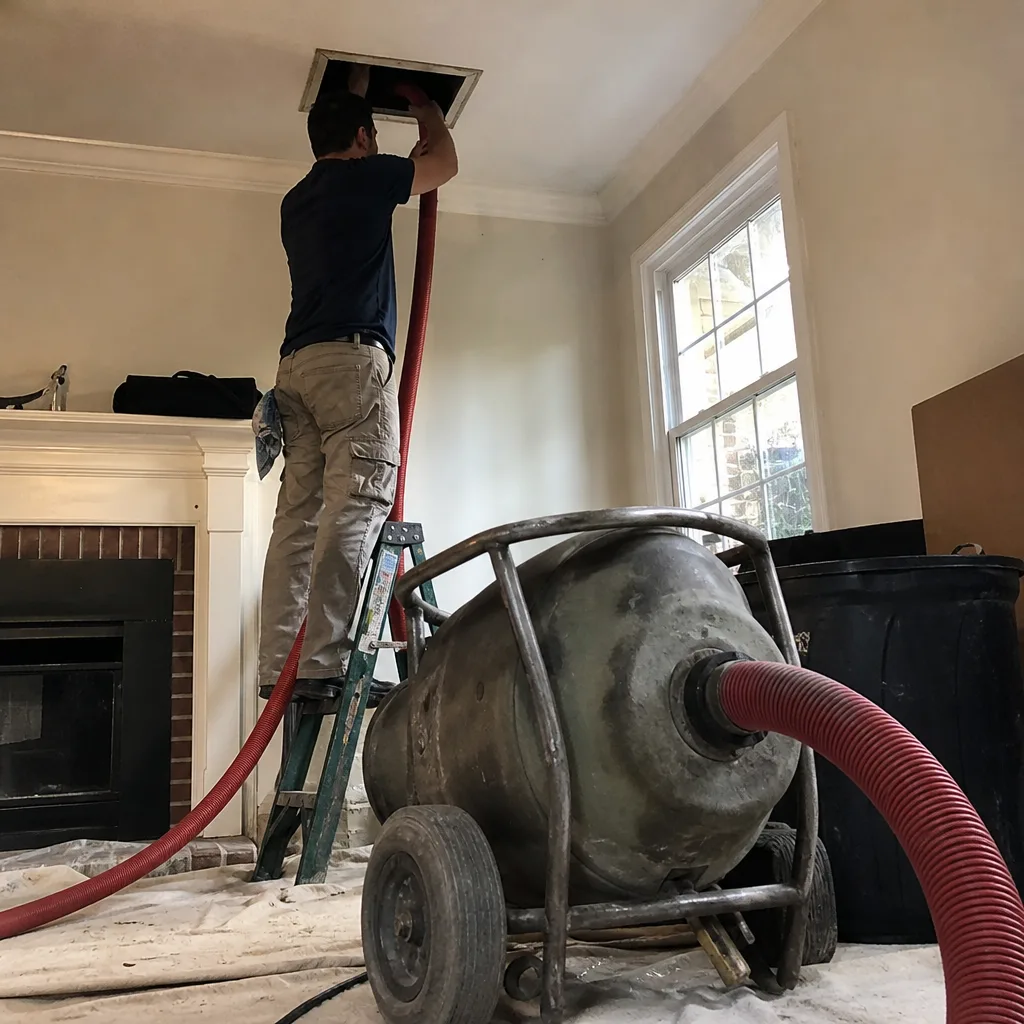 Before
 After
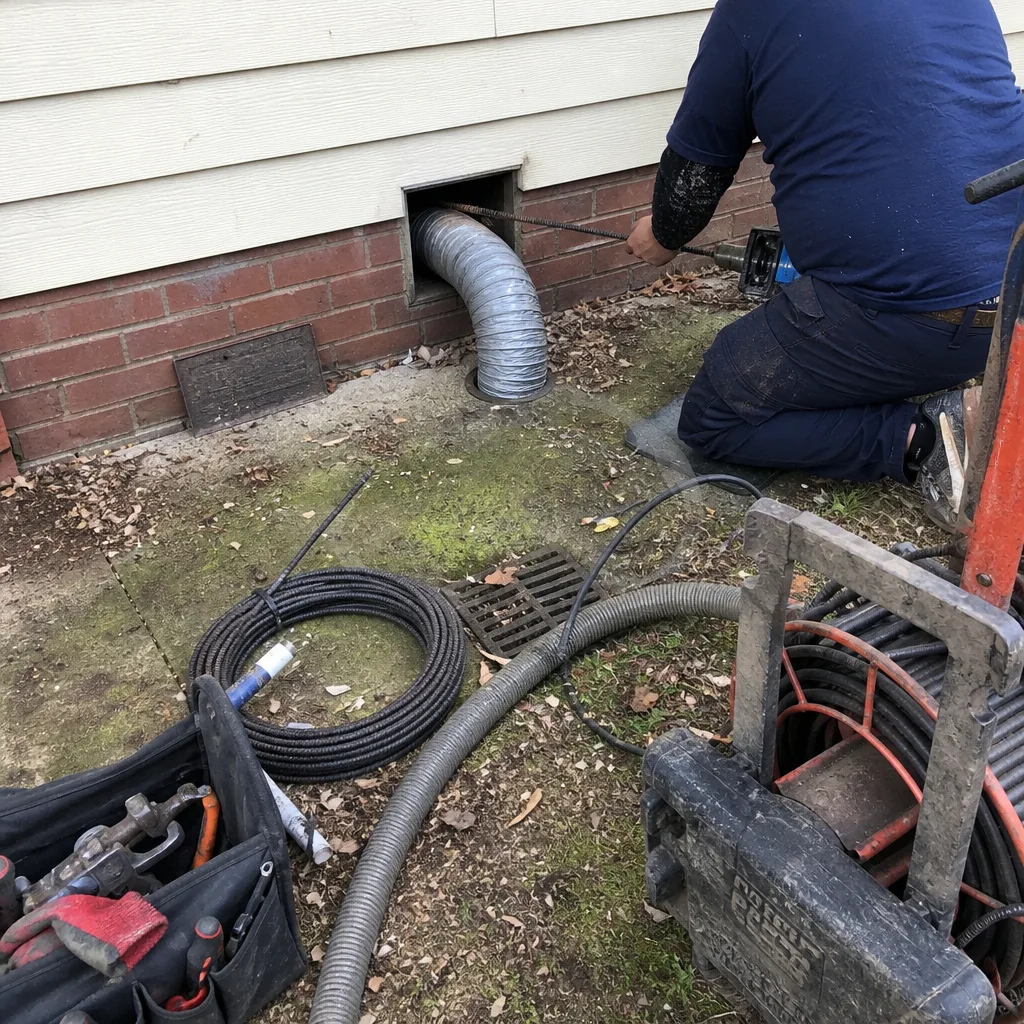 Before
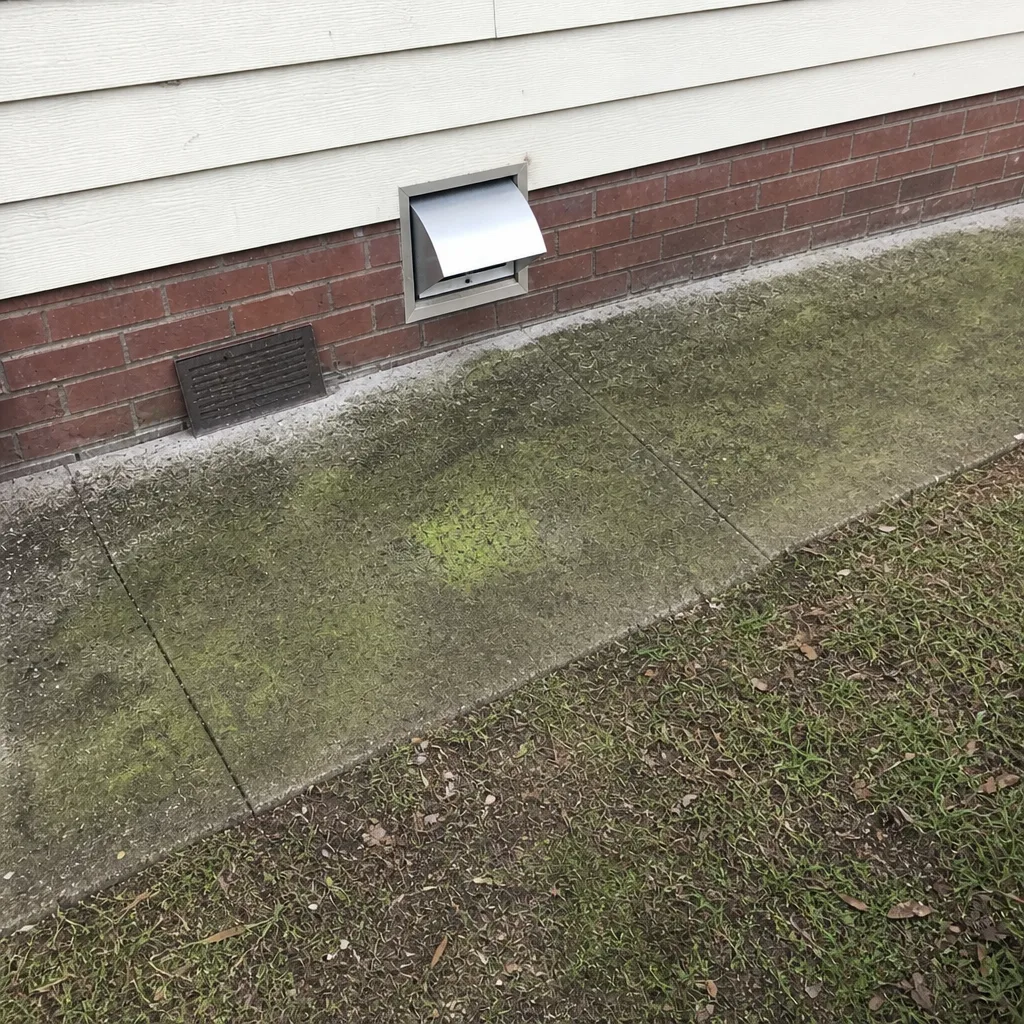 After
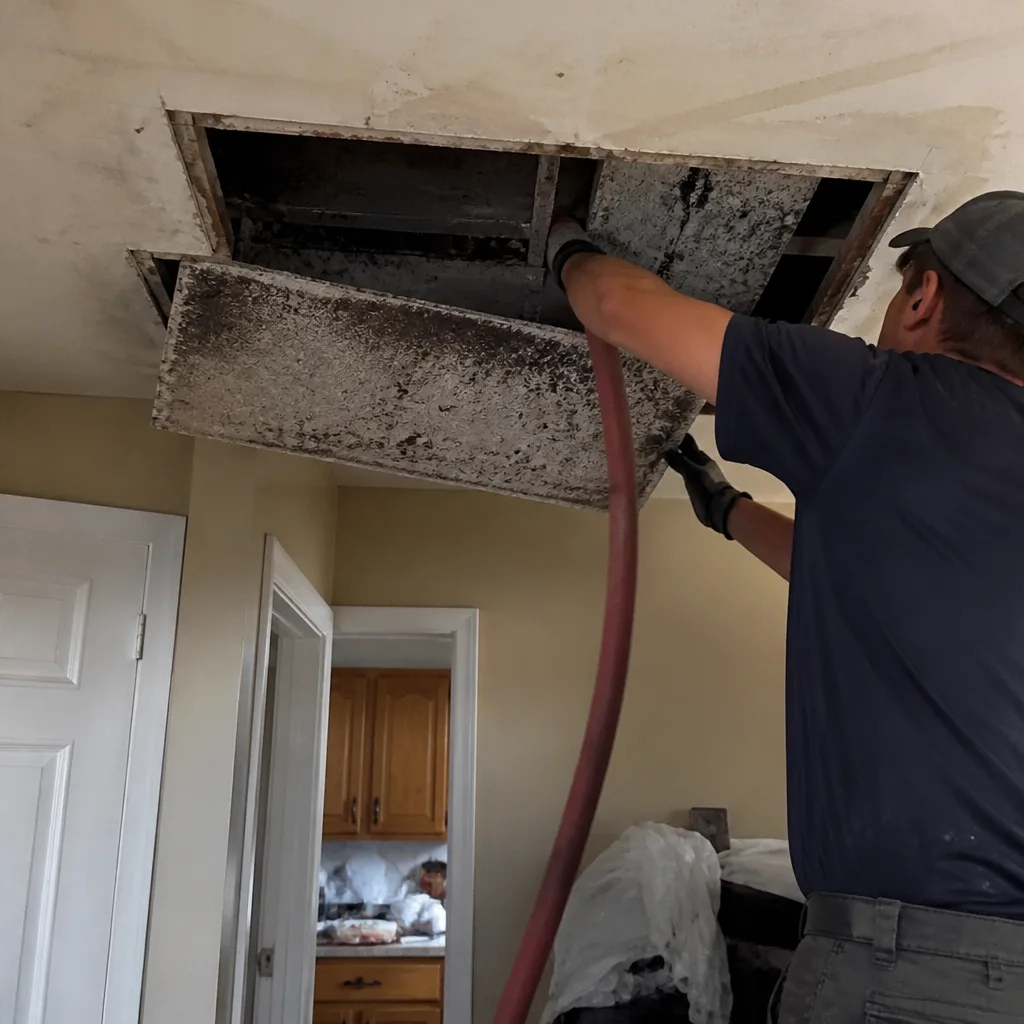 Before
 After
When to Call a Professional
Some issues genuinely need a trained eye and professional equipment. Call a duct specialist if your ducts have never been cleaned and you see visible dust streaking at registers, if there’s a persistent musty smell that hits when the system kicks on, if you’ve recently finished a renovation or roofing project, if one or two rooms have never received enough airflow, or if you’ve noticed flaking liner material at any register. Call an HVAC company if your entire house has weak airflow, if the system isn’t reaching temperature, or if you see ice or water at the indoor unit. And call a professional immediately if you find a disconnected duct inside a crawl space or attic, because the system is pulling unfiltered air into the living space every time it runs.
The team at Denali Air Duct Cleaning offers free estimates in Newport News. We can inspect, diagnose, and, when needed, repair or clean, all on the same visit. Our technicians have up to 11 years of experience, and the equipment we run on every job is commercial grade, from the Rotobrush rotary-brush system to the Abatement Technologies negative-air containment. Call (866) 942-7630 for an estimate. We answer 24/7. Fast dispatch from 7am to 7pm, Sunday through Friday.
Frequently Asked Questions
Because the musty smell is very often coming from the evaporator coil or the condensate drain pan, not the ducts themselves. The ducts are downstream of the coil, so if the coil is the source, cleaning the ducts leaves the smell in place. Have the coil cabinet inspected by an HVAC technician before booking a second cleaning. If you want a duct-specific diagnosis in Newport News, call (866) 942-7630. We answer 24/7, with fast dispatch from 7am to 7pm, Sunday through Friday, and estimates are free.
Check whether the symptom is about the quality or distribution of air in some rooms (duct-side) versus the temperature or behavior of the system across the whole house (HVAC-side). Weak airflow in one or two rooms, odor on startup, or dust at registers points to ducts. Weak airflow everywhere, short cycling, or the system not reaching setpoint points to equipment. The tissue test at each register sorts most cases in under ten minutes. If the answer is still unclear, call us at (866) 942-7630 for a free estimate and we’ll help you figure out what the next step should be.
On trunk lines and branch runs that pass through unconditioned attic or crawl space. Those areas see the widest temperature swings and the highest summer moisture, and interior duct liner in those runs degrades faster than anywhere else in the house. Homes here tend to show liner fraying at supply registers in upstairs bedrooms and rooms above the crawl space first. If you see fluffy material or film at a register, that’s the sign to look inside with a flashlight, and the sign to call for a proper inspection.
Yes, a visual check of the crawl space or attic with a flashlight is a reasonable first step and lets you describe the problem honestly over the phone. A pinched or flattened run, a flex duct sagging off its supports, or a run that pulls away easily at a collar are all findings you can identify. What a homeowner can’t do safely is crawl through a tight crawl space, reseal a disconnected run to code, or check liner that’s hidden behind insulation. If you find anything clearly wrong, call (866) 942-7630 for a free estimate.
Not always. Fast re-soiling is often caused by a leaking return duct drawing attic or crawl space air into the system, by a filter that’s undersized or the wrong MERV rating for the equipment, or by ongoing duct damage like a torn trunk. A second cleaning without finding the source just buys a few more months. The right move is a diagnosis, not a re-clean, so call (866) 942-7630 and ask for a duct assessment. We can check the returns, the flex runs, and the liner in the same visit.
Only sometimes. Many duct systems are simply soiled and clean up well with a proper rotary-brush clean and high-efficiency HEPA capture. But in older Newport News homes where ductwork has been added to, extended, or re-routed over the years, damage is common. Frayed liner, crushed flex runs, and disconnected joints are the routine repair finds. The honest answer is that a duct specialist should always look for damage before and after the clean, not just point a vacuum at the system. Our free estimate includes that inspection.
The Bottom Line
Most duct problems in Newport News fall into two very different categories, and the fix depends entirely on which one you’re dealing with. Duct-side problems respond to cleaning and repair. HVAC-side problems need an HVAC technician. Get the diagnosis right and money goes where it belongs. Get it wrong and you end up paying for a service that was never going to solve the actual problem. Use the register test, the return-air test, the filter check, the smell check, and the crawl space walkthrough to narrow the problem down. Look at your liner in humid months. And when in doubt, call a specialist who inspects before they quote and who can clean and repair on the same visit. That’s where the actual fix starts.
Getting Started
Every estimate is a chance to see what the system looks like before anyone commits to a scope. Call (866) 942-7630 for a free estimate on duct cleaning, duct repair, or dryer vent service in Newport News. We answer 24/7. Fast dispatch from 7am to 7pm, Sunday through Friday. Our technicians have up to 11 years of experience, we run commercial-grade equipment on every job, and we treat duct repair as a core service, not an upsell. When the diagnosis calls for another trade, we’ll tell you that directly. When it doesn’t, we’ll get the fix done.
Written by the team at Denali Air Duct Cleaning.