
Last updated November 15, 2026
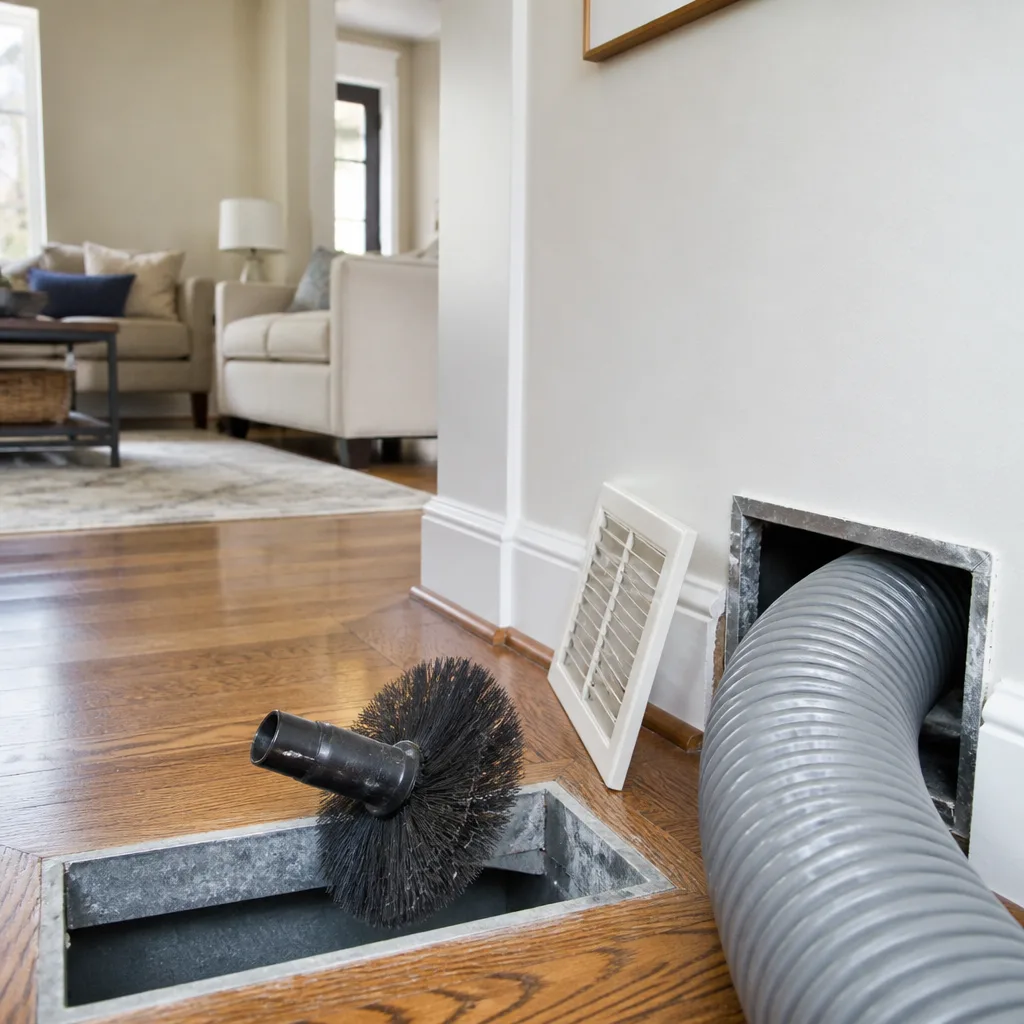 Whole-home duct cleaning
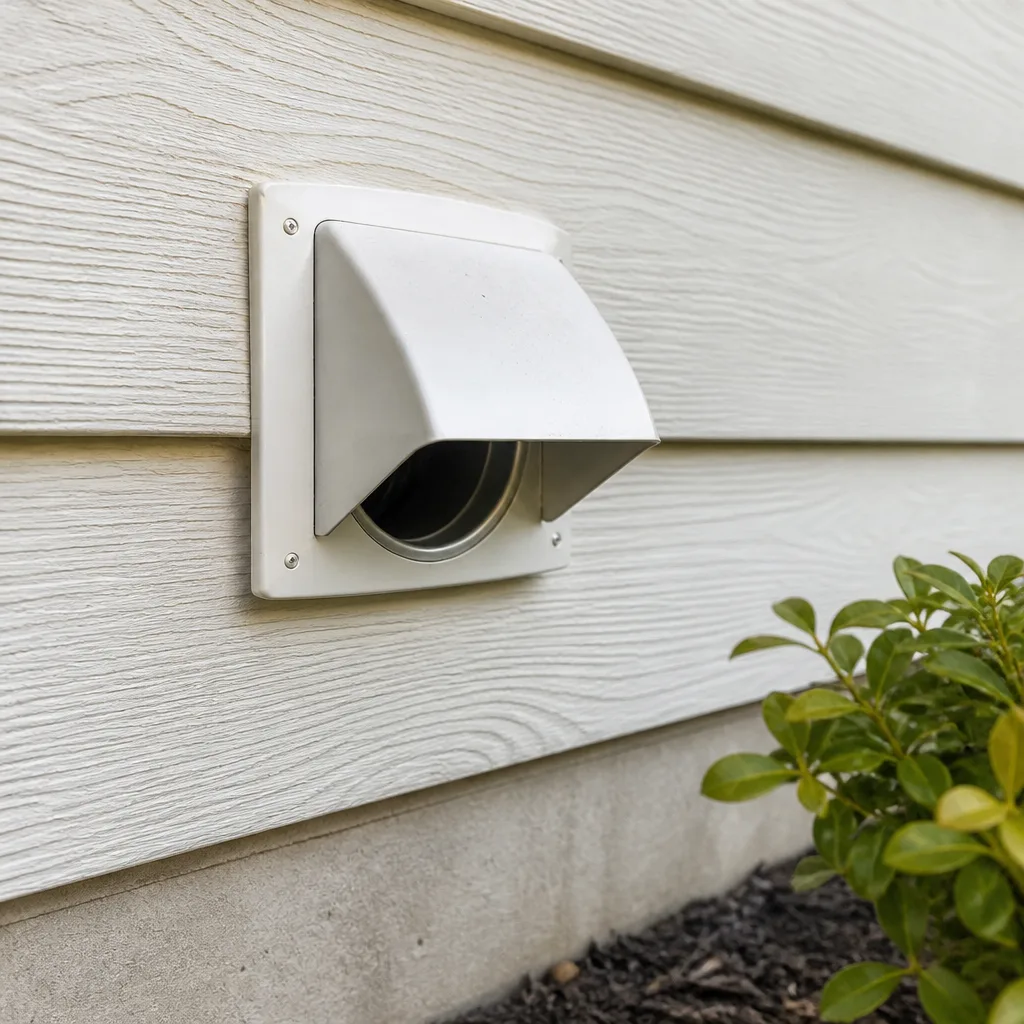 Dryer vent cleaning
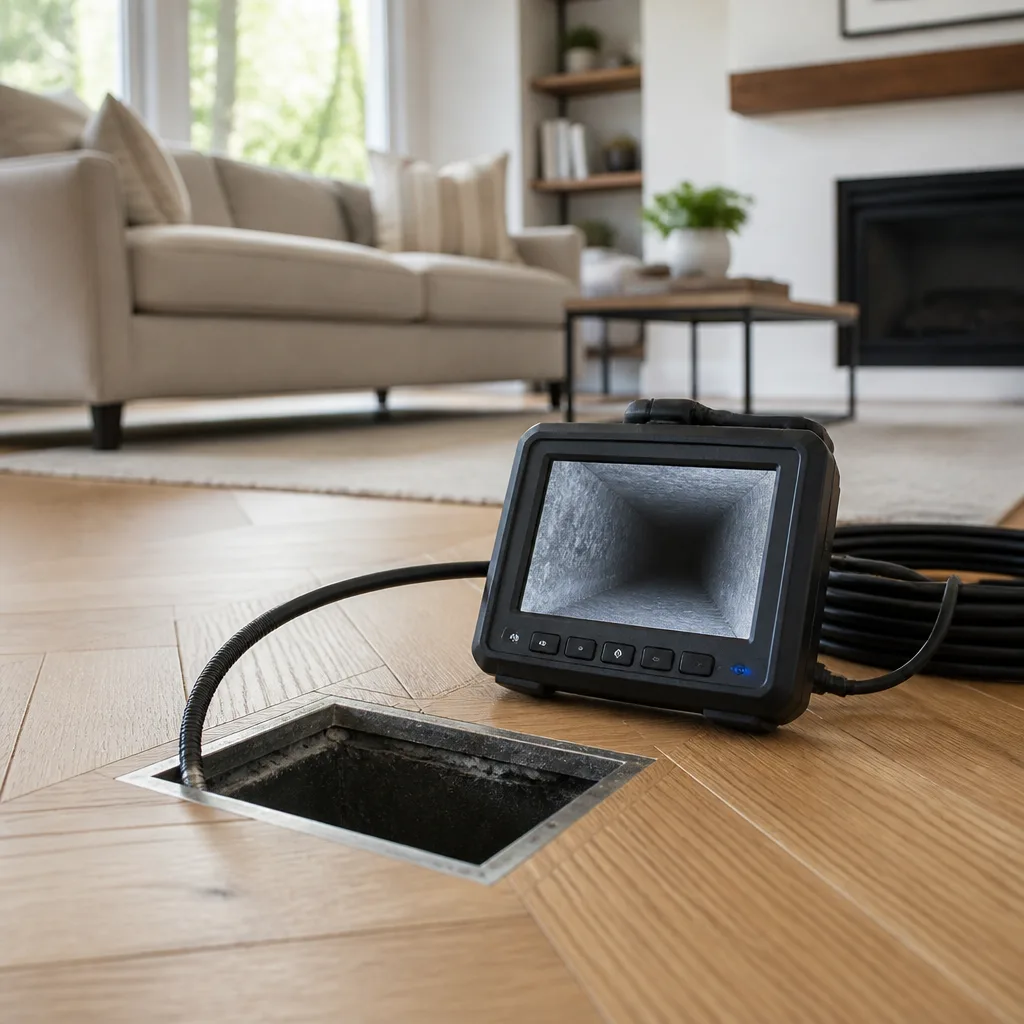 Camera inspection
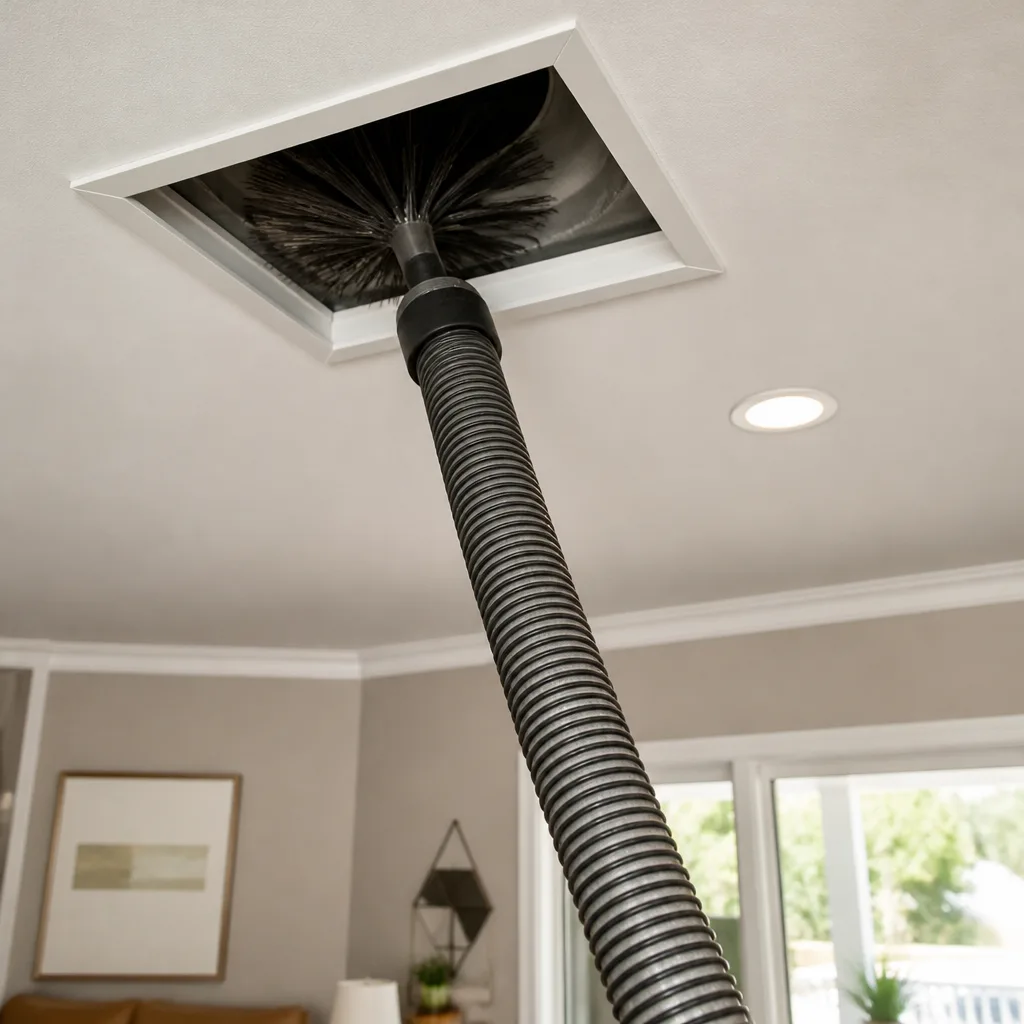 Sanitizing & deodorizing
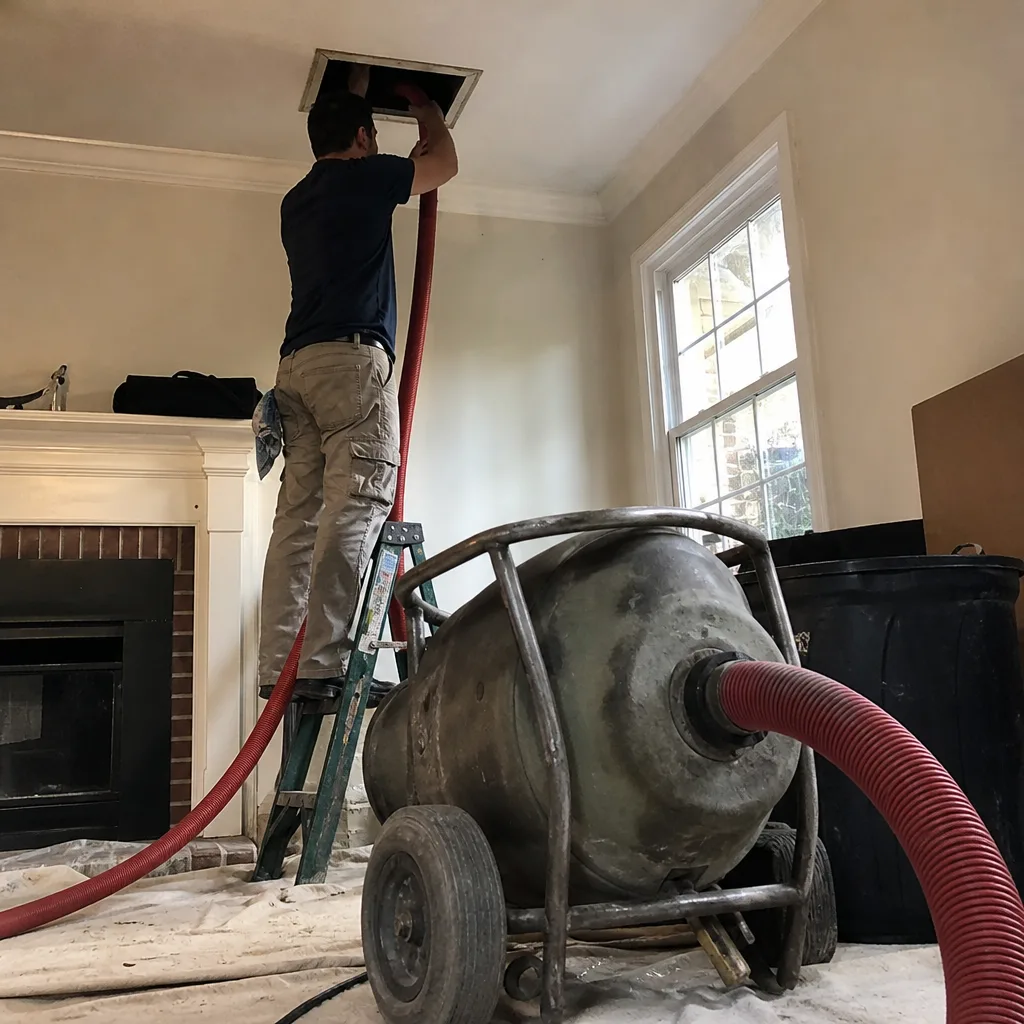
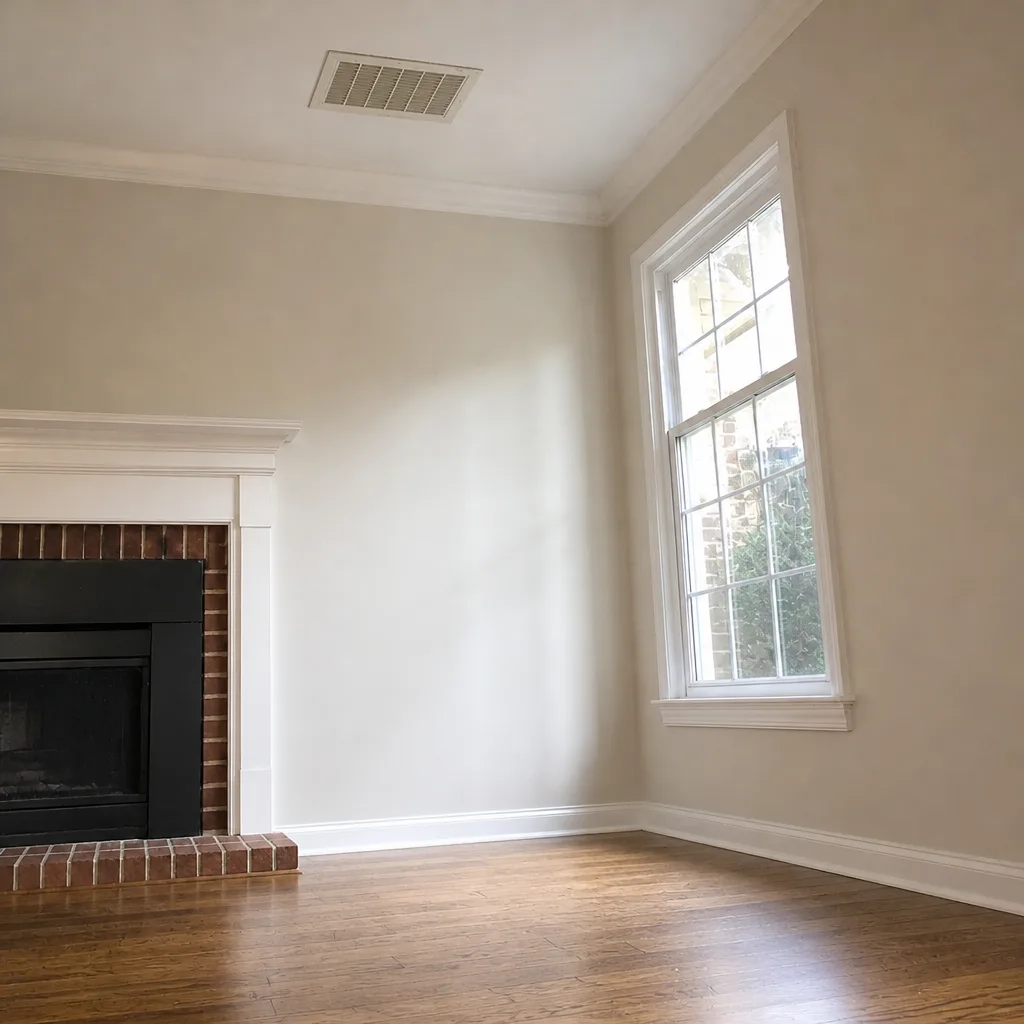
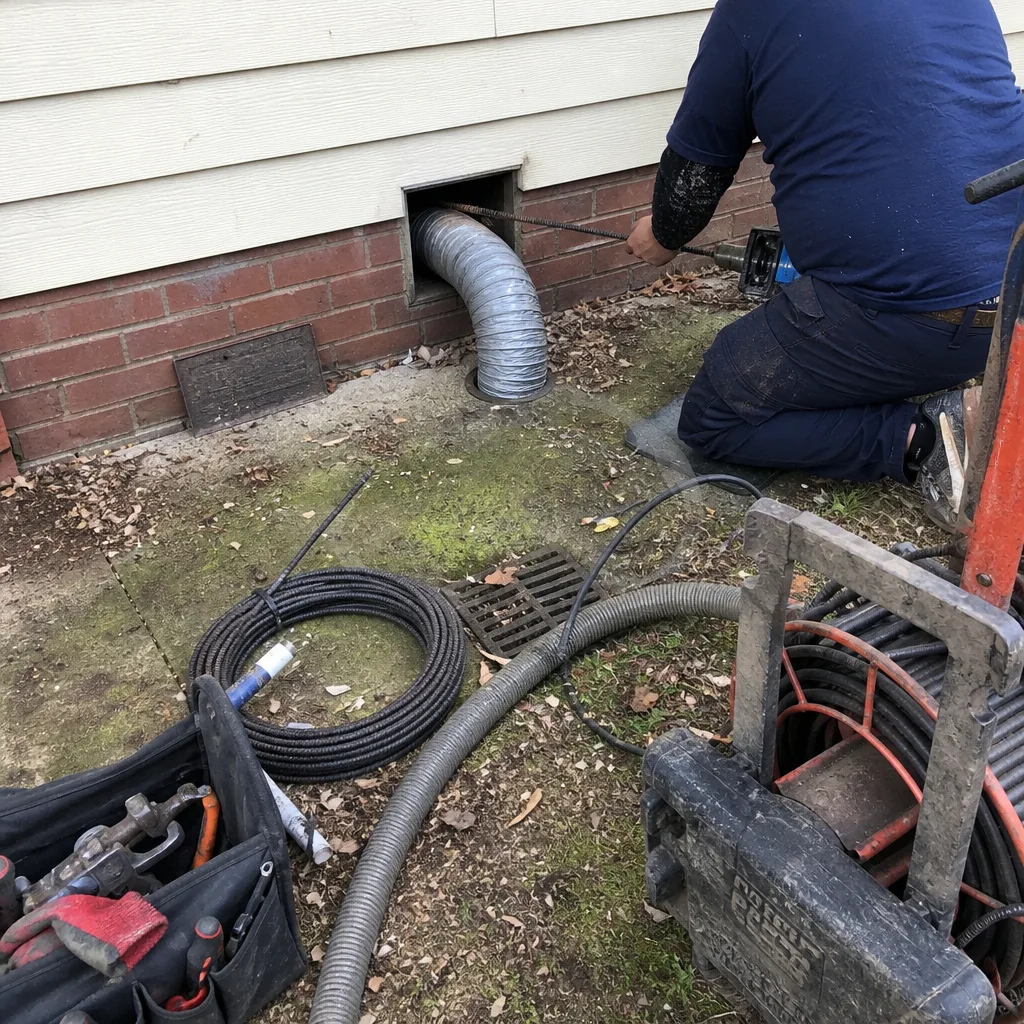
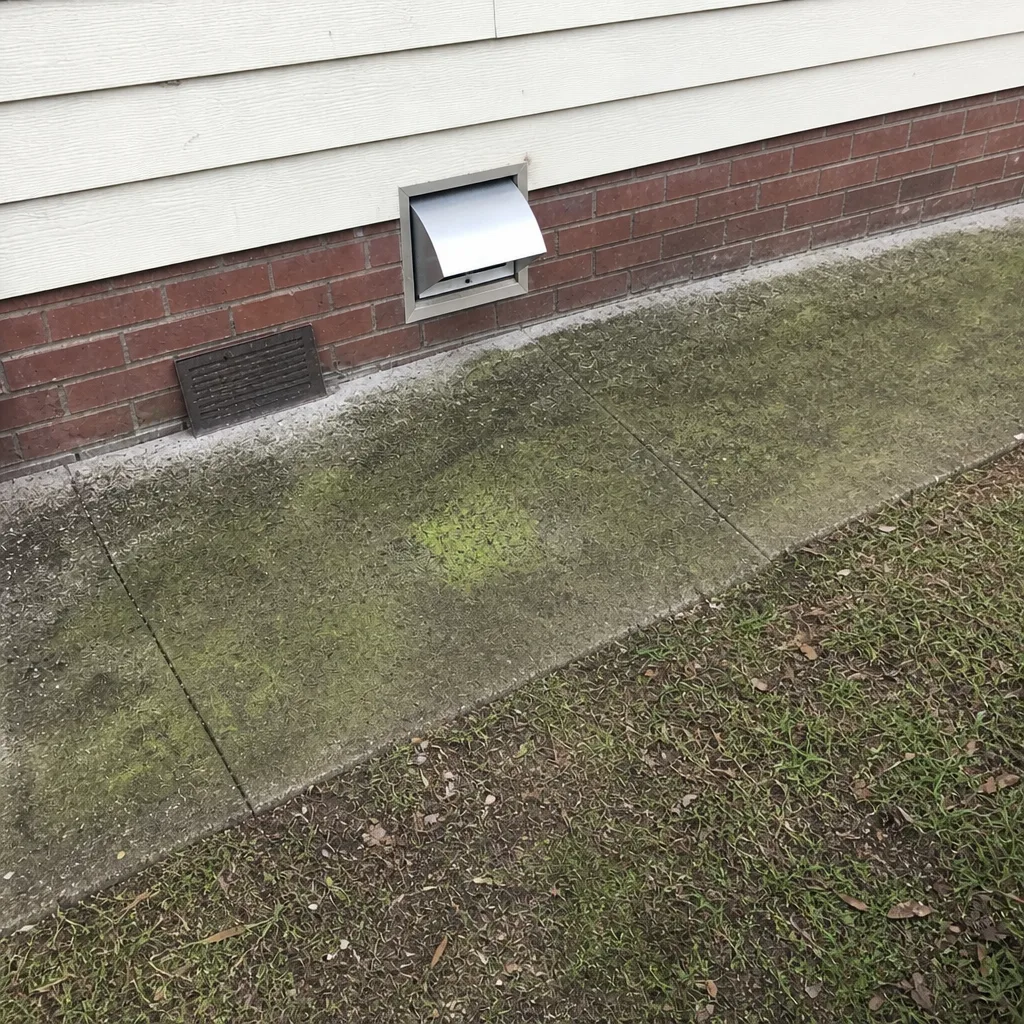
Whole-system duct and dryer vent check with before-and-after photos - you see exactly what came out of your vents
That "$99 whole-house special" is a bait ad - the real number appears once they are in your hallway, or the "clean" is a shop-vac at the register. We photograph the inside of your ducts before and after instead.
Air Duct Cleaning Warning Signs: A Newport News Homeowner’s Reference Guide
Visible dust on your supply registers is one of the least reliable signs that your ducts need cleaning. We’ve seen plenty of Newport News homes with spotless grilles and dirty trunks, and plenty with dusty grilles and clean interiors. The clue that matters isn’t the dust you can see sitting there. It’s the dust that comes out when the system kicks on, the smell that appears only in certain rooms, or the allergy symptoms that line up with your HVAC schedule rather than the pollen count.
This guide separates the signals that actually warrant action from the ones that are normal for a Hampton Roads home. You’ll learn how to test your own system with a paper towel, how to read three different odor patterns, how to tell airflow blockage from duct leakage, and what a recent renovation does to duct interiors. By the end, you’ll know what to check yourself and what to hand to a professional.
Quick Answer
The warning signs that most reliably point to dirty or compromised ducts are: dust actively discharging from registers when the blower starts, a musty or chemical smell that appears only when the system runs, uneven airflow that repeats room to room, visible debris or pest evidence at the grilles, and allergy symptoms that track your HVAC operation rather than outdoor pollen. Surface dust sitting on a register is usually normal. The test most homeowners skip is the discharge test, and it’s the one that actually tells you something.
Styles & brands we work with
- Whole-home duct cleaning
- Dryer vent cleaning
- Camera inspection
- Sanitizing & deodorizing
Table of Contents
- How to Test Your Ducts Yourself
- Dust Discharge vs. Normal Surface Dust
- Odor Diagnostics: What Each Smell Points To
- Airflow Imbalance: Blockage vs. Leakage
- Post-Renovation Warning Signs
- The Allergy Symptom Pattern That Points to Ducts
- When the Problem Is Duct Repair, Not Cleaning
- Dryer Vents: A Separate Safety Check
How to Test Your Ducts Yourself
Before you call anyone about air duct cleaning, run a ten-minute test that tells you more than a visual inspection of your registers. This is the discharge test, and it separates a home that needs scheduled cleaning from one that needs immediate attention.
Here’s the procedure:
- Turn the system off at the thermostat and let the blower come to a full stop.
- Press a clean white paper towel flat against the face of a supply register.
- Turn the system back on and hold the towel in place for thirty seconds.
- Pull the towel away and examine the side that faced the register.
- Repeat on two or three registers in different rooms, including one in the room where you spend the most time.
What you’re looking for is a visible film, a speckled spray, or a grey shadow that wasn’t there before the blower started. That’s dust being actively discharged, and it means the ducts are holding loose debris that the airflow is lifting and pushing into the room. A towel that comes away clean after thirty seconds is a strong signal the ducts aren’t the source of your dust complaints.
The second part of the test is the paper-towel settle check. Lay the same towel on a shelf or a piece of furniture in a room, leave it for a week without running the HVAC, and see how much dust settles. Then run the same test with the system on its normal schedule. If the system-on week produces noticeably more dust, you’ve isolated the ducts as a contributor. If both weeks look similar, the dust is likely coming from occupancy, open windows, or a filtration problem at the return.
In our experience across Newport News, that discharge test catches more real problems than any photograph of a dirty grille ever will. Register surfaces collect dust from the room itself, not from the duct behind them, so a dusty grille alone doesn’t tell you anything.
Dust Discharge vs. Normal Surface Dust
Every home has dust on its registers. Dust settles from the air in the room, and the grille of a supply register is a natural landing spot because the air moves past it. That’s the normal version, and it doesn’t mean your ducts are dirty.
The abnormal version looks different once you know where to look:
- Discharge dust appears on a clean surface within seconds or minutes of the blower starting. It looks like a fine grey mist or a speckled pattern.
- Surface dust builds up over weeks. Wipe a register clean and check it again in a few days; if it’s still clean, you’re dealing with surface dust.
- Discharge debris includes visible particles larger than dust, like tiny flakes, fibres, or grit. These come from inside the duct or from break-down products of the duct’s own materials.
- Smudge streaks running outward from a register frame mean air is escaping around the boot rather than through the grille, which is a seal issue, not a cleaning issue.
The distinction matters in Newport News because so much of the local housing stock mixes older ductwork with newer systems. A duct system installed decades ago and later fed by a more powerful blower can move more air than the original duct was designed for. That extra pressure pushes dust out through every loose joint, and the symptom looks like dirty ducts when it’s really pressure against aging seams.
One quick test to distinguish them: seal a register with a clean sheet of plastic taped around the edges, run the system, and see if the plastic bulges outward. If it does, that register is under positive pressure from the blower, and any dust behind it will be driven into the room. If it doesn’t, the register is likely on a return or is supply-limited.
None of this requires tools or an inspection. It requires a clean surface, a few minutes, and a willingness to write down what you see. If you want the fuller checklist for the area, we cover the schedule and the local detail on our Newport News page.
Odor Diagnostics: What Each Smell Points To
The nose is the most under-used diagnostic tool in home maintenance, and duct odors come in patterns. Three categories matter, and they don’t point to the same thing.
Musty or damp smells
A musty odor is the classic sign of biological growth in a moist environment. In a duct system, that usually means condensation is collecting somewhere it shouldn’t. Look for the cause, not just the smell: a leaking evaporator coil, a disconnected duct running through an unconditioned space, or a return that pulls air from a damp basement or crawlspace. A duct cleaner can clean the duct, but if the moisture source is still active, the smell returns. The work worth doing first is finding the wet spot.
This deserves prompt attention because ongoing moisture can damage duct insulation and interior lining, and it can affect indoor air quality across the whole house. It’s worth acting on quickly rather than waiting.
Burning or hot smells
A burning smell that appears only when the system kicks on is the most urgent of the three. It can point to a failing blower motor, an overheating electrical component, or friction between a moving part and the duct. Turn the system off and don’t restart it until someone has looked at it. A burning smell from a heat pump or furnace can also signal a heat-side issue, and that’s outside the scope of duct cleaning entirely. For gas heat, this is the moment to involve a licensed HVAC technician, not a duct specialist.
Chemical or solvent smells
A chemical smell often arrives after a renovation or a new installation. Adhesives, sealants, paint, and foam insulation all off-gas for days or weeks. If the smell is stronger in some rooms than others and follows the system’s operation, the ducts are pulling those compounds from construction areas and distributing them. That’s a ventilation issue. It’s also why post-renovation duct cleaning in Newport News is usually done after the dust has fully settled rather than during the work.
Our rule of thumb: a smell that only appears when the system runs is a duct or system problem. A smell that’s present whether or not the system runs is a room problem. Start with that distinction.
Airflow Imbalance: Blockage vs. Leakage
Weak airflow in some rooms and strong airflow in others is a classic complaint that’s often blamed on dirty ducts. In our experience, it’s more often a duct leakage or design problem. The two look almost identical to a homeowner, but they have different causes and different fixes.
Here’s how to tell them apart. Start by checking the static pressure at the air handler. A licensed technician can measure it in a few minutes, but a homeowner can get most of the way there with a simple observation:
- Blockage signs: weak airflow on every register served by one branch, but strong airflow at the return. That points to a restriction inside the duct run, not to the whole system. Dirty coils, crushed flex duct, or a closed damper are common causes.
- Leakage signs: weak airflow on only some registers even though the trunk feels pressured, plus dust streaks at seams or a whistle at high fan speeds. Leaks in a duct running through a conditioned space pull room air in; leaks in an attic or crawlspace pull unconditioned air in.
- Design signs: the same room is always weak, and it has been since the house was built or the system replaced. That’s not a cleaning problem at all.
In Newport News, this matters because a lot of the older housing stock has been re-ducted, added onto, or retrofit with a larger system without upgrading the ductwork to match. When a modern blower gets fed into 1980s trunk lines with loose joints and no mastic, the result is a system that leaks before it delivers. Cleaning those ducts helps, but it won’t fix the imbalance. That’s where a real duct repair conversation begins.
The practical test: close the register in the strong room. If the weak room gets noticeably stronger, the trunk is being starved. If not, the problem is downstream of that room, and you’re looking at a leak, a kink, or a restriction in the branch ducting rather than a cleaning issue.
Post-Renovation Warning Signs
Newport News has an active remodeling market, and renovations are the single most common trigger for duct contamination in the homes we work in. Drywall dust is fine enough to pass through most standard filters, and it settles into the duct runs it drifts into. Fiberglass particles behave similarly. Both can coat duct interiors and reduce system efficiency, and both are difficult to remove without professional agitation.
Signs that a renovation has left its mark on your ducts:
- Persistent white dust on horizontal surfaces after the contractor has finished clean-up and the drywall has cured.
- A dry, chalky smell in specific rooms when the system runs, often strongest in the rooms nearest the kitchen or bath remodels.
- Visible white film inside return grilles that were not sealed during construction.
- New allergy-type symptoms that began within a month of a renovation and worsen when the HVAC runs.
- A whistling noise at supply registers after a renovation, which points to debris partially blocking duct branches.
- Fiberglass specks in a paper towel discharge test, which is the strongest indicator that insulation has been disturbed and debris is now in the airflow.
Professional duct cleaning after a renovation is a different job from routine maintenance. It’s not just “clean out the dust.” It’s an extraction job that has to remove fine particulate that has adhered to duct walls, and it’s why the equipment matters. Our team runs Rotobrush rotary-brush systems to agitate material loose from the duct walls, paired with Nikro HEPA-rated vacuums that capture dislodged debris at the source rather than recirculating it. For post-renovation work we also use Abatement Technologies negative-air equipment, which holds the work area to a containment standard similar to what’s used in professional remediation. The goal is simple: the debris leaves the house, not the room.
If the renovation is still underway, have the supply registers and returns sealed with painter’s tape and plastic before drywall sanding begins. That one step saves a lot of cleaning later. If the renovation is already done, book the cleaning after the final sanding but before you move furniture back in.
The Allergy Symptom Pattern That Points to Ducts
Allergies are the hardest warning sign to read because so much of the landscape contributes to symptoms. In Newport News, pollen season hits hard, and outdoor allergens flood the area for months. The key variable in telling duct contamination from outdoor exposure isn’t where you are. It’s timing relative to the HVAC system.
Look for these patterns:
- Symptoms that improve outdoors, not indoors. When a person feels worse inside a specific building than outside it, the indoor environment is the likely source.
- Symptoms tied to blower operation. Notice if symptoms appear within 20 to 30 minutes of the HVAC kicking on and fade when it cycles off. That’s the pattern of particles being dispersed by air movement.
- Symptoms concentrated in one room. If one bedroom is worse than the rest of the house, the branch serving that room is the place to look.
- Post-renovation onset. New symptoms that began during or after construction often track the drywall dust that settled into the ducts.
- Seasonal mismatch. Symptoms that peak when pollen counts are low but HVAC use is high point away from outdoor allergens.
The distinction is not purely academic. If the pattern points to outdoor allergy, the fix is a filter strategy and a discussion with an allergist. If the pattern points to duct contamination, the fix is cleaning and possibly a repair, plus consideration of filtration and air-quality upgrades. Aprilaire and Honeywell indoor air-quality solutions are the two we work with most often for post-cleaning upgrades, and the right starting point depends on what the symptom pattern tells us.
It’s also worth noting that some symptoms aren’t an allergy story at all. If you’re getting headaches, cough, or throat irritation only in one building, and it’s persistent, don’t self-diagnose. Get it checked by a medical professional, and separately get the ducts inspected.
When the Problem Is Duct Repair, Not Cleaning
Not every duct issue is a cleaning issue. Some of the warning signs we’ve covered are actually repair warnings, and treating them as a cleaning job wastes money and leaves the problem in place.
Signs that point to repair rather than cleaning:
- Visible tears, holes, or separated joints in exposed ductwork, usually in a basement, crawlspace, or attic.
- Crushed or kinked flexible duct behind a wall or at a tight turn, which restricts airflow even when the duct is clean.
- Duct tape failure at seams, a common issue because standard cloth-back duct tape has a limited lifespan and eventually releases.
- Air blowing out of a joint instead of reaching the room, detectable with the plastic sheet test.
- Disconnected duct runs that no longer deliver air to a register at all, even on full blower speed.
In our experience across Newport News, the disconnected duct behind a wall is the one homeowners miss. It doesn’t smell, doesn’t look dirty, and the room just stays cold or hot. A duct cleaning visit that doesn’t include a repair capability will document the problem and leave it in place. That’s the reason our duct repair work is treated as a core service rather than a follow-up visit, and why our team runs all three services (air duct cleaning, dryer vent cleaning, and duct repair) under the same roof.
If your system has been running with a disconnected duct for a while, the duct itself has likely pulled unfiltered air from a crawlspace or attic and needs cleaning whether or not it looks dirty. Repair and cleaning usually go together on the same visit. If a duct is disconnected, tape it, clean it, and reconnect it in the right order, which is: repair, clean, seal, then re-test for airflow.
Dryer Vents: A Separate Safety Check
Dryer vent cleaning is a different job from duct cleaning, with a different risk profile. We treat it as fire-prevention work rather than maintenance, and the warning signs look different from duct signs.
Watch for:
- Clothes that take longer than one cycle to dry, especially if that’s a change from how the dryer used to behave.
- The dryer cabinet or the wall behind it feeling hot to the touch after a cycle.
- A burning smell or a smell of hot lint from the dryer or vent area.
- Lint visible around the exterior vent hood, or a vent flap that no longer opens fully.
- The dryer shutting off mid-cycle, especially with an error code that suggests overheating.
If you’re seeing any of these, stop using the dryer until the vent is cleaned. Dryer lint fires are one of the most common home fire causes, and a vent that has lost airflow is a fire that only needs heat and time. dryer vent cleaning is a job worth doing on a schedule, not just when the warning signs appear.
This matters in Newport News because the same renovation dust that coats ductwork can also coat the dryer vent if the vent runs are exposed. A post-renovation check covers the dryer vent at the same time as the ducts.
Common Mistakes to Avoid
- Judging the ducts by the registers. A dusty supply grille usually means dust from the room, not from the duct. Test with the paper towel before you spend money.
- Assuming every musty smell is the duct’s fault. A duct that’s been cleaned and still smells is sniffing out moisture somewhere else, so look for a wet crawlspace, a leaking coil, or a disconnected run before booking another cleaning.
- Ignoring a burning smell as “just dust burning off.” A one-time smell on a first start-up of the season is normal. A smell that appears on every cycle is not, and it needs a professional look before the system runs again.
- Skipping the paper-towel settle test. Without a baseline, you can’t tell whether the ducts actually are contributing to household dust or whether the source is elsewhere.
- Cleaning ducts after a renovation without addressing filtration first. A fresh filter is cheaper than a cleaning, and it catches new drywall dust before it settles. Change it out before the final sanding.
- Confusing a disconnected duct with a dirty duct. A room that never warms or cools when the system runs is a repair issue, and cleaning won’t change it.
- Using a generalist HVAC company for what’s really a duct cleaning job. The question isn’t who will take the job at the lowest price. It’s who can actually get the debris out of the duct on this visit, and whether they can repair a problem they find. Ask what equipment they’ll use before you book.
See the difference
 Before
 After
 Before
 After
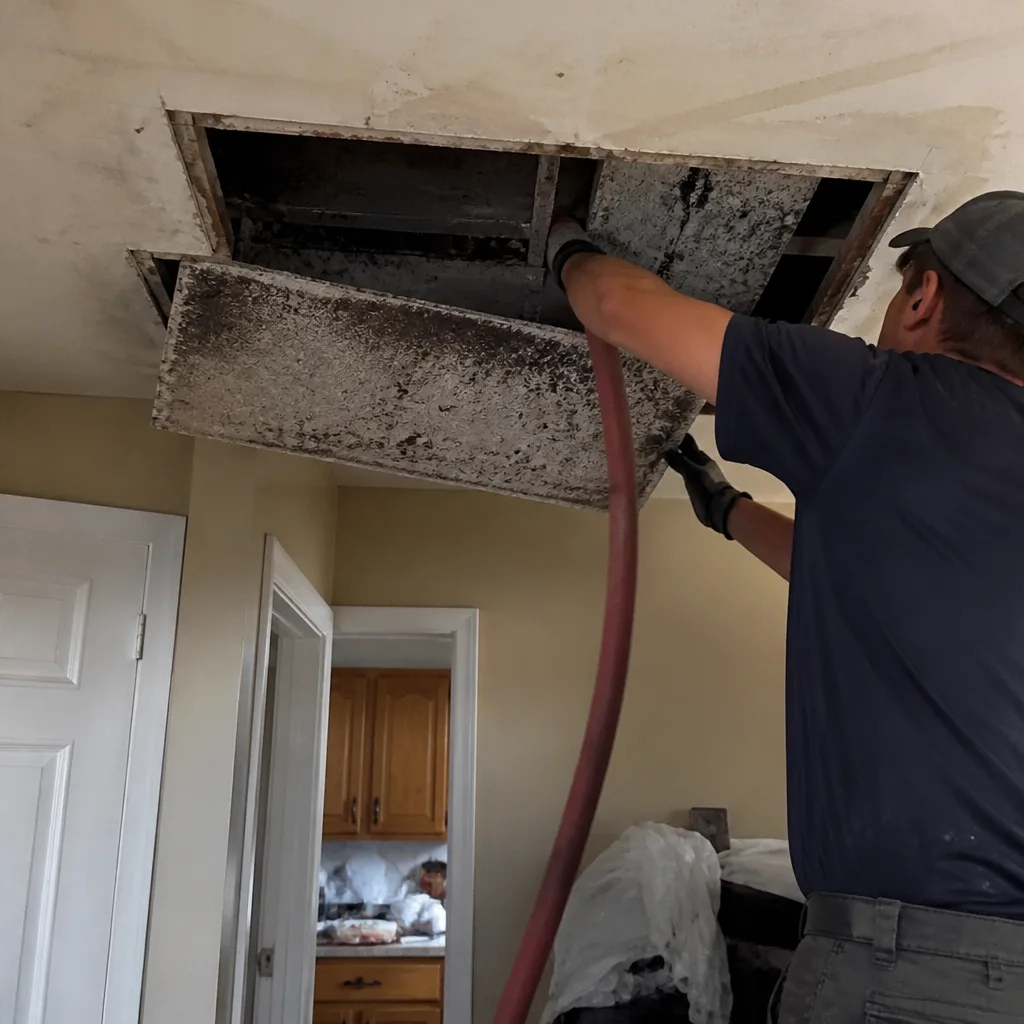 Before
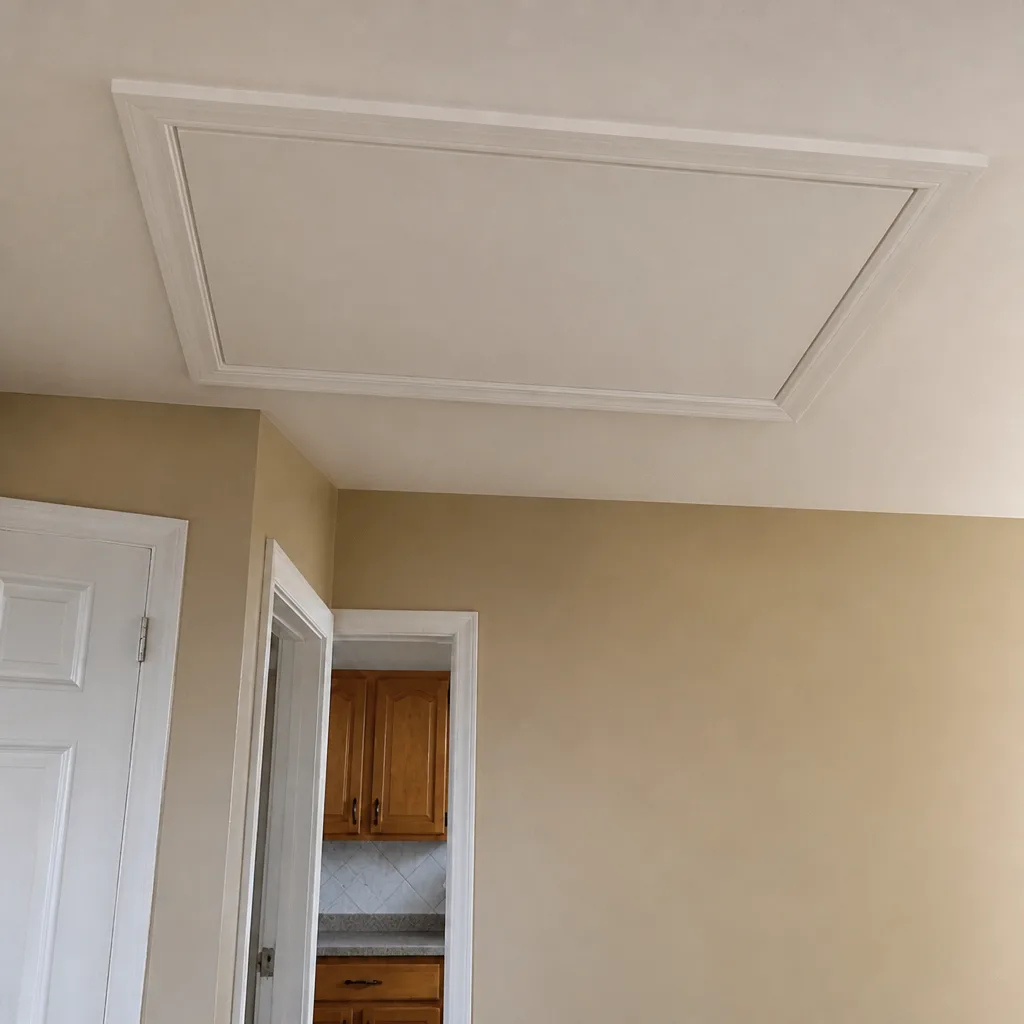 After
When to Call a Professional
Some signs are safe to monitor and some need a call. If your paper-towel test shows active discharge, if a musty or chemical smell only appears when the system runs, if one room’s airflow never matches the rest of the house, if you’ve just finished a renovation, or if you’re seeing allergy symptoms tied to HVAC operation, it’s time to have the system looked at by someone with the right equipment. Our technicians have up to 11 years of experience reading these patterns in Hampton Roads homes, and our team runs the same Abatement Technologies negative-air equipment used in higher-containment work so dislodged debris is captured at the source.
Denali Air Duct Cleaning offers free estimates in Newport News. Call (866) 942-7630 for a written estimate. We answer 24/7. Fast dispatch from 7am to 7pm, Sunday through Friday.
Frequently Asked Questions
Most homes need cleaning every three to five years, but the schedule depends on what’s happening in the house rather than the calendar. A home with pets, recent renovations, or a habit of running the system with a clogged filter may need it sooner. A home with none of those factors and a well-sealed duct system may go longer. The paper-towel discharge test is a better annual check than a fixed schedule. Call (866) 942-7630 for an exact quote. Estimates are free.
Cheap quotes often skip the equipment that actually removes debris. A portable vacuum pushed around by one person can lift dust off the register face and leave the duct walls untouched, which is why a low price and a short visit tend to arrive together. When you compare quotes in Newport News, ask what equipment will be used on the job and whether the technician can agitate debris from the duct walls before vacuuming. Our team runs Rotobrush rotary-brush systems with Nikro HEPA-rated vacuums so the material is loosened first and captured second. Call (866) 942-7630 for an exact quote. Estimates are free.
Ask for before-and-after photos of your own ducts, not stock images. A professional job photographs the trunk and the branch runs before and after cleaning, and it’s a reasonable ask in the quickest conversation. Ask also what equipment was used and how long the vacuum ran. If those questions can’t be answered, the job probably didn’t amount to what was promised. Call (866) 942-7630 for an exact quote on a job that comes with its own photographs. Estimates are free.
Usually no. Dust settles on register faces from the room itself, and a grille that looks dirty after a few months of ordinary living is not a sign of duct contamination. The reliable test is the paper-towel discharge check: hold a clean towel against the register, turn the system on, and see if new dust appears within thirty seconds. If it does, that’s a sign worth acting on. If the towel stays clean, the ducts likely aren’t the source. Call (866) 942-7630 for an exact quote on a diagnostic visit. Estimates are free.
Yes, in most cases. Drywall dust and fiberglass particles are fine enough to pass standard filters and settle into duct interiors, and they reduce system efficiency when they coat the surfaces. The right timing is after the final sanding and before furniture goes back in. In our experience across Newport News, the post-renovation homes we see most often have dust driven in through supply registers that were left unsealed during the work. Call (866) 942-7630 for an exact quote on a post-renovation cleaning. Estimates are free.
Only if the moisture source is identified and corrected first. Cleaning removes the material that smells, but a damp crawlspace, a leaking coil, or a disconnected duct running through an unconditioned space will re-contaminate the duct in a matter of weeks. Fix the moisture problem, then clean. If the smell remains after a cleaning, look at the source before booking another visit. Call (866) 942-7630 for an exact quote on combining a moisture check with the cleaning. Estimates are free.
Dirty ducts make the air that reaches your registers more particle-heavy. Leakage means the air isn’t reaching the register in the first place, because some of it is escaping through a joint, a tear, or a disconnected run. Dirty ducts show up in the paper-towel test. Leakage shows up as a room that’s always weak on airflow. The two can exist in the same home, and fixing them is a different job for each. Call (866) 942-7630 for an exact quote on a duct repair or cleaning visit. Estimates are free.
The Bottom Line
Dust on your registers is the wrong signal. What actually tells you something is dust that discharges when the blower starts, a smell tied to HVAC operation, uneven airflow that repeats in the same rooms, a recent renovation, or allergy symptoms that track your system rather than the pollen count. Run the paper towel test before you call anyone. If the signals line up, book a professional cleaning that names its equipment and can also handle repair and dryer vent work, since all three problems often live in the same house. Our team at Denali Air Duct Cleaning runs Rotobrush, Nikro, and Abatement Technologies equipment so the debris leaves the house rather than recirculating into the room.
Written by the team at Denali Air Duct Cleaning.