
Last updated November 15, 2026
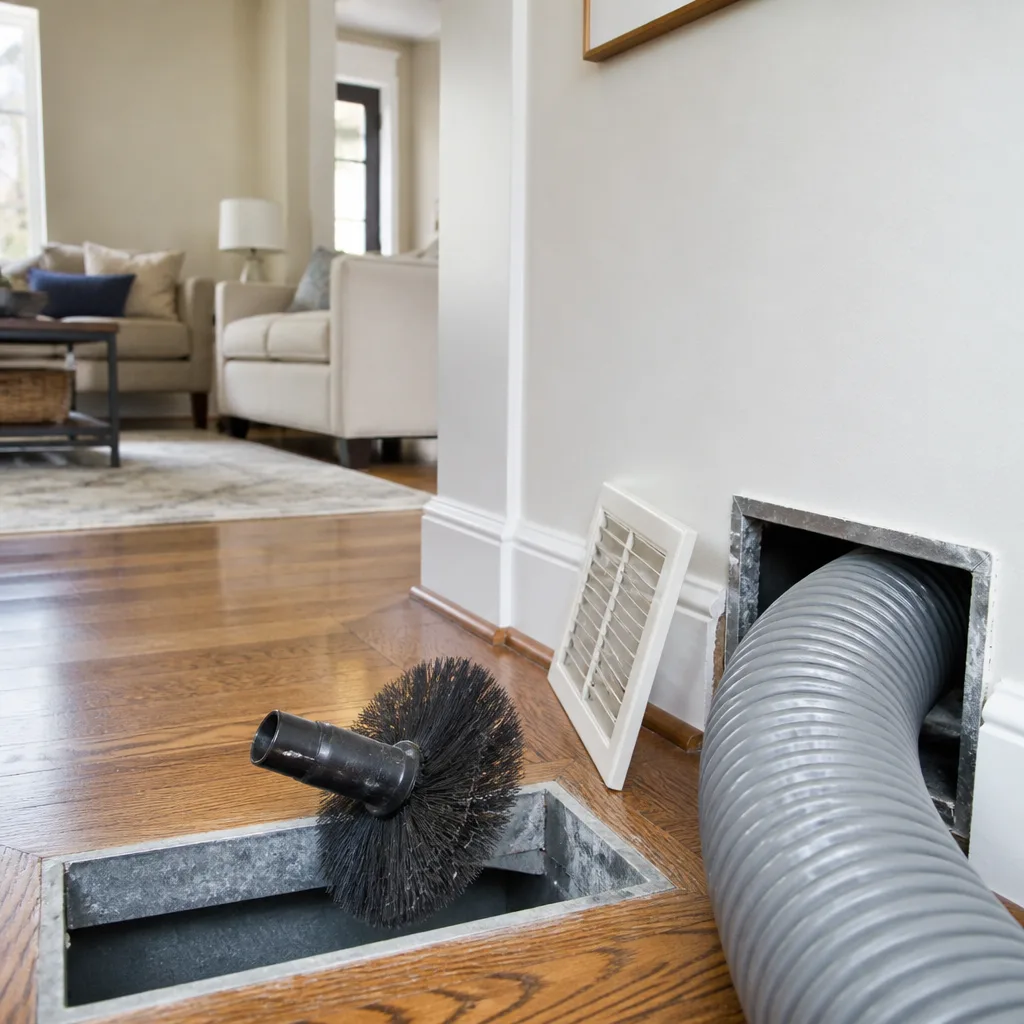 Whole-home duct cleaning
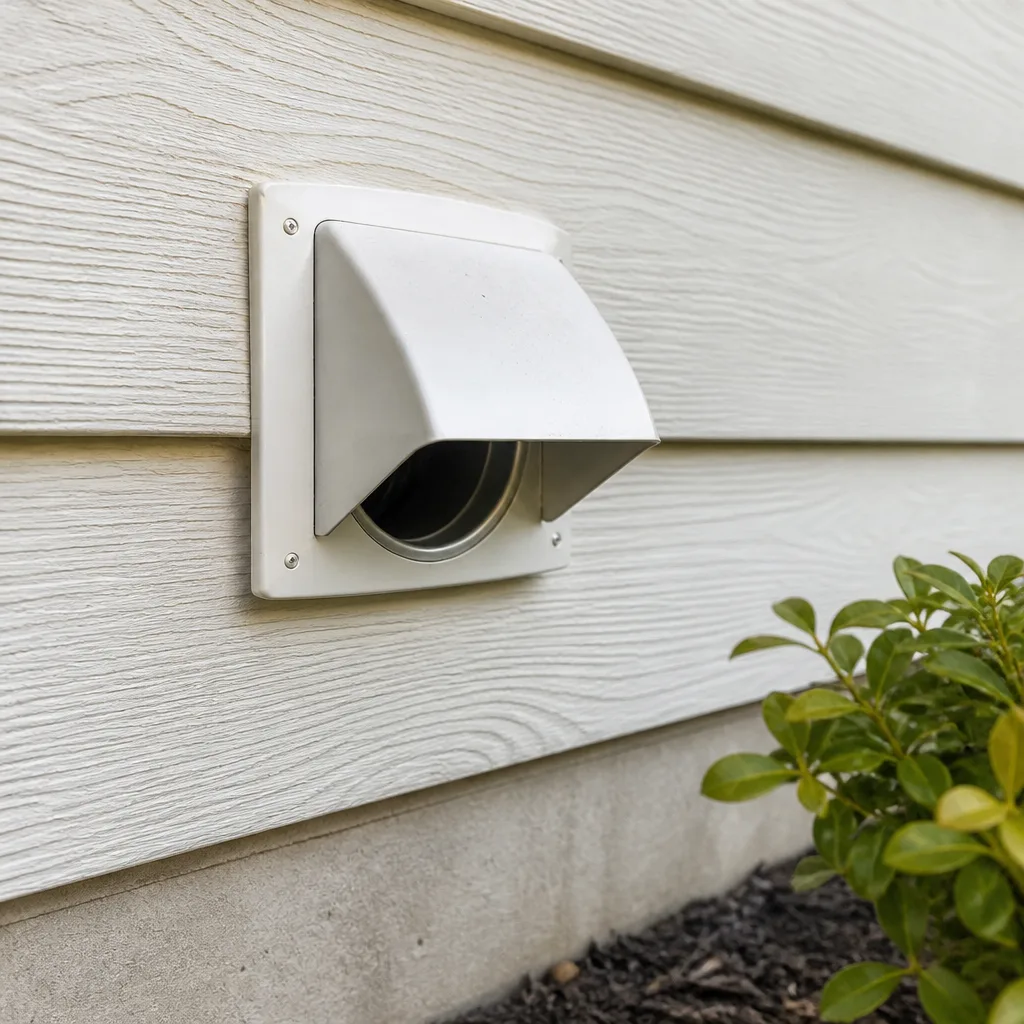 Dryer vent cleaning
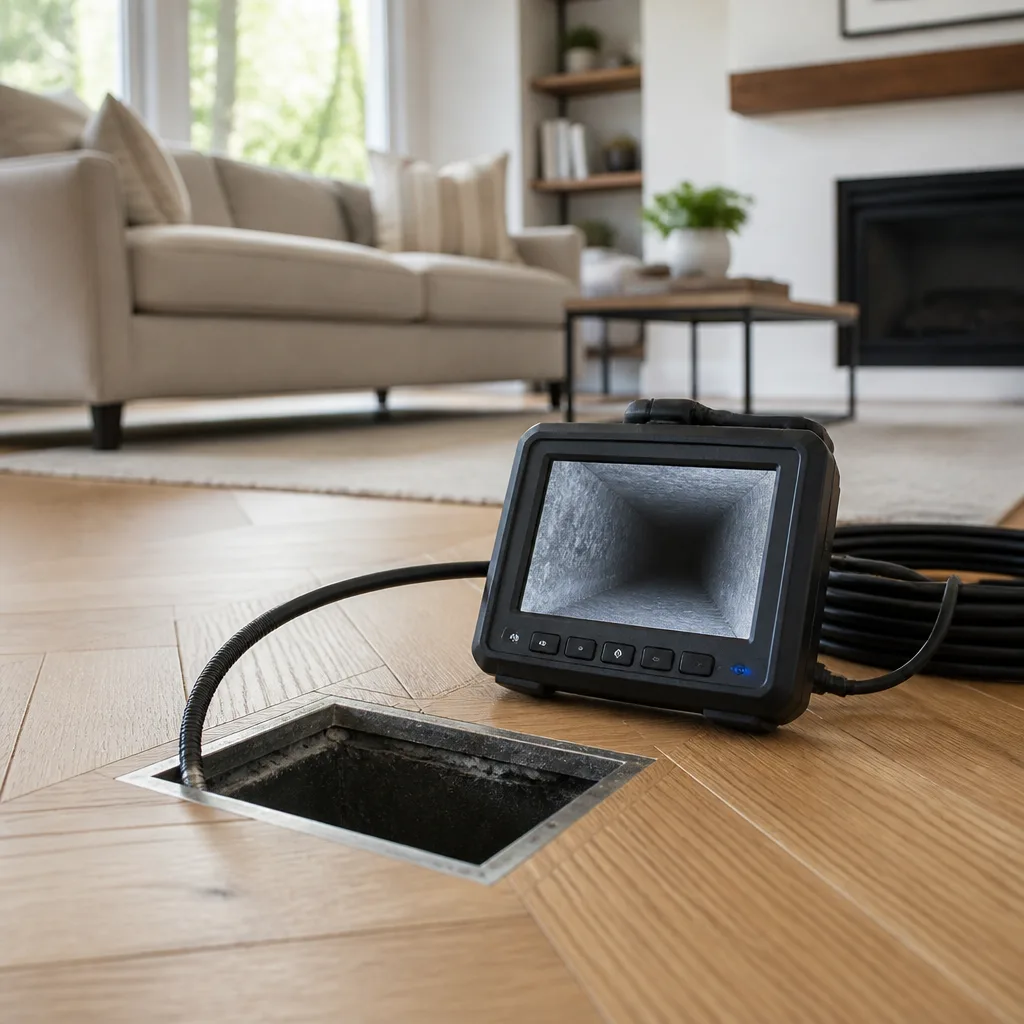 Camera inspection
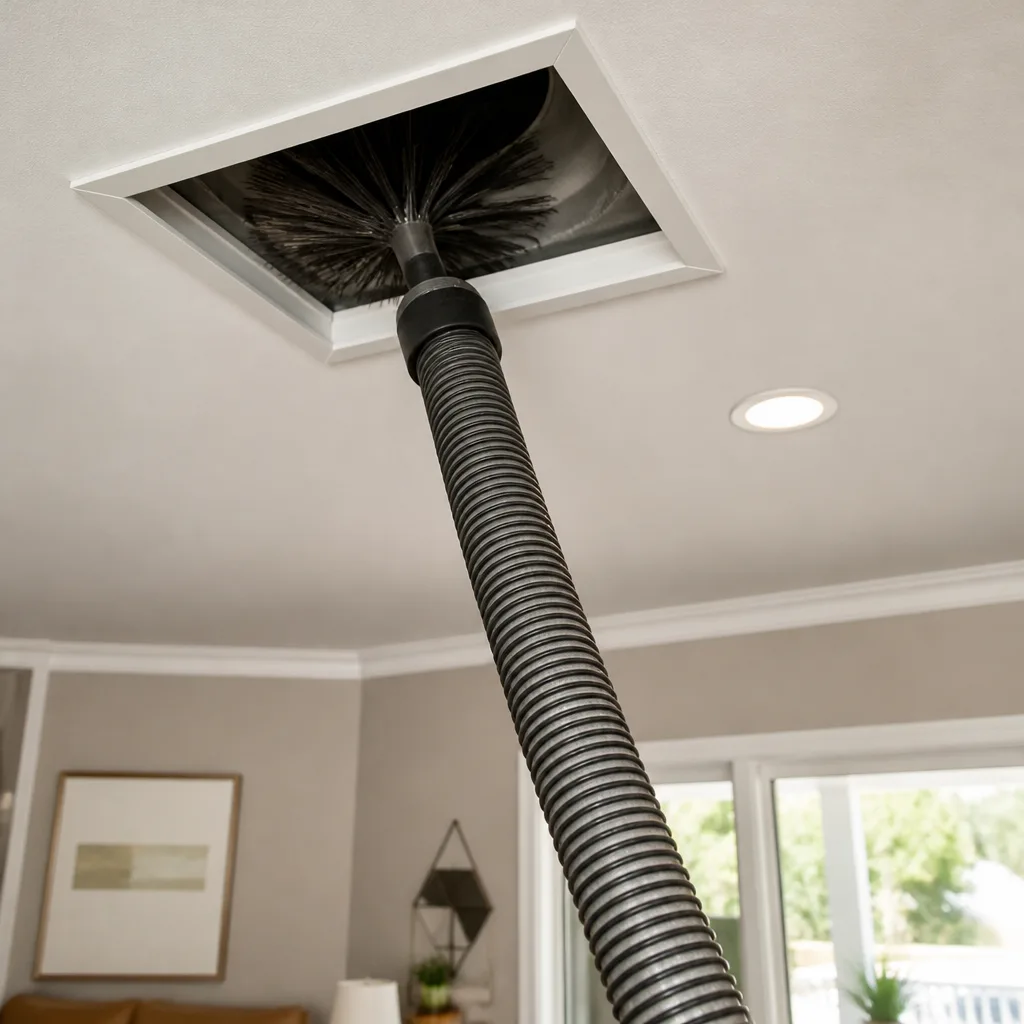 Sanitizing & deodorizing
Whole-system duct and dryer vent check with before-and-after photos - you see exactly what came out of your vents
That "$99 whole-house special" is a bait ad - the real number appears once they are in your hallway, or the "clean" is a shop-vac at the register. We photograph the inside of your ducts before and after instead.
Air Duct Cleaning Maintenance Checklist for Newport News Homeowners
Changing your filter on schedule feels productive. But a filter left in two weeks too long during an August humidity stretch here can push moisture-heavy air backward through the return side, and that trapped damp is exactly what lets biological growth take hold inside ductwork where no filter swap will reach it. The filter is one checkpoint, not the whole system. What follows is the maintenance routine we’d hand a homeowner in Hidenwood or Port Warwick if we couldn’t do the work ourselves: a month-by-month schedule tied to how Newport News actually behaves through the year, the visuals to check between professional cleanings, and how to document your system so no contractor can tell you a story you can’t verify.
Quick Answer
A workable air duct maintenance plan for a Newport News home pairs a filter change every 60 to 90 days with a seasonal visual inspection of registers and accessible duct sections, plus a professional whole-system cleaning every three to five years (sooner after renovation, water intrusion, or a pet-heavy household). The key is timing each task to local seasons: pollen peaks in April, humidity runs high July through September, and the heating switchover lands in November.
Styles & brands we work with
- Whole-home duct cleaning
- Dryer vent cleaning
- Camera inspection
- Sanitizing & deodorizing
Table of Contents
- Why Timing Matters More Than Frequency
- The Month-by-Month Checklist for Newport News
- How to Inspect Registers and Ducts Without Taking Anything Apart
- Filter MERV Ratings for Hampton Roads Allergen Seasons
- The Three Mechanical Checkpoints That Drive Duct Dirt
- How to Document System Condition With Your Phone
- When Professional Cleaning Moves Up the Schedule
- Common Mistakes to Avoid
Why Timing Matters More Than Frequency
Search for a duct cleaning schedule and most results hand you the same number: every three to five years, no context. That number was never the useful part. A home near the James River in July is dealing with a completely different load than the same house in February, and a cleaning done at the right seasonal moment buys more than an extra cleaning done at the wrong one.
Here’s what we mean. Newport News sits in a climate with humid summers and a real pollen season, and the two stress different parts of the system. Spring pollen loads the return side and the filter. Summer humidity means the evaporator coil is wet for weeks at a stretch, and a wet coil in a moving airstream is where dust turns into adhered residue on the metal. By the time the heating switchover arrives in November, the blower has been pulling that residue through the ducts for months.
So the checklist below isn’t organized by “how often.” It’s organized by “when.” Annual cleaning for everyone sounds thorough, but it wastes money on homes that don’t need it and distracts from the checkpoints that actually matter between visits.
The other reason local timing matters: this checklist is specific to Newport News housing and climate. A guide written for a dry, high-altitude city will tell you to skip the moisture checks entirely. Here, they belong at the top of the list.
The Month-by-Month Checklist for Newport News
Here is the routine in calendar order, tied to how the Peninsula moves through a year. The filter change is the constant; everything else is seasonal.
- January – February. Heating has been running for weeks. Pull the filter and hold it up to a light: if you can’t see through it, it’s overdue. Check for a musty smell at the supply registers the first time the heat comes on.
- March. Before pollen peaks, change the filter and note its condition. Do a short walkthrough of every register with a flashlight (see the inspection section below). This is your pre-season baseline.
- April – May (pollen peak). Check the filter every 30 days instead of every 60 to 90. Keep windows closed on high-pollen days, or accept that the filter is doing overtime. Look for a fine yellow-green film on return grilles.
- June. The cooling season is underway. Verify the condensate drain pan is dry of standing water and the pan drains freely. Any water that sits through summer is a problem the ducts will inherit.
- July – September (peak humidity). The heaviest stretch. Watch for condensation on duct surfaces in the basement or crawlspace. Confirm the outdoor drain line for the condensate is dripping normally. Change the filter based on airflow, not the calendar.
- October. The last real chance to inspect accessible ductwork before the heating season closes up any damp gone unnoticed. Clean register covers and vacuum the immediate area around return grilles.
- November (heating switchover). First weeks of heat push anything sitting in the ducts into the living space. Change the filter right before the switch. Expect a faint dust smell on first startup; a persistent smell is the signal worth acting on.
- December. Year-end check: photograph everything per the documentation section and note any register you flagged during the year. That record drives next year’s professional cleaning decision.
This isn’t a rulebook to follow to the letter. It’s the rhythm that fits this climate. Skip a month and you’ll survive; skip September moisture checks for three straight years and you may not.
How to Inspect Registers and Ducts Without Taking Anything Apart
You don’t need to disassemble ductwork to catch early problems. Most of what you need to see is at the surface: grilles, register covers, and duct runs that are exposed in a basement, crawlspace, attic, or utility closet.
Walk the house with a flashlight and do these six checks. It takes about twenty minutes.
- Look at the register louvers. A dust film is normal. A thick, matted coating or a fuzzy edge means airflow has been depositing for a long time.
- Shine light into the register opening. You should see clean sheet metal (or flexible duct) and a clear edge. Black or brown speckling on the interior surface within reach of the grille is worth photographing.
- Check the return grilles. They collect more than supplies. Look for a visible dirt shadow on the wall or ceiling around each return, which can suggest air leaking past a poorly seated grille.
- Feel the air at a supply register when the system runs. Weak or uneven airflow at one register while others are strong points to a kink, disconnection, or crushed run (see the air duct cleaning approach for how that’s assessed).
- Look at exposed duct runs in utility areas. Check for leaks at joints, torn outer jacket on flexible duct, and sagging that puts a low point where condensation collects.
- Smell and listen. A musty smell at one register, or a rattling from a run when the blower kicks on, is information. Note where and when.
Why does inspecting only accessible sections matter? Because in our experience, the majority of real problems surface at joints, at disconnections, and at the grille – not deep inside a straight run. You can find those without touching a screwdriver.
What you should not do: open the air handler cabinet, pull insulation off duct runs, or try to reach inside main trunks. What lies inside those is a job for a technician with the right equipment and the right safety precautions.
Filter MERV Ratings for Hampton Roads Allergen Seasons
Filter selection is where homeowners most often get it wrong in a way that costs them. The instinct is to buy the highest rating on the shelf. In an older system, that can restrict airflow enough to strain the blower and force air backward through the return path – the exact problem we described at the top of this page.
MERV stands for Minimum Efficiency Reporting Value. The higher the number, the more particles the filter captures, and the more resistance it places on the system’s ability to move air. Both matter.
- MERV 8 to MERV 11: the practical target for most homes in Hampton Roads during allergy season. Captures a solid share of pollen and dust without starving airflow.
- MERV 13: appropriate for newer equipment rated for it, or for households with a strong allergy concern. Confirm your air handler’s rated filter density before switching up.
- MERV 16 and above: hospital-grade filtration, generally a mismatch for a standard residential system without design changes. Don’t buy on the number alone.
- Pleated vs. fiberglass: fiberglass filters are cheaper and capture less. Pleated filters cost a little more and do more work. On a system with 1-inch filter slots, a pleated MERV 8 to 11 filter is usually the sensible pick.
One Hampton Roads wrinkle: during April pollen and again as ragweed finishes in September, your filter is working hardest. Drop the change interval to 30 days during those stretches, then return to your normal 60- to 90-day rhythm. Check the filter, don’t check the calendar.
If your system has a 4- or 5-inch media cabinet, filter changes stretch to six months or more. If you’re not sure which you have, that’s a good question for a technician on the next visit.
The Three Mechanical Checkpoints That Drive Duct Dirt
Airflow path health starts at the air handler, not in the ducts. Three components there (the blower, the condensate drain pan, and the evaporator coil) determine how much dirt ends up in ductwork between cleanings. If they’re healthy, your ducts stay cleaner longer. If they’re not, no amount of duct cleaning holds.
The blower
The blower wheel is the fan that moves air through the system. When its blades load up with dust, the wheel spins less efficiently, airflow drops, and the system runs longer to reach its setpoint. Longer runtimes mean more air moving across dirtier surfaces. You can see a dusty wheel through the inspection panel on many air handlers; you cannot clean it yourself without risking damage. Note its condition.
The condensate drain pan
The pan sits under the evaporator coil and catches water that condenses in summer. Newport News humidity sends a lot of water through that pan from July through September. If the pan holds standing water, or the drain line is clogged, you’ve got a wet surface in the middle of a moving airstream. That combination is the one that makes musty smells persistent. Check that the line drains (you can often see it dripping outdoors) and that the pan is empty when the system is off.
The evaporator coil
The coil is where the air cools. It’s also the wettest surface in the system and the surface most attractive to dust. A dirty coil chokes airflow and holds moisture. Some coil housings are sealed and can’t be inspected without opening things up. For those, the sign of a problem is a drop in cooling performance, icing on the refrigerant lines, or a musty smell on startup.
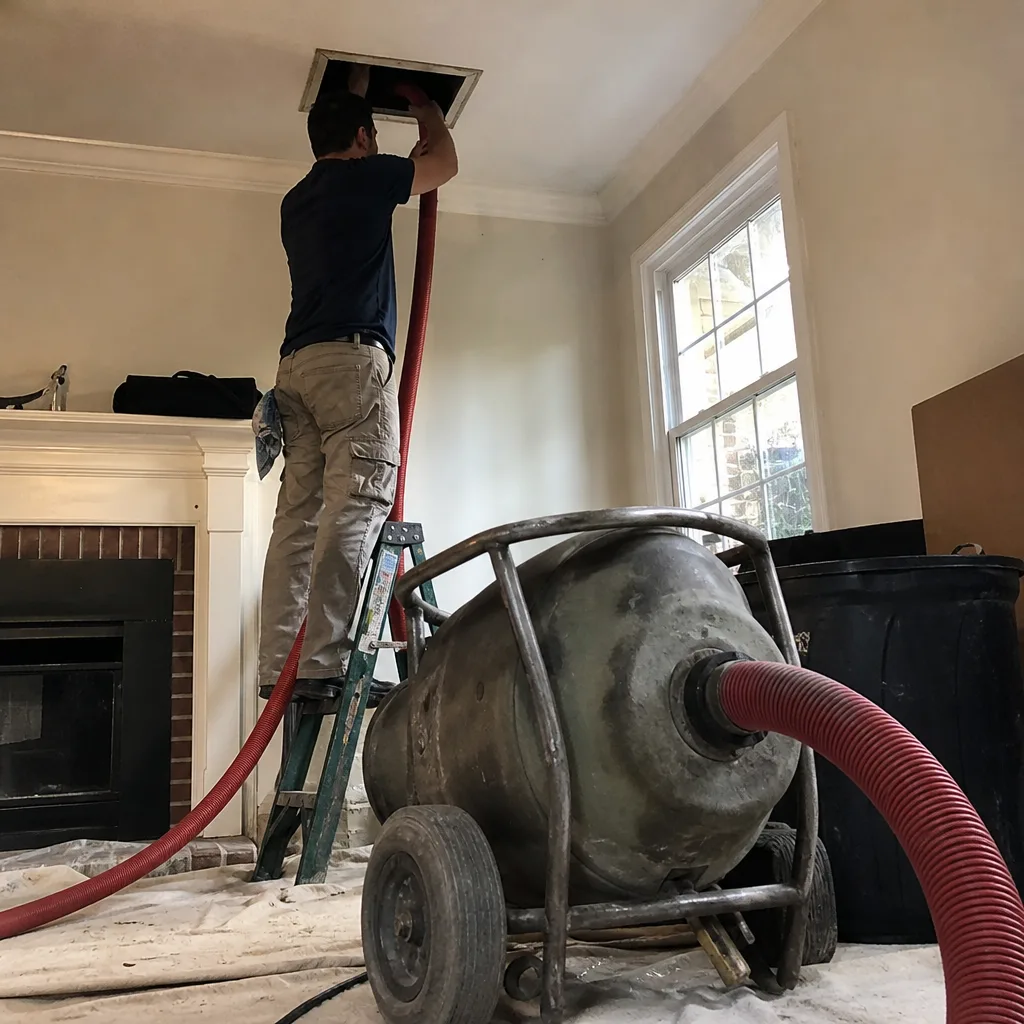
On a professional visit, all three get checked. The equipment we run, including a Rotobrush rotary-brush system and Nikro HEPA-rated vacuums, allows us to clean the ductwork without leaving the loose material that a poor job leaves behind. And we can repair compromised ductwork the same visit rather than documenting the problem and leaving. That’s the difference between a cleaning and a fix.
How to Document System Condition With Your Phone
If you take one habit from this guide, take this one. Photograph your system before you hire anyone. It costs nothing and it fixes the single biggest trust problem in this trade.
Here’s the routine, on a single phone, in about fifteen minutes:
- Photograph every register and return grille in the house, close up, with the grille in view. Twelve to twenty photos depending on the size of the home. Note the room name.
- Photograph the filter before you change it. Write the date in the photo filename or note it separately.
- Photograph exposed duct runs in the basement, crawlspace, attic, or utility closet – joints, supports, any place that looks compromised.
- Photograph the air handler and pan from the service side without opening anything. A photo of the model and serial plate is worth having.
- Write a short note in the same folder describing smell, sound, airflow weakness, or dust patterns you noticed.
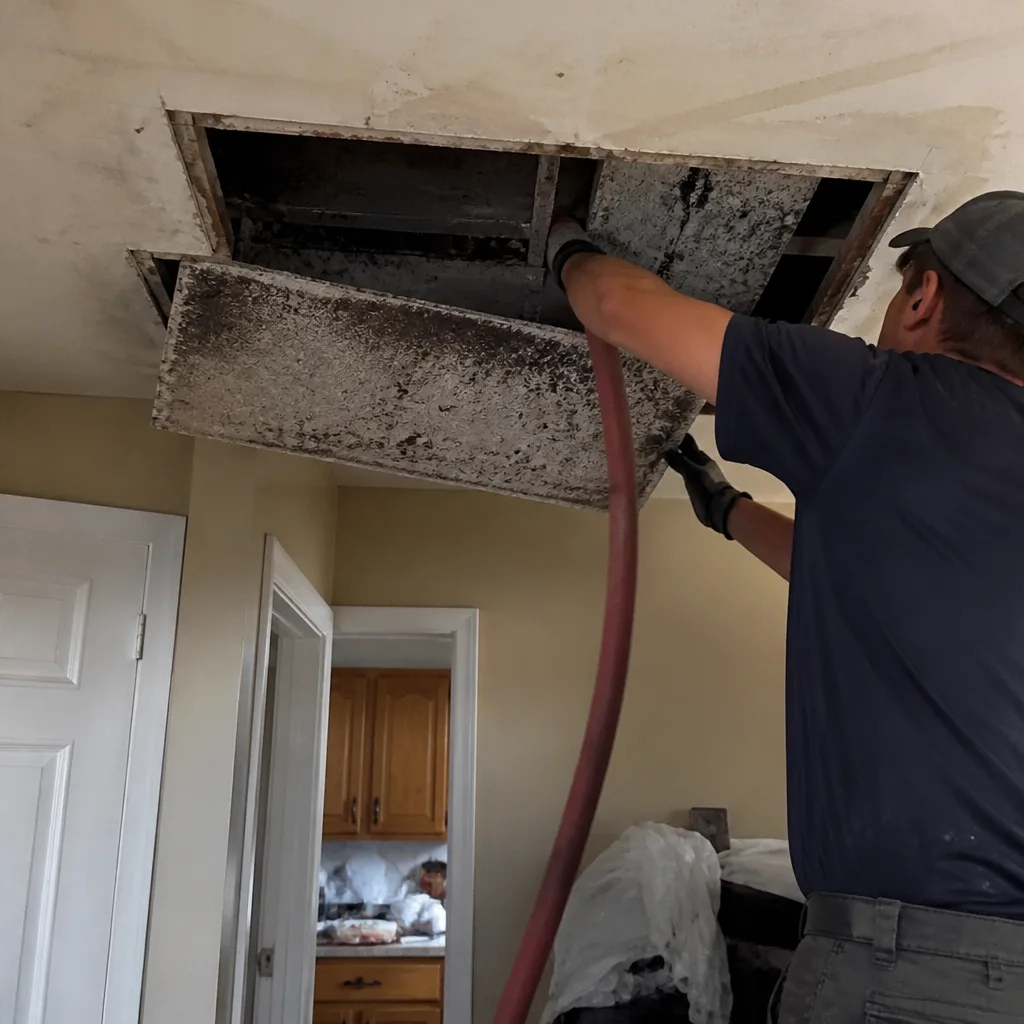
Now you have a baseline. When a technician tells you the system is in bad shape, you can compare what they describe to what you photographed. When they finish, ask for before-and-after photos of your own ducts. A professional operation will provide them without being asked; a vague answer to that request is your cue to walk. That standard applies to us as much as anyone. The photos make the work verifiable, which is the only thing that matters.
Do the same for any repair. In our experience, a photographed pre-state is what turns an honest diagnosis into a conversation rather than an assertion. If you’re a homeowner in Newport News, that baseline is worth keeping on file for every future contractor.
When Professional Cleaning Moves Up the Schedule
Every three to five years is the working baseline for professional cleaning in a home that stays on top of the checklist above. Several things shorten that interval and shouldn’t be ignored:
- Recent renovation. Drywall dust and construction debris travel far through a running system. A post-renovation cleaning is standard practice.
- Water intrusion or a wet event. Any time water enters ductwork (roof leak, plumbing failure, flooding) the ducts should be evaluated for contamination and cleaned.
- Persistent musty odor that doesn’t clear after a filter change and drain check.
- Visible debris at registers or dust falling from supply vents when the system runs.
- Multiple pets or heavy occupancy. More dander and hair in the airstream means the schedule compresses.
- Compromised ductwork – a disconnected run, torn flexible duct, or a crushed section – needs air duct repair before a cleaning makes sense.
Those last two are worth highlighting. Some cleaning services only clean and leave; we do both, so a compromised run can be diagnosed and fixed in the same visit rather than becoming a second appointment. That’s also why the same crew that handles a cleaning can assess whether the ducts are the problem at all, or whether the fix belongs with the air handler.
When you do hire, ask what equipment will be used. A truck-mounted system with negative-air containment and HEPA-rated vacuum holds contamination inside the work area; a shop vac and a hose recirculates it. Abatement Technologies negative-air equipment is the class of machinery used in professional remediation, and it’s what we bring to home jobs. Our technicians have up to 11 years of experience, and the work area is protection-taped with Guardsman surface-protection products to guard floors and finishes. If a quote doesn’t include a discussion of equipment and containment, it isn’t a quote you can compare.
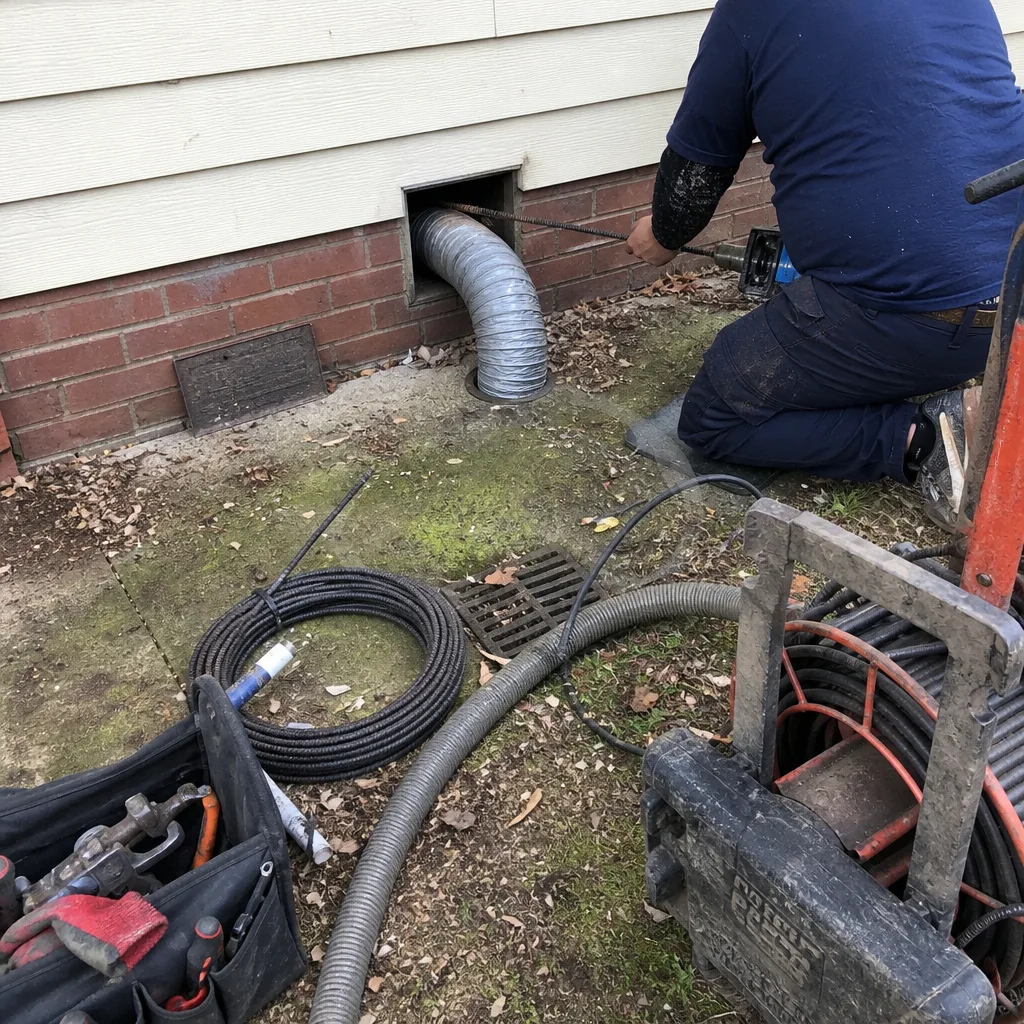
If you’re booking from any house in Newport News, ask the easy questions. A contractor who knows the equipment won’t flinch. And if you’re cleaning a dryer vent alongside the ducts, that’s a separate safety service worth doing on its own schedule – see dryer vent cleaning for why it’s not optional.
Common Mistakes to Avoid
- Buying the highest-MERV filter on the shelf. The filter that captures the most particles can also strangle an older system’s airflow. Match the filter rating to the air handler, not to the marketing.
- Skipping the filter change in July and August. Those are the humidity months here. A saturated filter passes moisture-laden air back into the return, and the damage doesn’t show up until the smell does.
- Cleaning ducts once and stopping there. Ducts stay clean only if the filter, blower, pan, and coil are maintained. If the blower is dirty, cleaning the ducts doesn’t help. If the coil is fouled, the smell comes back.
- Hiring on price alone. A very low quote usually means a small vacuum and a visual pass, not a real cleaning. Ask what equipment is used, whether containment is set up, and whether before-and-after photos are included.
- Failing to photograph the before-state. Without a documented baseline, you have no way to verify the work or compare contractors. That’s the whole reason the habit matters.
- Treating a compromised duct run as a cleaning job. A crushed or disconnected run needs repair, not cleaning. Cleaning a disconnected duct just spreads the problem.
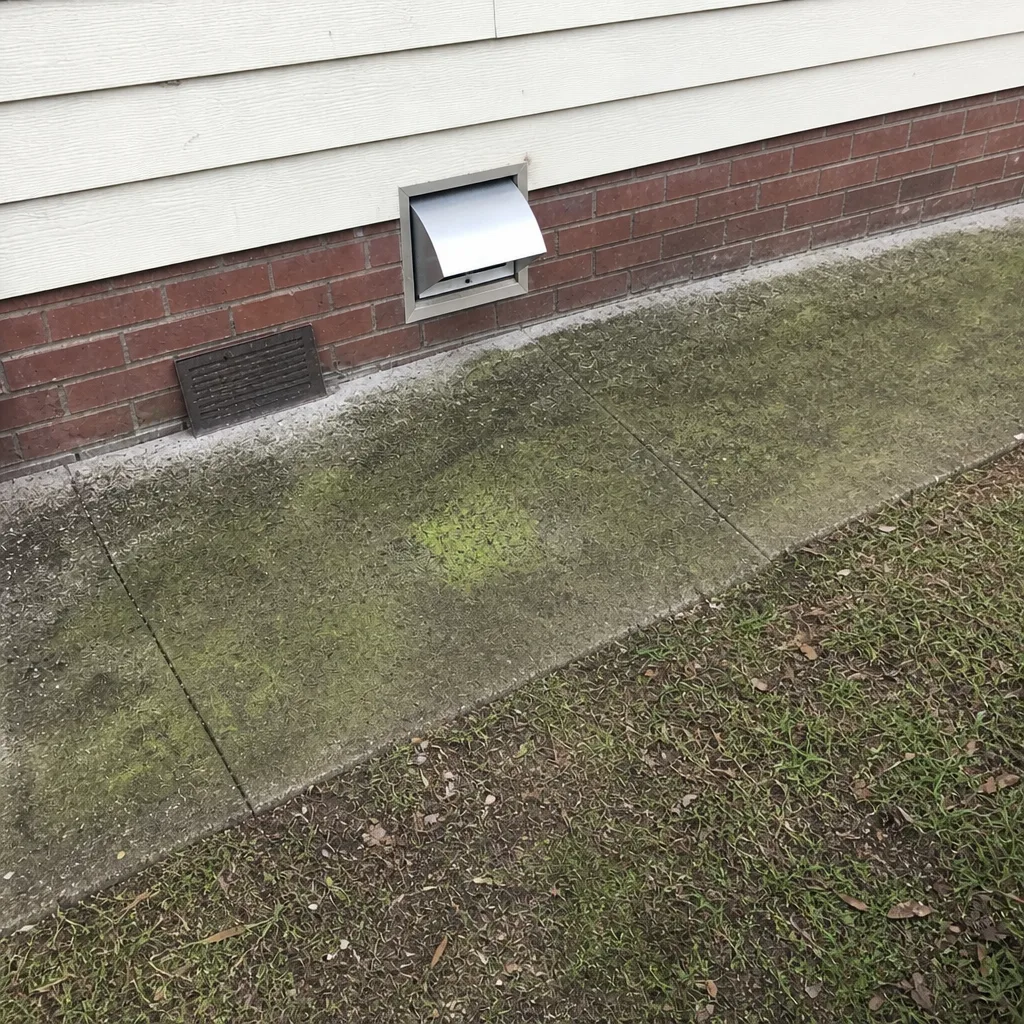
- Ignoring the dryer vent. If you’re thinking about ductwork, the dryer vent deserves the same attention. Lint accumulation there is the leading cause of dryer fires, and it’s completely preventable. Our dryer vent cleaning is a separate service, and it’s one that belongs on your maintenance calendar alongside the air ducts.
See the difference
 Before
 After
 Before
 After
 Before
 After
When to Call a Professional
Call for a professional assessment if you’ve spotted any of the following: dust blowing from supply vents when the system runs, a musty or stale smell that persists after a filter change, visible debris or biological speckling at registers, a heating or cooling bill rising without explanation, a recent renovation, or evidence of water intrusion into ductwork. Call if you’ve never had the ducts cleaned and don’t know their history. And call if the dryer takes more than one cycle to dry a load – that’s a safety issue with a clear answer.
There are also things you should not do yourself. Never open the air handler cabinet to clean the coil or blower; there is live electrical equipment inside, and the coil fins are easily damaged. Never pull insulation or attempt to clean inside main trunks without training. Call us instead.
Denali Air Duct Cleaning offers free estimates in Newport News. Call (866) 942-7630. We answer 24/7, with fast dispatch from 7am to 7pm, Sunday through Friday. The written estimate sets the final price, and you’ll see before-and-after photos of your own ducts when the work is done.
Frequently Asked Questions
Most homes here do best with a professional whole-system cleaning every three to five years, with some closer spacing after renovation, water damage, or in households with multiple pets. Between cleanings, the filter and the mechanical checkpoints in this guide do more for duct cleanliness than an extra cleaning would. Call (866) 942-7630 for a free estimate.
A MERV 8 to MERV 11 filter is the right target for most homes in this area during pollen and humidity seasons. Going higher on MERV can restrict airflow in an older system and cause more problems than it solves. Confirm your air handler’s rated filter density; if you’re unsure, a technician can tell you on a visit.
It depends on the size of the system, how many runs there are, and what condition they’re in. Rather than quote a teaser price per vent, we set one flat price per system by written estimate after we see the house. Estimates are free, so call (866) 942-7630 for an exact figure.
Low quotes usually reflect a smaller vacuum, no containment, and a quick visual pass rather than a real cleaning. Ask what equipment the contractor uses, how they contain contamination, and whether you get before-and-after photos. If the answer is vague, the quote is not comparable. Call us for an honest range and a written estimate.
Before-and-after photos of your own ducts are the only reliable answer, along with the contractor’s willingness to show you what was removed. Take your own photos before any work begins so you have a baseline. Ask for the photos as part of the estimate agreement.
Yes. Dryer vent cleaning is a fire-safety service and deserves at least an annual cleaning, more often in a busy household. A dryer taking more than one cycle to dry a load is a warning sign that lint is restricting airflow. We treat dryer vents as a separate specialty from ducts. Call (866) 942-7630 if you’re overdue.
The Bottom Line
Duct maintenance in Newport News isn’t a single annual task. It’s a rhythm: watch the filter hard in April and again in July through September, check the drain pan before cooling season, inspect what you can see at the registers without taking anything apart, and photograph a clean baseline so every contractor conversation starts from fact. Professional cleaning every three to five years is the backstop, not the plan. Denali Air Duct Cleaning works in Newport News with the equipment that makes a cleaning count, and we fix compromised ductwork on the same visit when the diagnosis calls for it. If you want a baseline for your home, call (866) 942-7630. The estimate is free, and the photos are yours.
If you’re starting from scratch, the Denali Air Duct Cleaning home page covers the full service lineup and what each work visit involves.
Written by the team at Denali Air Duct Cleaning.