
Last updated November 15, 2026
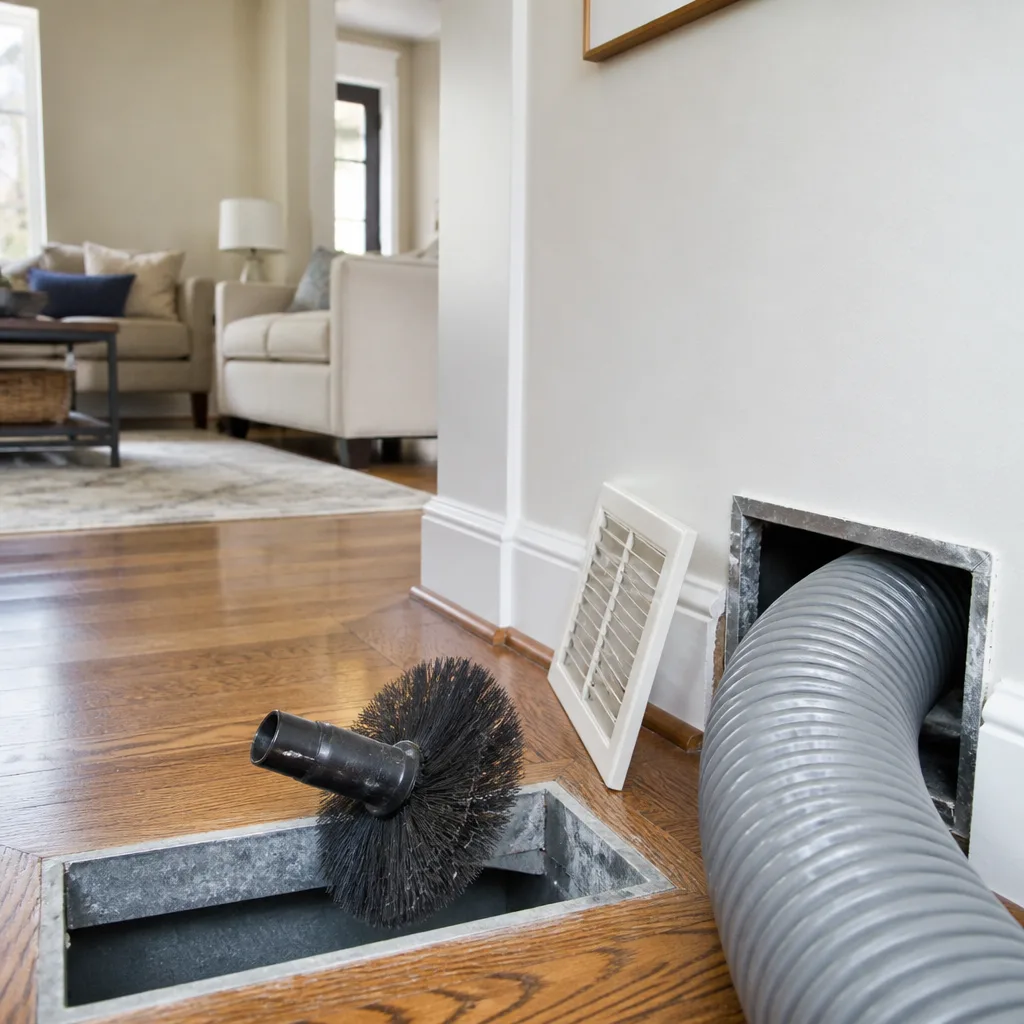 Whole-home duct cleaning
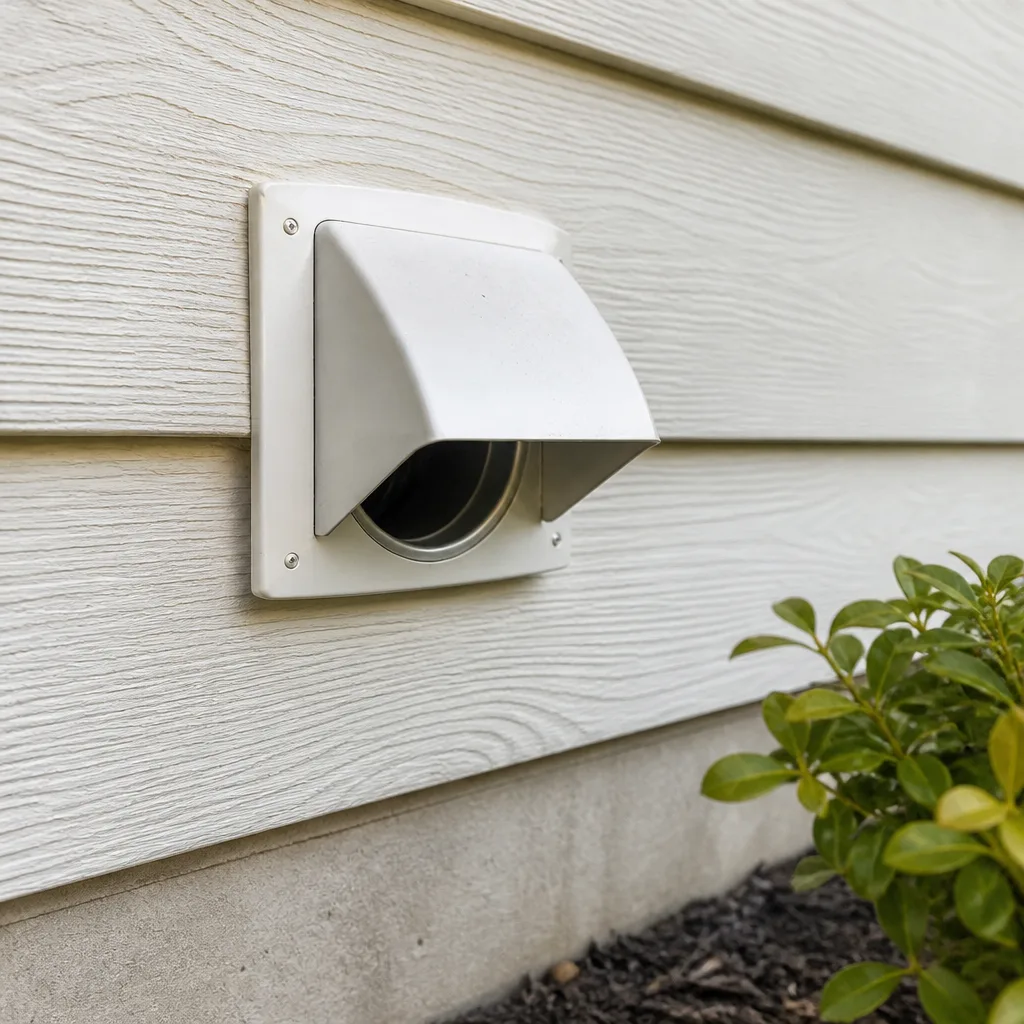 Dryer vent cleaning
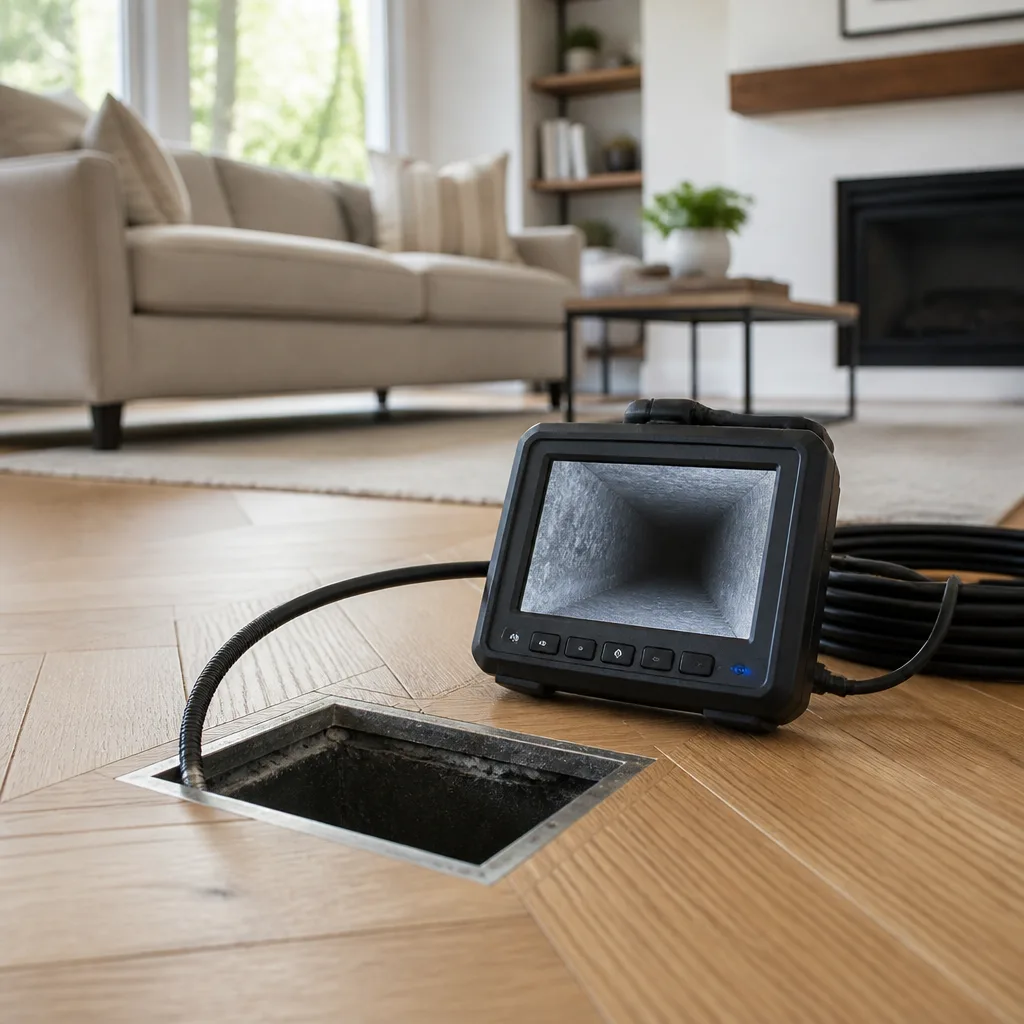 Camera inspection
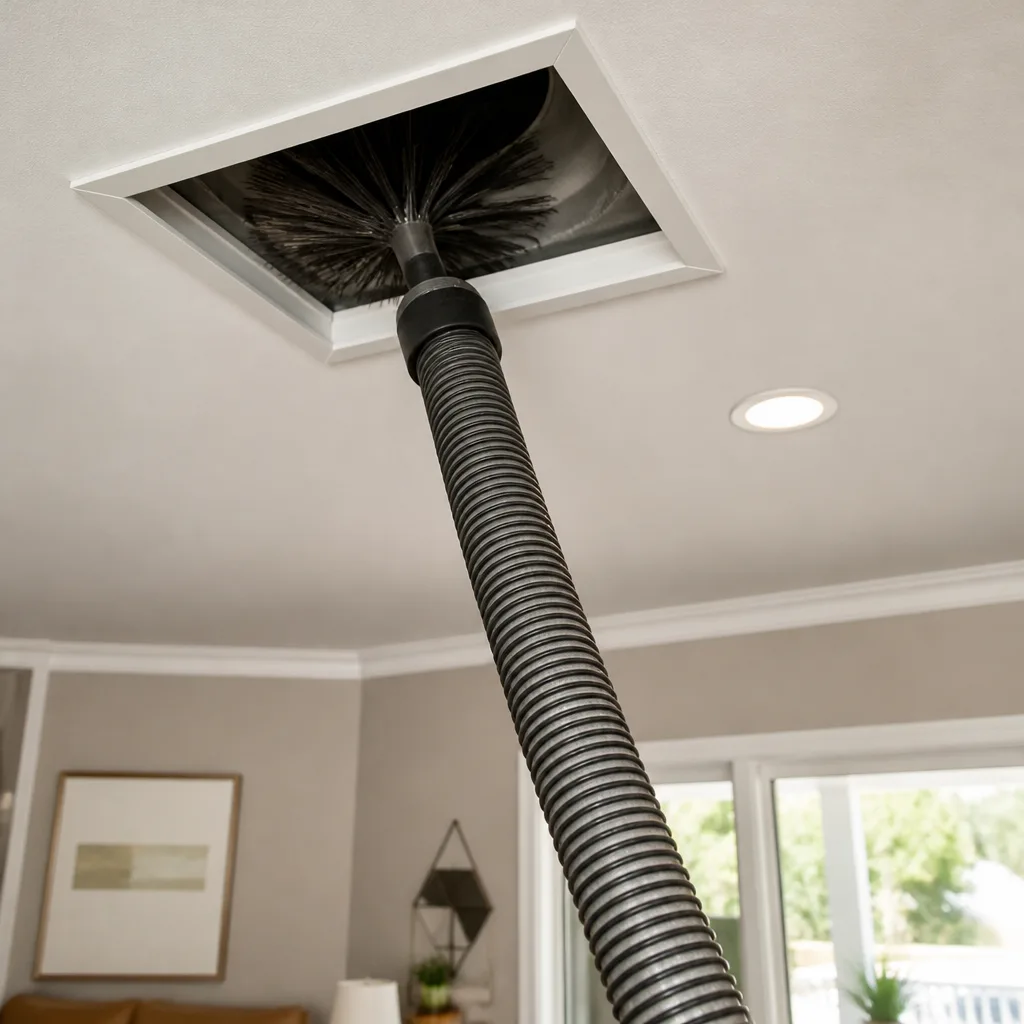 Sanitizing & deodorizing
Whole-system duct and dryer vent check with before-and-after photos - you see exactly what came out of your vents
That "$99 whole-house special" is a bait ad - the real number appears once they are in your hallway, or the "clean" is a shop-vac at the register. We photograph the inside of your ducts before and after instead.
Air Duct Cleaning Permits, Codes & Inspections in Newport News, VA: What You Need to Know
Here’s the part most homeowners miss: cleaning your ducts doesn’t require a permit in Newport News, but repairing them very likely does. The line between the two is thinner than it looks, and it moves the moment a technician disconnects a run, cuts into a trunk line, or swaps out a register boot. Virginia’s Uniform Statewide Building Code treats that kind of work as mechanical construction, and mechanical construction gets inspected. In this guide, we’ll walk you through exactly where that legal line sits, who enforces it in Newport News, how unpermitted work surfaces during a home sale, and the one warranty scenario that catches people off guard. If you own or manage property here and you’ve ever been handed a bundled “clean and repair” quote, this is worth your time.
Quick Answer
Cleaning air ducts in Newport News does not require a building permit, because cleaning is maintenance, not construction. However, any repair, replacement, or modification of duct components, such as replacing flex duct, reconnecting a supply boot, or cutting in a new register, falls under Virginia’s Uniform Statewide Building Code and generally requires a mechanical permit and inspection. Ask any contractor to separate cleaning from repair in writing before work begins.
Styles & brands we work with
- Whole-home duct cleaning
- Dryer vent cleaning
- Camera inspection
- Sanitizing & deodorizing
Table of Contents
- Where the line sits between cleaning and repair
- Who enforces mechanical work in Newport News
- What a mechanical inspection actually looks like
- Why bundled quotes need a line-item breakdown
- How unpermitted duct work shows up during a home sale
- The one cleaning scenario that can affect your system warranty
- Why Newport News homes see this issue more than you’d think
- When to call a professional
Where the Legal Line Sits Between Cleaning and Repair
Cleaning is not construction. When a technician runs a rotary brush through a duct and pulls the loosened debris into a HEPA vacuum, nothing in the building envelope changes. No component is added, removed, or relocated. That is why cleaning sits outside the permitting process in Newport News and everywhere else in Virginia.
Repair changes the equation. The Virginia Uniform Statewide Building Code governs mechanical work, and duct systems are mechanical systems. When a contractor does any of the following, the job likely crosses toward permit territory:
- Replacing a section of flex duct between a trunk and a supply boot
- Removing and reconnecting a supply boot at the floor or ceiling
- Cutting in a new supply or return register
- Resealing or replacing a trunk line that has come apart at a joint
- Relocating ductwork during a remodel or layout change
- Adding or removing a return path for the system
Reconnecting a boot that a cleaning brush knocked loose sits in a gray zone, but any repair involving new materials, altered routing, or a change to how the system is configured should trigger the question of whether a permit is required. That question isn’t one a cleaning crew should answer alone. It’s a question for your local building officials or a licensed mechanical contractor. For a straightforward assessment of what cleaning involves on its own, our air duct cleaning page covers the process step by step.
Who Enforces Mechanical Work in Newport News
Mechanical work in Newport News is enforced by the city’s Department of Codes Compliance, working with the Virginia Uniform Statewide Building Code as the governing standard. When a permit is issued for mechanical work, that department oversees the inspection. The enforcement arms look like this:
- Permitting and plan review happens through the city’s codes office before work begins.
- Rough-in inspections happen after ductwork is installed or modified but before it’s covered or concealed.
- Final inspections confirm the system is complete, connected, and ready to operate.
- Complaint-driven enforcement happens when a homeowner, buyer, or inspector flags unpermitted work.
Practically speaking, the permit is the contractor’s responsibility, not the homeowner’s. When a mechanical contractor takes on duct repair, that contractor pulls the permit in their name and schedules the inspections. If someone offers to “do the repair on the side” without a permit, that’s the moment to slow down and ask why.
We’ve seen plenty of cleaning jobs in Newport News where everything is fine on the cleaning side and the only thing left to sort out is whether a minor fix needs to go through the permit process with a licensed HVAC contractor. Keeping those two conversations separate is how you protect yourself.
What a Mechanical Inspection Actually Looks Like
A mechanical inspection isn’t mysterious, but it does have a sequence. If your duct repair requires a permit, here’s how the process typically unfolds in Newport News:
- Permit application. The licensed contractor submits the permit with a scope of work describing what’s being installed, replaced, or modified.
- Rough-in inspection. Once the new ductwork or repair is in place and connected, but before it’s closed in behind drywall or insulation, the inspector reviews the installation.
- Corrections if needed. If the inspector flags an issue (improper sealing, wrong support, undersized ductwork), the contractor corrects it and schedules a re-inspection.
- Final inspection. After the work is complete and the system is operational, the inspector signs off on the final.
- Record of the permit. The city retains the permit record, which becomes part of what a future buyer or their agent can look up.
The rough-in stage is really the important one. Ductwork that’s been properly supported, sealed, and sized correctly shows up cleanly at rough-in. Work that was never permitted has no rough-in, which is exactly what a home inspector or buyer’s agent will point out later.
Why Bundled “Clean and Repair” Quotes Need a Line-Item Breakdown
If a quote includes cleaning and repair as one lump number, ask for it itemized. Cleaning has no permit requirement. Repair work likely does, and the two activities carry different responsibilities for the contractor performing them. A line-item quote protects you on both counts.
Here’s the structure you want to see on any quote from a Newport News contractor:
- Cleaning line items: supply runs, return runs, main trunk, registers, blower compartment if included. Each with its own scope.
- Repair line items: what’s being replaced, reconnected, or added, and where.
- Permit line item: if a permit is required for the repair, it should be listed separately with the cost and the licensed contractor’s information.
- Equipment note: which machines will be on site so you can verify the scope matches the cleaning method.
The repair tasks that should trigger a conversation about a licensed HVAC contractor and a possible permit look like this:
- Replacing flex duct runs (flex is common in Newport News homes and is a frequent repair point).
- Cutting in new registers or moving existing ones.
- Rebuilding a disconnected trunk line at a joint.
- Adding a return for a room that’s never had one.
- Rerouting ductwork during a renovation or layout change.
Our position is simple: we clean it and, if needed, we fix it, but the permit side of a mechanical repair needs to be handled correctly and by a licensed mechanical contractor. We’ll tell you plainly which line item is which, and you decide who handles the permit.
How Unpermitted Duct Work Shows Up During a Home Sale
Unpermitted duct modifications don’t generally surface during cleaning. They surface when a house goes on the market. In Newport News, where a lot of the housing stock is older and has seen multiple rounds of DIY renovation, this scenario plays out more often than you’d think.
Here’s what typically happens when a buyer’s agent or home inspector finds ductwork that doesn’t line up with city records:
- The inspector notes the modification in the report as “appears unpermitted” or “no permit on record.”
- The buyer’s agent asks the seller to produce permit documentation or disclose when the work happened.
- If no permit exists, the buyer often requests either a permit retrofit through the city or a credit at closing to cover the cost of proper repair.
- Any duct repair that was done without a permit gets flagged for review even if the work happens to be acceptable.
The difficult part is that a clean, well-installed duct repair done without a permit still raises a flag on paper. The city has no record of it, so the buyer can’t confirm it was done correctly. What buyers’ agents typically demand in response is documentation: a permit application, a mechanical contractor’s sign-off, or a home inspector’s assessment of the repair. Closing the gap is usually easier if you have a permit from the start.
For property managers handling multiple units around Newport News, kept permit records are the single biggest difference between a clean transaction and a delayed one.
The One Cleaning Scenario That Can Affect Your System Warranty
Manufacturer warranties on HVAC equipment generally include language about who may service, repair, or modify the system, and what happens if that work isn’t performed to spec. Cleaning typically falls within allowed service. However, if a cleaning job pulls a duct section loose in a way that alters the system’s engineered configuration, or if a technician makes a modification during cleaning that isn’t part of the original design, that can complicate a warranty claim.
The warranty language varies by manufacturer, but the themes are consistent:
- Authorized service language: work must be performed by qualified technicians familiar with the equipment.
- Modification language: changes to the system design or components not approved by the manufacturer may void specific coverage.
- Documentation language: some manufacturers ask for records of what was done and when.
Before any cleaning or repair, it’s worth calling the manufacturer or reading the warranty document itself. If your Newport News home has equipment still under warranty, this one step takes five minutes and can save a costly dispute later.
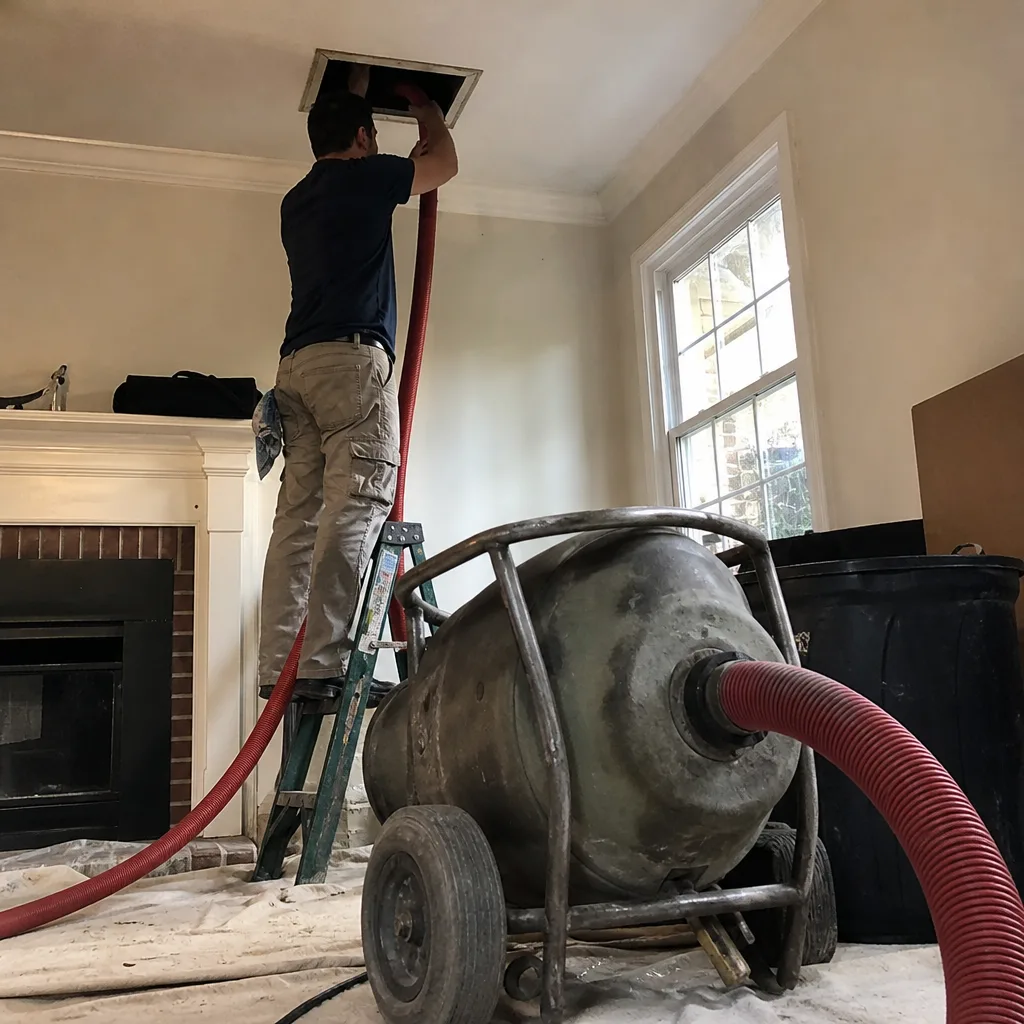
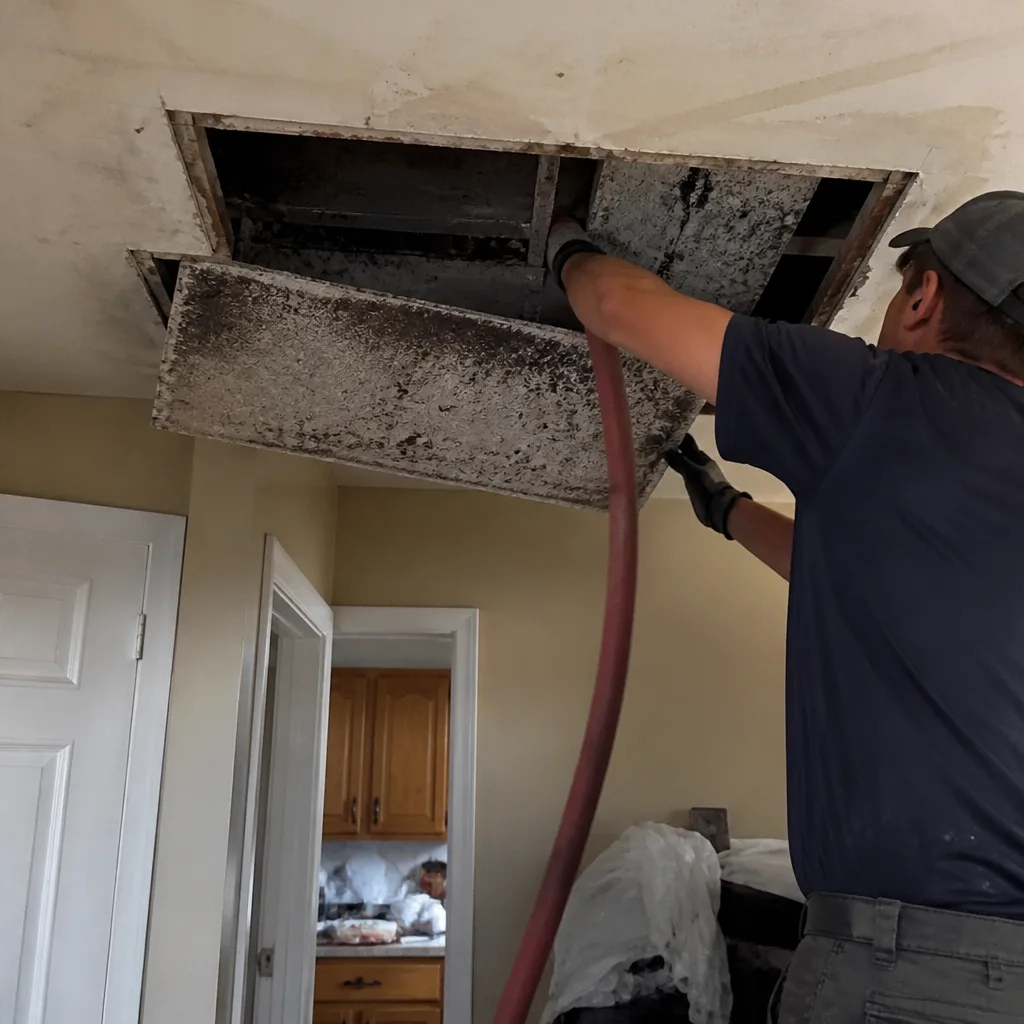
The good scenario for warranty protection looks like this: a cleaning crew that documents what it did, records the condition of the ductwork before and after (before-and-after photos of your own ducts, not stock photos), and separates cleaning from any repair that needs to happen.
Why Newport News Homes See This Issue More Than You’d Think
Newport News has a lot of older housing stock, and that means a lot of duct systems that have been modified over time. A typical sequence in a neighborhood like Hilton Village or Riverside goes like this: the original system gets replaced at some point, flex duct gets retrofitted in the attic, a small addition gets its own supply line, a register gets moved during a kitchen remodel. Each of those changes is a potential permit event. Ten years later, a duct cleaning crew shows up and finds flex runs connected with tape, boots sitting loose, and joints that have opened up.
The regional climate adds its own layer. Newport News summers are humid enough that duct systems running through unconditioned attics collect condensation. That condensation finds every poor seal and every unpermitted joint. Over enough seasons, the tape and mastic give way and the system starts leaking air into the attic instead of into your rooms. You notice it as a room that never quite cools off, or a power bill that keeps climbing without explanation.
For property managers in the Oyster Point and Port Warwick areas, this shows up as tenant complaints about uneven cooling that can’t be solved by filter changes alone. The solution usually sits in the ducts, not the condenser. Our technicians have up to 11 years of experience with these systems, and we’ve learned that the duct system is almost always telling you what happened in a home’s renovation history.
How a Legitimate Cleaning Job Is Documented
One of the reasons permits and codes matter in this conversation is because they turn duct work into a paper trail. A proper cleaning should have one too. When a crew arrives, here’s what a documented job includes:
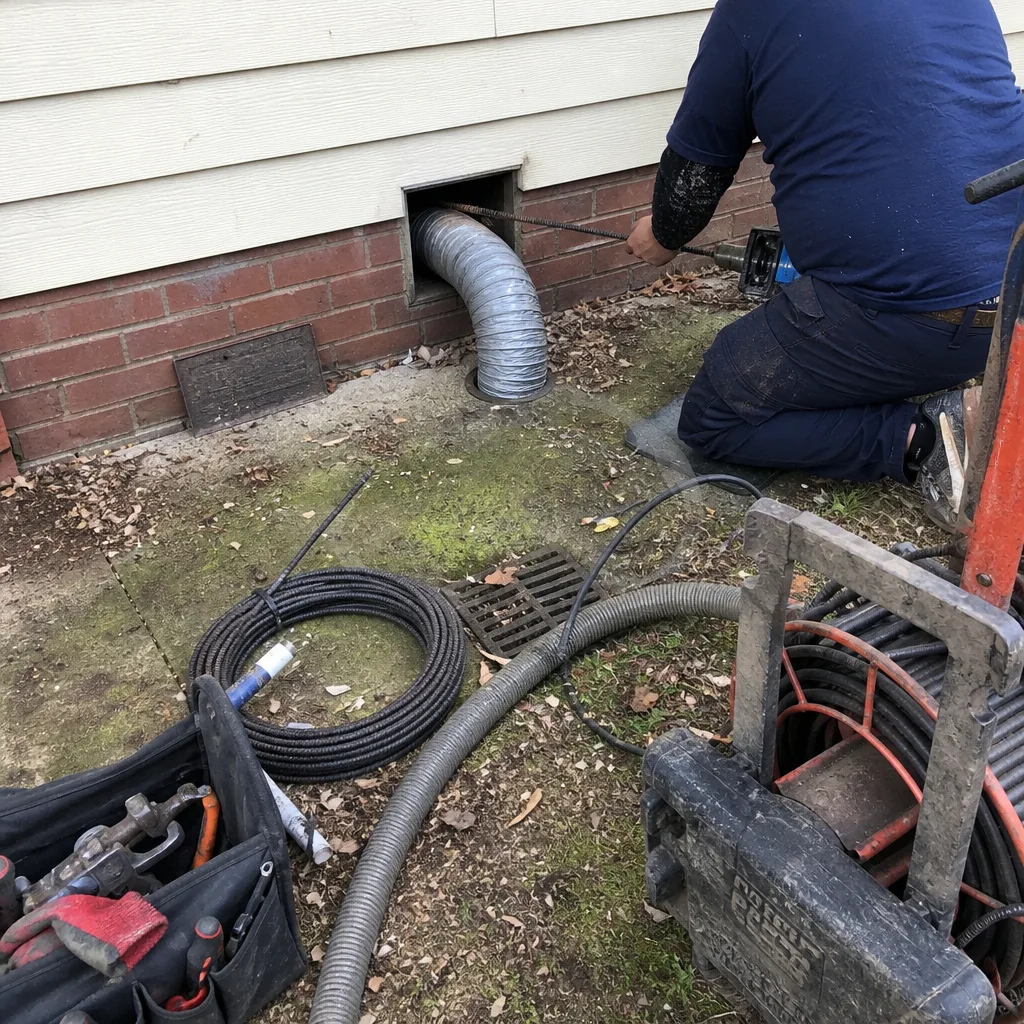
- Before-condition photos of each duct run, register, and trunk line you’re paying to have cleaned.
- Scope confirmation in writing, before any equipment is turned on, matching the quote.
- Equipment verification. Rotary brush systems agitate debris loose. HEPA-rated vacuums capture it at the source. Negative-air equipment holds the work area under containment.
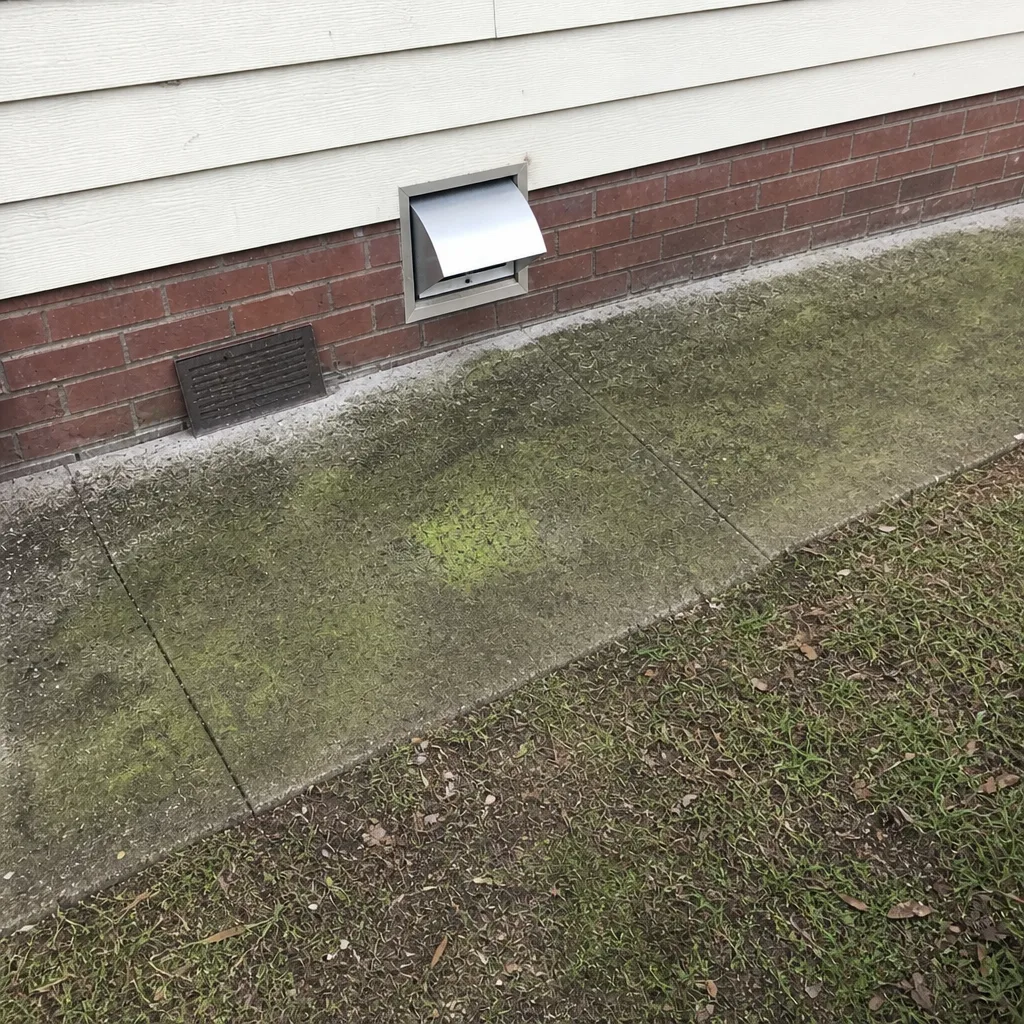
- After photos of the same surfaces, so you can compare what changed.
- A written summary of what was cleaned and any issues noted during cleaning.
That summary is where the code conversation begins if anything needs repair. If a technician finds a duct that’s come apart at a joint during cleaning, that’s the point where you ask whether the fix is a cleaning-side reseal or a mechanical repair that needs a licensed contractor and a permit.
Common Mistakes to Avoid
- Assuming a cleaning quote covers repair. If you signed a cleaning quote and the crew starts pulling duct apart, ask them to stop and confirm the scope. Cleaning and repair are separate line items.
- Not asking who pulls the permit. On any duct repair, ask the contractor directly who is pulling the mechanical permit. If the answer is “you don’t need one for this,” ask them to explain why.
- Skipping the warranty check. Newport News homes with HVAC equipment still under warranty need the warranty language read before cleaning. Some claims are easier to preserve than to fix later.
- Relying on a $99 coupon as the final number. A teaser coupon price rarely covers whole-system cleaning, and if it does, the low price usually means a portable unit instead of professional equipment. Ask for the whole-system range and a written estimate.
- Not photographing the before condition. A cleaning job with no before-and-after photos leaves you with no way to confirm the work was done. Insist on it.
- Ignoring attic ductwork. Newport News homes with attic-mounted systems need that ductwork included in the quote. If it’s not listed, ask why.
- Selling a house without permit records. If a repair was done to your duct system, keep the permit and inspection records somewhere with the home’s documents. Buyers will ask.
When to Call a Professional
There are a few clear signals that duct work in your Newport News home needs professional attention. Call us if you’re seeing visible dust streaming from a register when the system kicks on, if you smell something musty that gets worse when the HVAC runs, if a room never cools the way it used to, or if you’ve finished a renovation and the system has been pulling construction dust through the ducts since. Call us too if you already have a quote in hand that bundles cleaning and repair without itemizing them; we can walk through which line items are cleaning and which are mechanical repair so you know what you’re actually paying for.
Denali Air Duct Cleaning offers free estimates in Newport News. Call (866) 942-7630 and we’ll schedule a look. We run Rotobrush rotary-brush systems alongside Nikro HEPA-rated vacuums, and we treat the estimate as a written scope, not a sales conversation.
See the difference
 Before
 After
 Before
 After
 Before
 After
Frequently Asked Questions
No. Cleaning air ducts is maintenance work, not construction, and does not require a building permit in Newport News. The permit requirement only kicks in when the job involves repairing, replacing, or modifying duct components, at which point Virginia’s Uniform Statewide Building Code governs the work. Call (866) 942-7630 for an exact quote if you’re not sure which side of the line your job falls on.
Whole-system cleaning typically falls in a range based on the number of runs, whether attic or crawlspace ducts are included, and how accessible the system is. We give one flat price per system agreed before work starts, not a per-vent price, and the written estimate sets the final price. Anything quoted in a teaser range before a technician has looked at your system is a guess, not a quote. Call (866) 942-7630 for a free estimate; estimates are free.
Cheap quotes usually mean portable equipment instead of commercial-grade machines, a shorter cleaning scope, or a low teaser price that turns into a much larger invoice once the technician is on site. A crew that shows up with a shop vac and a blower isn’t doing the same job as a crew running a rotary brush into a negative-air containment zone. Ask what equipment will be on the truck before you book. Call (866) 942-7630 for a quote you can compare line by line.
Likely yes, if the repair involves replacing flex duct, cutting in a register, or making any change to the system’s configuration. Resealing a joint that came loose may not require a permit, but any added or replaced component generally does under the Virginia Uniform Statewide Building Code. We can diagnose and repair compromised ductwork the same visit, and we’ll tell you clearly which part of the job needs a mechanical contractor’s permit. Call (866) 942-7630 to discuss your system.
Documentation. A legitimate cleaning job includes before-and-after photos of your own ducts, a written scope agreed before work starts, and a summary of what was cleaned. If none of those is offered, you have no way to confirm the work matched the quote. We provide photos on every job so you can see the difference. Call (866) 942-7630 for a free estimate.
Most homes in Newport News do well on a cycle of every few years, though the interval depends on whether pets live in the house, whether anyone in the household has allergies, and whether the home has just been renovated. Homes with attic-mounted ductwork in this climate benefit from a check after several humid seasons because condensation stresses the joints. Call (866) 942-7630 and we’ll help you judge whether now is the right time.
The Bottom Line
The clean-versus-repair line is the whole story here. Cleaning your ducts doesn’t require a permit in Newport News, but the moment a component is replaced, reconnected, or added, you’re in mechanical code territory and the permit process is real. Ask any contractor to separate cleaning line items from repair line items in writing. Ask who pulls the permit on repair work. Keep the documentation, including before-and-after photos of your own ducts, because a future buyer or their agent will look for it. And check your equipment warranty language before the job starts, not after. If you want the cleaning done right and the repair conversation handled honestly, we’re one call away.
Call (866) 942-7630 for a free estimate on air duct cleaning in Newport News. We answer 24/7. Fast dispatch from 7am to 7pm, Sunday through Friday. We also handle dryer vent cleaning for homeowners and property managers who want the same standards applied to the vent side of the system. If you want to understand how the full job differs between cleaning, repair, and continuous maintenance, the team at Denali Air Duct Cleaning is happy to walk through it.
Written by the team at Denali Air Duct Cleaning.