
Last updated November 15, 2026
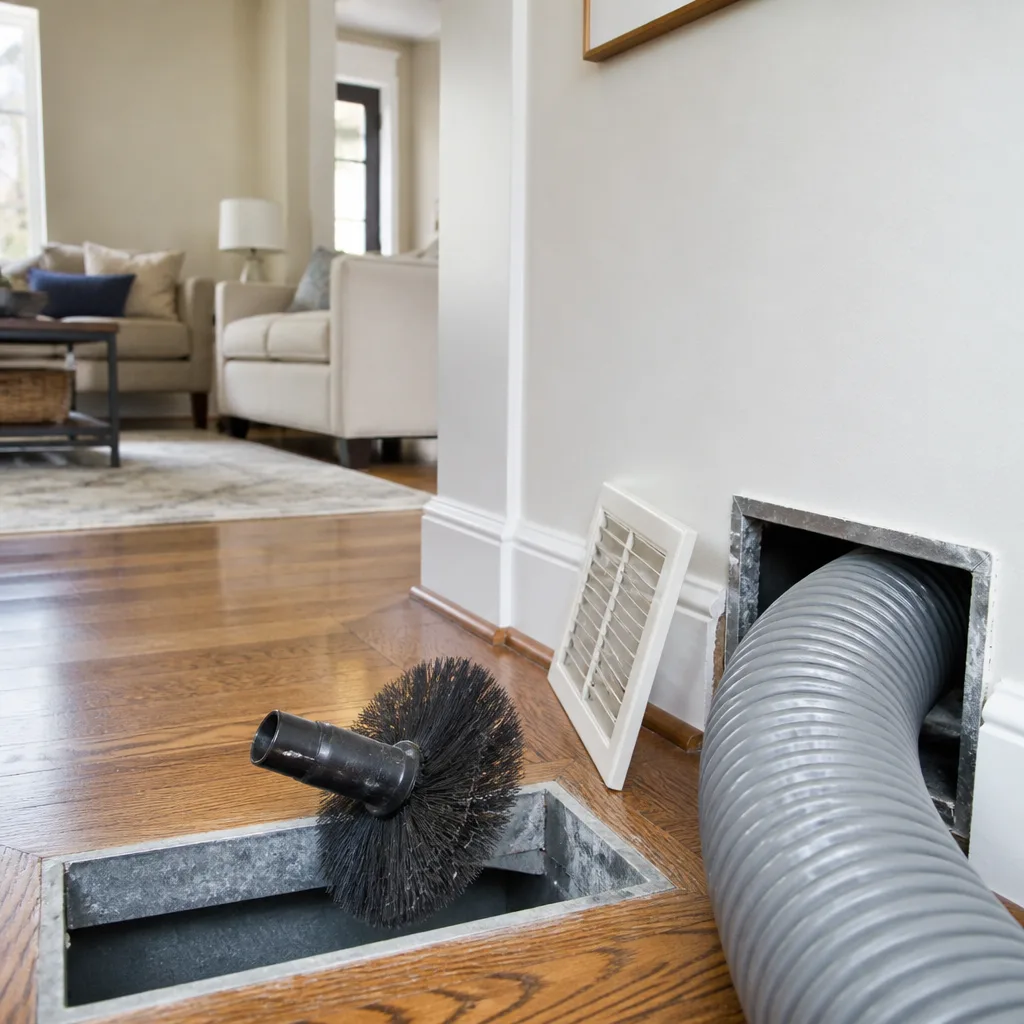 Whole-home duct cleaning
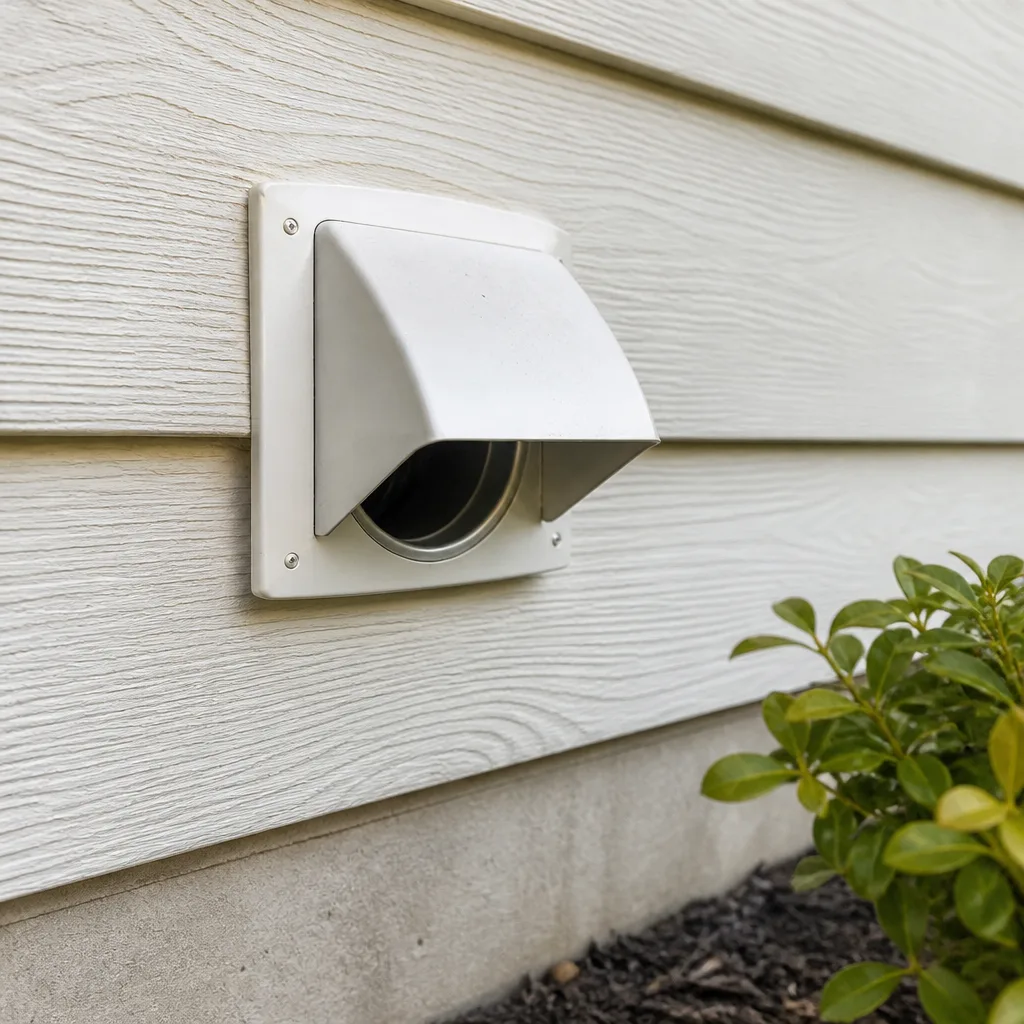 Dryer vent cleaning
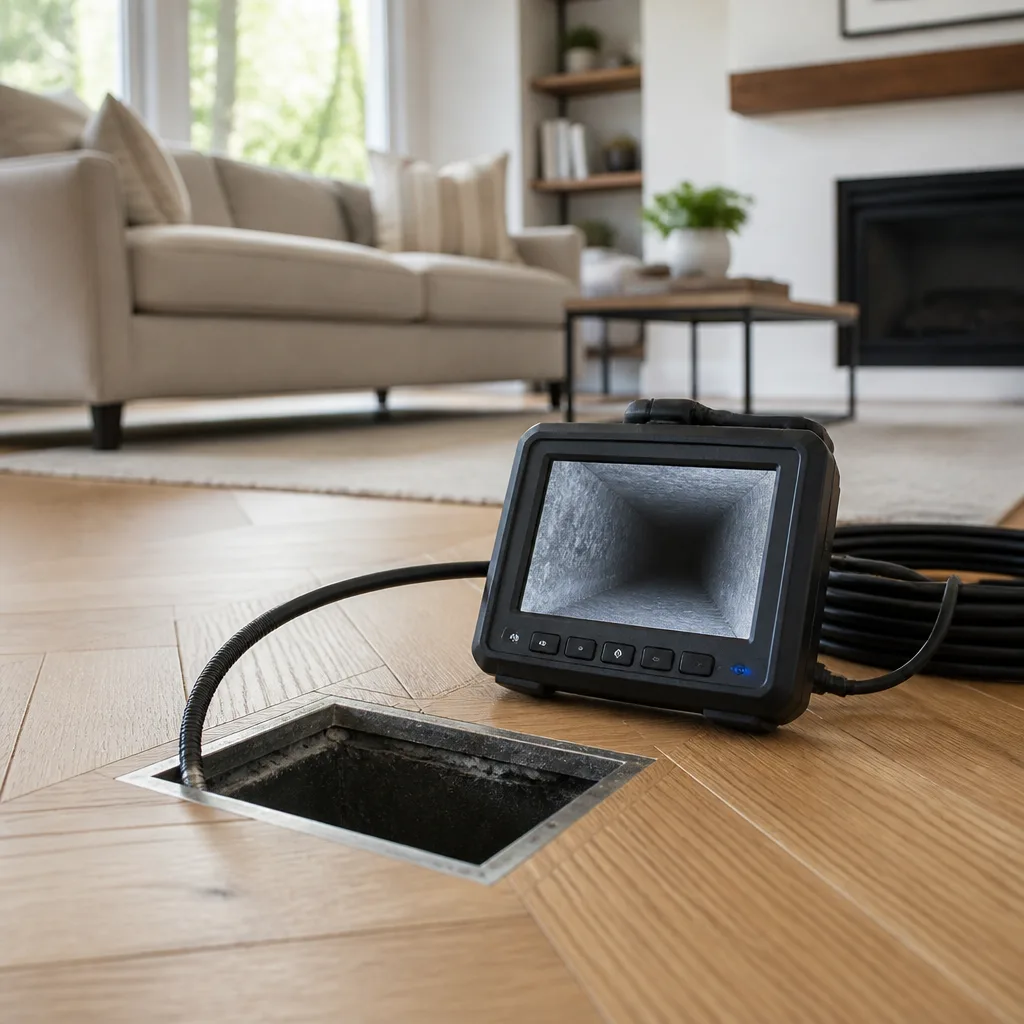 Camera inspection
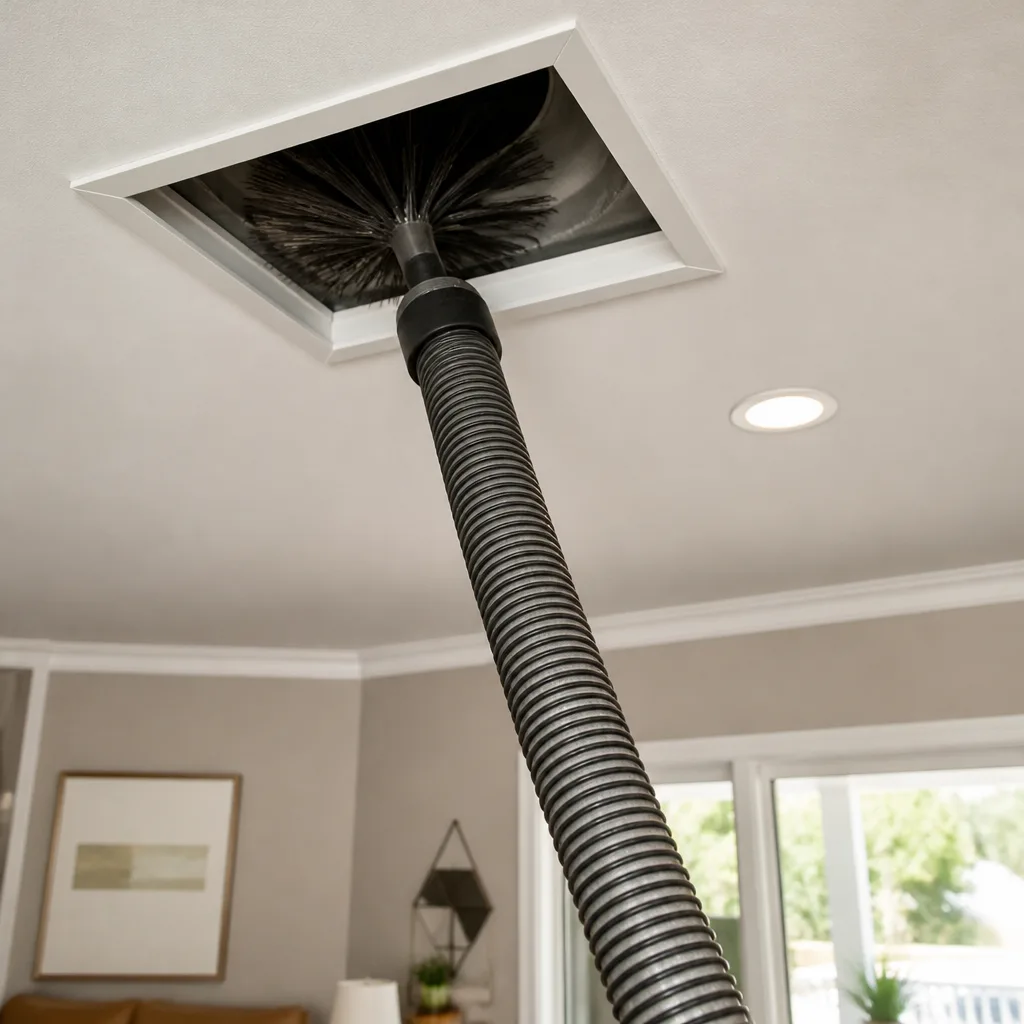 Sanitizing & deodorizing
Whole-system duct and dryer vent check with before-and-after photos - you see exactly what came out of your vents
That "$99 whole-house special" is a bait ad - the real number appears once they are in your hallway, or the "clean" is a shop-vac at the register. We photograph the inside of your ducts before and after instead.
How to Hire an Air Duct Cleaning Contractor in Newport News: A Step-by-Step Guide
Virginia does not require a specialty license to clean air ducts. Anyone with a van and a shop vacuum can legally take your money for the job. That single fact reframes the whole hiring decision: the price quote is the least important part of the conversation, and the five questions you ask before booking matter more than any coupon in a mailer. This guide walks through those questions, the equipment specs worth asking about, what NADCA membership does and doesn’t prove, the red flags we see in the Hampton Roads market, and how to structure the walkthrough so nothing changes once the crew is inside your ductwork. If you live in Newport News and your ducts are overdue, this is the sequence to follow.
Quick Answer
To hire an air duct cleaning contractor in Newport News, verify three things before booking: what equipment they’ll run (source-capture vacuum and rotary brush, not just an air whip), whether their credentials can be independently checked through NADCA, and what the written estimate covers line by line. Ask about negative-air containment and photo documentation, and insist the price is set per system before any work begins. Vague answers to any of those are your signal to move on.
Styles & brands we work with
- Whole-home duct cleaning
- Dryer vent cleaning
- Camera inspection
- Sanitizing & deodorizing
Table of Contents
- Why Virginia Has No Duct Cleaning License, and What That Means for You
- The Five Questions to Ask Before You Book
- What Equipment to Ask About: CFM, Brush Type, and Where the Vacuum Exhausts
- What NADCA Membership Actually Verifies
- Red Flags Specific to the Hampton Roads Market
- How to Structure the Walkthrough Before Work Begins
- What the Written Estimate Must Include
- How to Verify a Contractor Before You Call
Why Virginia Has No Duct Cleaning License, and What That Means for You
Virginia regulates HVAC contractors through the Department of Professional and Occupational Regulation, but duct cleaning as a standalone trade has no dedicated license class. A contractor performing duct cleaning alone is not required to hold a specialty credential the way an electrician or plumber is. That’s not a loophole; it’s simply how the state code is structured. The practical consequence for a Newport News homeowner is that the vetting burden lands entirely on you.
What this means in practice:
- You cannot call a state board to confirm someone is “licensed to clean ducts,” because that license doesn’t exist.
- A contractor who claims to hold a “duct cleaning license” from Virginia is either referring to a general business license, an HVAC contractor license for related work, or overstating what they have.
- Insurance and bonding are separate from licensing. Ask for a certificate of insurance and confirm the policy is current, since a general business license doesn’t guarantee either.
- Professional association membership becomes a more meaningful filter when the state credential isn’t available.
In a market like Newport News, where older housing stock in neighborhoods like Hilton Village and the Southeast Community often has ductwork that hasn’t been touched in decades, the difference between a competent contractor and a truck-and-vacuum outfit shows up fast. A franchise-trained crew running proper equipment will produce visibly different results than someone who shows up with a portable unit and a shop vac.
For the actual cleaning process itself, see our guide to air duct cleaning.
The Five Questions to Ask Before You Book
These are the questions that separate capable contractors from price-shoppers. Ask them by phone before anyone comes out, and listen for specifics rather than reassurances.
- What vacuum system do you run, and what’s its rated airflow? A professional source-capture vacuum should be rated in the thousands of CFM. Portable units that claim under a thousand are not pulling debris against the resistance of a residential duct run. Ask for the model and the rating.
- Do you use rotary brush or air whip? Rotary brush systems like Rotobrush physically agitate debris off duct walls. Air whips rely on compressed air and can push debris around rather than remove it from surfaces. A contractor who only runs air whip is doing a lighter job.
- Where does the vacuum exhaust? The right answer is outside the home or through a HEPA filter. A vacuum exhausting into the living space is recirculating the same debris you’re paying to remove.
- Are you a NADCA member, and can I verify it? Membership is verifiable. Ask for the member number and check it on the association’s directory before booking.
- Is the price per system or per vent, and is it fixed before work begins? Per-vent pricing creates an incentive to keep finding vents. A per-system price agreed before the job starts is the honest structure.
If a contractor can’t answer all five in plain language, that’s your answer. Our team at Denali Air Duct Cleaning fields these questions regularly, and they’re the right questions to ask.
What Equipment to Ask About: CFM, Brush Type, and Where the Vacuum Exhausts
Equipment is where the industry’s quality gap is widest, and where a homeowner can get the most useful information from a single phone call. Here’s what the technical terms actually mean.
CFM (Cubic Feet per Minute)
CFM measures how much air the vacuum moves. A residential duct system might contain several hundred cubic feet of internal volume, and debris clings to the walls. You need enough airflow to create negative pressure across the whole run, not just at the register. Ask the contractor for the rated CFM of their vacuum. If the answer is a number in the low hundreds, they’re running a shop vacuum with a filter. A commercial source-capture unit is rated in the thousands.
Brush Type: Rotary vs. Air Whip
Rotary brush systems use a spinning brush head on a flexible shaft to contact the duct interior and knock debris loose. Air whip systems use compressed air driven through a hose to blow debris toward the vacuum. Both are legitimate tools, but they produce different results on caked-on dust and debris. A contractor running rotary brush as the primary method is doing contact cleaning. Ask which one they’ll use on your system.
Vacuum Exhaust Location
The vacuum’s job is to remove, not to recirculate. A source-capture vacuum with HEPA filtration captures debris at the collection point. A vacuum that vents into the living space, or that lacks proper filtration, sends fine particulate back into the room. Ask specifically: does the exhaust vent outside, or does it go through HEPA filters? Professional setups do one or the other.
Containment and Surface Protection
The best crews also protect the house. Negative-air equipment holds the work area at a pressure below ambient, so dislodged debris moves toward the machine rather than into your kitchen. Surface protection products like Guardsman cover floors and finishes at the walkthrough. If a contractor doesn’t mention either of these, ask.
What NADCA Membership Actually Verifies
The National Air Duct Cleaners Association sets an industry standard for how duct cleaning should be performed. Membership is not a license, but it does carry meaning when other credentials don’t apply. Here’s what it does and doesn’t verify:
- It verifies: the contractor has agreed to the association’s code of ethics and assessment, cleaning, and restoration (ACR) standard, which specifies that the entire HVAC system be addressed rather than just the visible registers.
- It verifies: access to training resources and industry updates that non-members don’t have.
- It does not verify: the quality of any specific job, the equipment on the truck, or that the crew you’ll meet has completed any particular training.
- It does not substitute for state licensing, insurance, or a written contract. It’s one filter, not the whole vetting process.
Membership is checkable on the association’s public directory. Before you call any contractor, spend two minutes there. If the company claims membership but isn’t listed, that’s worth asking about. In our experience in Newport News, contractors who welcome that check are the ones who run proper equipment and stand behind the written scope.
Red Flags Specific to the Hampton Roads Market
Hampton Roads has a competitive duct cleaning market, and the low-price end is crowded. Here’s what to watch for in Newport News and the surrounding cities:
- Whole-house quotes under $99. A legitimate whole-system cleaning involves hours of labor, professional equipment, and photo documentation. Any quote in the double digits means corners will be cut, usually by skipping the main trunk lines or using a single-port vacuum that can’t reach the full run.
- Antimicrobial treatment upsells pitched before the job starts. If a salesperson leads with a fogging treatment without having seen your ducts, they’re selling product, not cleaning. Legitimate contractors assess first, then recommend.
- “Your ducts are the worst we’ve seen” as a script. Every house gets the same line. A capable contractor shows you photos of what’s actually in the system and explains what they found.
- No written estimate, or an estimate with vague scope language. If the estimate says “clean air ducts” without listing the trunk lines, the branches, the registers, and the air handler, the scope is undefined, and any add-on becomes negotiable on the day.
- No photo documentation of before and after. Duct interiors are out of sight. Photos are how you know the work happened.
- Cash-only pricing with no receipt trail. It limits your recourse if the job goes wrong.
Newport News has a mix of older and newer housing. In older homes near the James River, duct systems sometimes lack accessible cleanouts, which makes the job harder. Contractors who quote low to win the job often find that out on-site and then ask for more. That’s why a fixed per-system price before work begins protects you.
See also our page on dryer vent cleaning for the parallel hiring questions in that service line.
How to Structure the Walkthrough Before Work Begins
The walkthrough is the ten to twenty minutes before anyone starts work. It’s also where the tone of the entire job gets set. A legitimate contractor uses it to confirm scope and document conditions. Here’s what a well-run walkthrough looks like:
- Access and crawl-through. The contractor confirms the location of the air handler, main trunk, branch runs, and registers, and identifies any access points they’ll open.
- Inspection and photography. Before any cleaning begins, the contractor photographs the duct interiors. These are your baseline images and you should see them.
- Surface protection setup. Floors, furniture, and adjacent finishes should be covered. Ask what products they’ll use.
- Negative-air setup. The vacuum and containment are connected and confirmed reaching target pressure before cleaning starts.
- Scope confirmation in writing. Walk through the written scope together. Confirm what’s covered and what isn’t. Any additions should be priced before work starts, not after.
- After-cleaning photos. The contractor photographs the same locations after cleaning. You get before-and-after documentation of your system, not a generic sales folder.
Our team at Denali Air Duct Cleaning runs this sequence on every job. If a contractor skips the walkthrough or treats it as a formality, that’s a warning sign, regardless of the price.
What the Written Estimate Must Include
The estimate is your contract for scope, and it’s the document that protects you if the contractor finds something unexpected once inside the system. Here’s what a proper written estimate includes:
- A per-system price. One number for the whole system, not per vent or per register.
- An itemized scope. Main trunk, branch runs, registers, air handler, and any return-side components should be listed explicitly.
- Equipment named. The vacuum model or type, brush type, and whether HEPA filtration or outside exhaust is used.
- Containment description. Negative-air or source-capture description in plain terms.
- Photo documentation commitment. Before and after, delivered to you.
- What’s excluded. Repair of damaged ductwork, mold remediation, or HVAC repairs should be spelled out as separate scopes.
- Change-order language. If the contractor finds a problem mid-job, how is additional scope priced and approved? Get it in writing before they open the system.
- Contact and credentials. Business name, contact information, and how to reach them if something goes wrong after the job.
One thing to watch for: contractors who can clean but can’t repair. Compromised ductwork (separated joints, crushed flex runs, torn insulation) is often discovered during cleaning. If your contractor’s scope stops at “clean and document,” any repair becomes a separate job with a separate contractor. That’s why we treat Air Duct Repair as a core service rather than an upsell. If we find a problem during cleaning, we can fix it the same visit with the right equipment and materials on hand.
How to Verify a Contractor Before You Call
Between one and five minutes on a laptop can eliminate most of the market. Here’s a quick verification sequence:
- Search the state business registry (Virginia’s SCC site) for the business name. Confirm the entity is active.
- Check the NADCA directory if the contractor claims membership. The member search is public.
- Ask for a certificate of insurance and confirm the policy is current. General liability coverage should name the business.
- Look for photo documentation on their own site or in reviews that shows duct interiors, not just equipment on a truck.
- Read pricing structure. Per-system price ranges are a good sign. No pricing visible at all is common but ask for the structure on the phone.
- Call and ask the five questions. The way the person on the phone handles equipment questions tells you most of what you need to know.
If all six check out, you can move forward. If any one of them fails, keep calling. The right contractor is out there, but the burden is on you to find them in Virginia.
Common Mistakes to Avoid
- Booking on price alone. The lowest quote in Newport News is very often the lowest for a reason, usually a shop vacuum and an hour of labor. The difference in result between a $79 job and a properly scoped one won’t show up on the invoice, but it will show up in your air quality and allergy symptoms.
- Accepting an antimicrobial upsell before the job. Legitimate contractors assess first. If the antimicrobial treatment is pitched before they’ve looked at your ducts, it’s a script, not a recommendation.
- Skipping the written estimate. A verbal agreement leaves you with no recourse if scope changes on-site or the contractor “discovers” a problem and adds cost.
- Not asking about vacuum exhaust. A vacuum that recirculates into the living space is doing half the job. Ask where the exhaust goes.
- Assuming state licensing covers this trade. It doesn’t in Virginia. That’s not a knock on the state; it’s just how the code is written. The vetting is yours.
- Not getting before-and-after photos. If you can’t see the duct interiors in photos, you can’t verify the cleaning happened. This is the single most useful post-job document.
- Skipping the walkthrough. A few minutes on the front end prevents scope disputes later. Contractors who skip it often work from a standard script.
See the difference
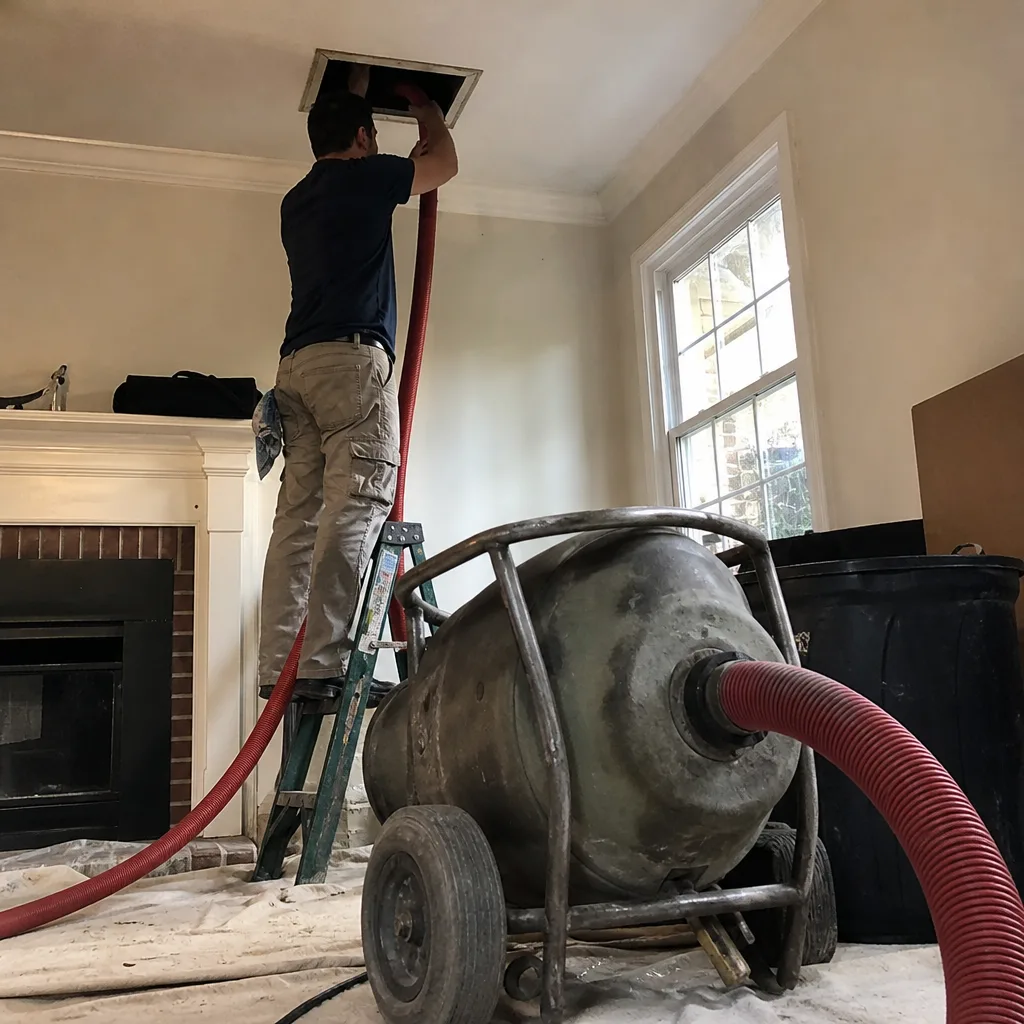 Before
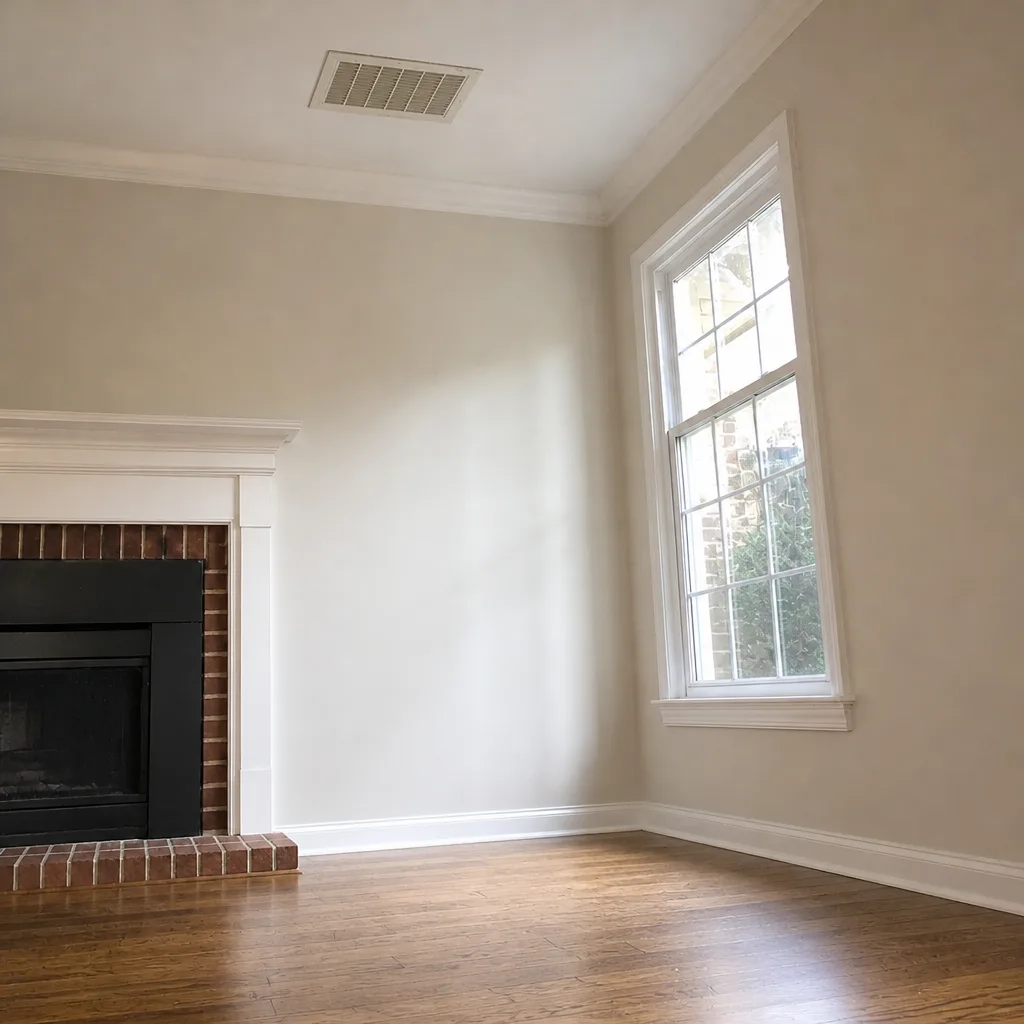 After
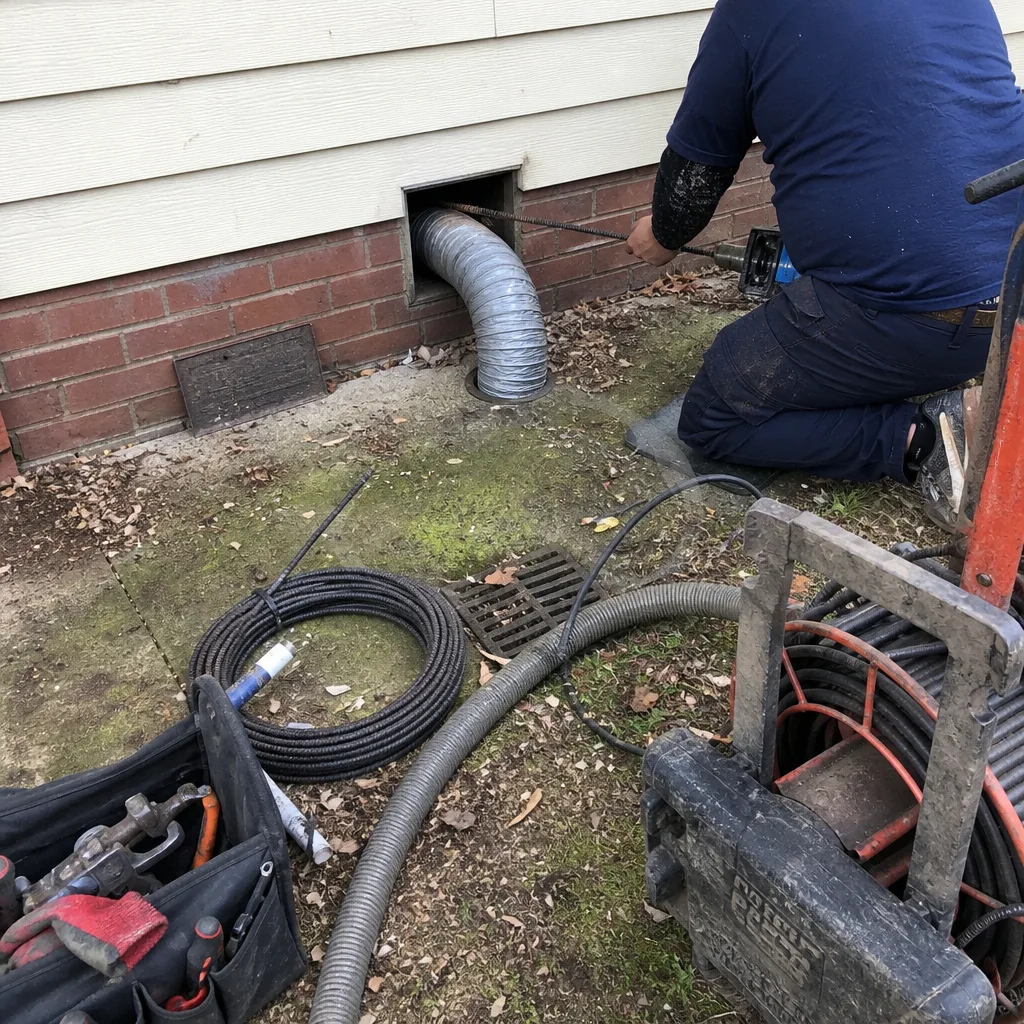 Before
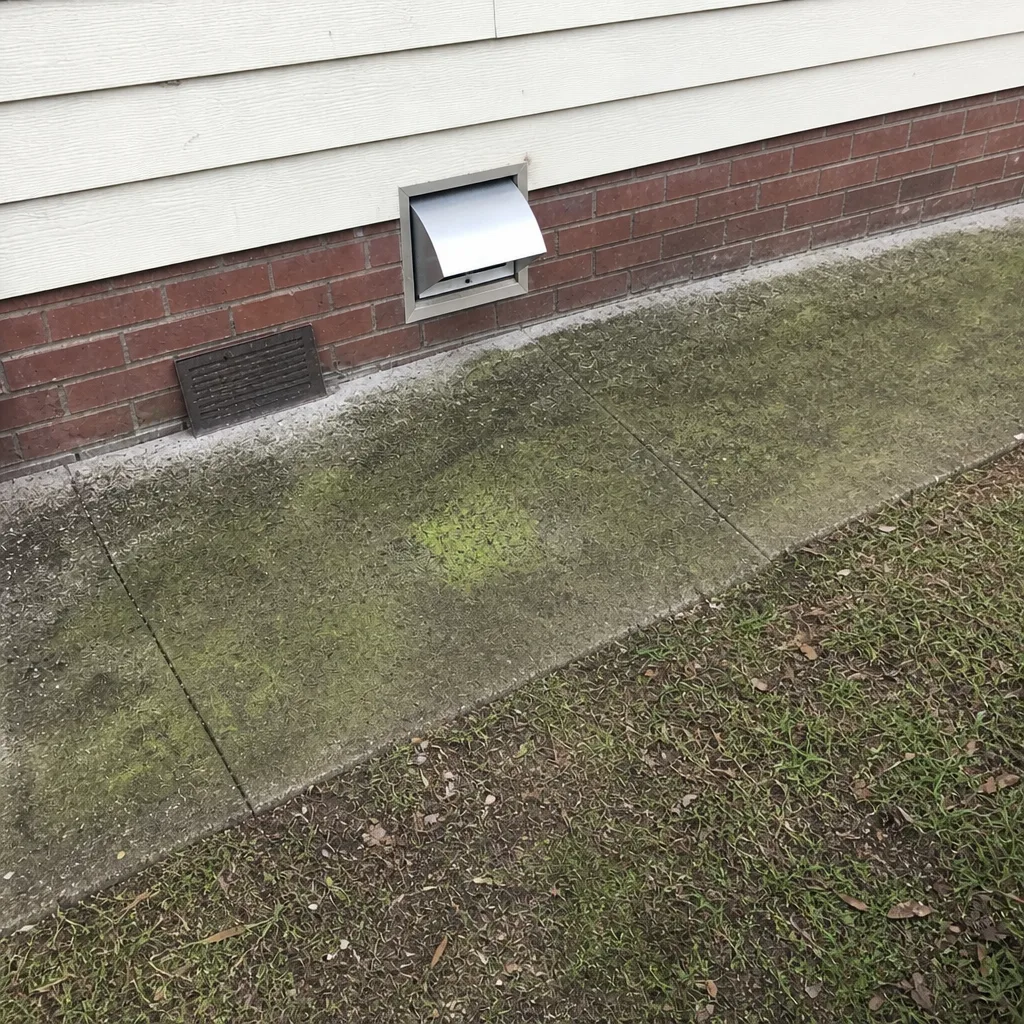 After
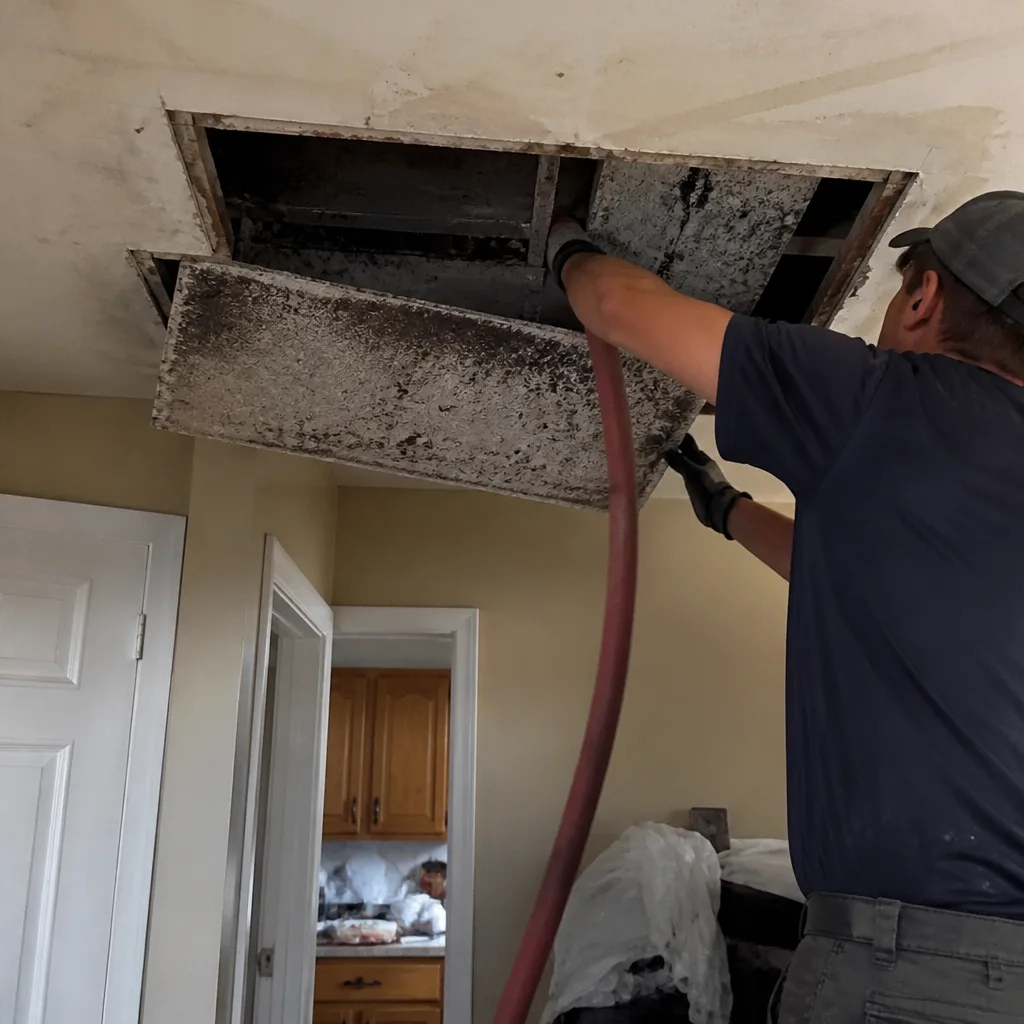 Before
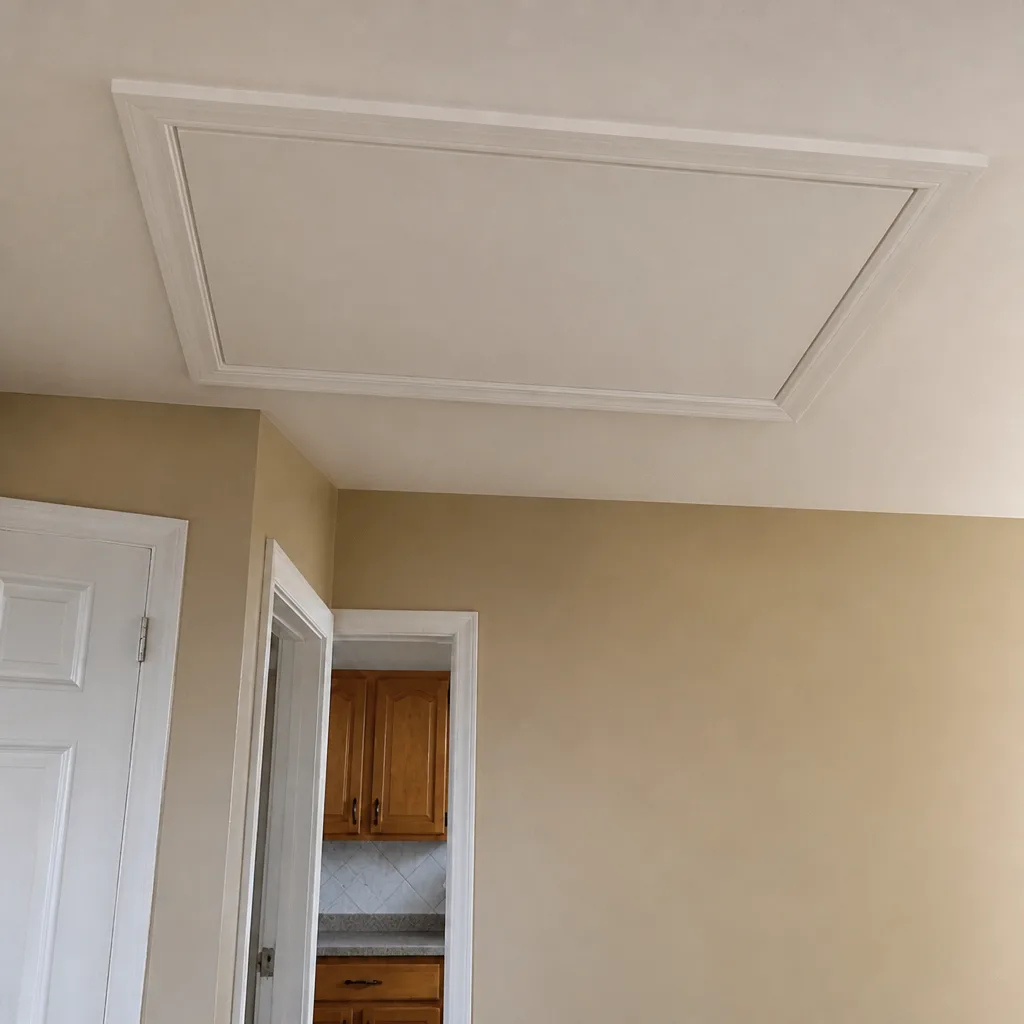 After
When to Call a Professional
Some signs mean it’s time to book a duct cleaning in Newport News. You’re seeing visible dust blowing from registers shortly after cleaning the room. Musty or stale odors linger when the HVAC runs, especially after a humid summer. Someone in the household has allergy symptoms that worsen when the system is on. You’ve just finished a renovation and drywall dust is everywhere. Or your energy bills have crept up without a change in usage. These are the triggers that justify the call. Dryer vent cleaning is a separate case, and it’s a fire-prevention service rather than routine maintenance; if you haven’t had yours cleaned in years, that’s worth scheduling regardless of the duct situation.
If you’re ready to get an estimate, Denali Air Duct Cleaning offers free estimates in Newport News. Call (866) 942-7630. We answer 24/7. Fast dispatch from 7am to 7pm, Sunday through Friday.
Frequently Asked Questions
No. Virginia does not have a specialty license for air duct cleaning as a standalone trade. Homeowners in Newport News and elsewhere in the state need to verify insurance, check NADCA membership if claimed, and ask the equipment and scope questions themselves. A general business license is not the same as a specialty contractor credential and doesn’t guarantee quality of work.
Whole-system cleaning in the Newport News area generally runs in the range of a few hundred dollars for a typical single-family home, with larger or more complex systems at the higher end. Whole-house quotes under $99 are a red flag because the labor and equipment involved can’t be delivered at that price. Call (866) 942-7630 for an exact quote; estimates are free and the written estimate sets the final price.
Cheap quotes usually mean a portable shop vacuum rather than a commercial source-capture system, a single-pass air whip instead of rotary brush agitation, and a scope that skips the trunk lines. The contractor is still making money; they’re just doing less work. A written, itemized, per-system quote shows you exactly what’s covered. Call (866) 942-7630 to see how our scope compares.
Before-and-after photos of your duct interiors, taken at the same locations. Any contractor who won’t provide those is asking you to trust them without documentation, and duct interiors are out of sight by design. Ask at booking whether photos are standard and who delivers them.
For most Newport News homes, every three to five years is a reasonable baseline, with more frequent cleaning after a renovation or if you have pets or allergy concerns in the household. Visible dust from registers, musty odors, or recent drywall work are all reasons to move up the schedule. Dryer vents have a different timeline: they should be checked and cleaned more often because they’re a fire-safety concern, not just an air-quality one.
Cleaning removes the organic debris that feeds odor-causing growth inside the system, and it can solve many musty odor problems. If the odor source is mold growth that has penetrated duct lining or the air handler itself, cleaning alone may not be enough. Ask about inspection and photo documentation during the walkthrough. Call (866) 942-7630 for an assessment; we’ll tell you honestly what cleaning will and won’t solve.
No. You can stay in the house during standard duct cleaning with proper negative-air containment, though it’s common to step out during the noisiest portion. Ask your contractor whether they’ll set up negative-air equipment and how they’ll protect floors and finishes before work starts.
The Bottom Line
Duct cleaning has no state license in Virginia, so the vetting is entirely on you. Ask the five questions, verify NADCA membership if claimed, insist on a written per-system estimate with itemized scope, and require before-and-after photos of your own system. Watch for the Hampton Roads market’s low-bid traps: under-$99 whole-house quotes, antimicrobial upsells before inspection, and contractors who clean but can’t repair. If all that checks out, you can book with confidence. Denali Air Duct Cleaning offers free estimates in Newport News. Call (866) 942-7630. We answer 24/7. Fast dispatch from 7am to 7pm, Sunday through Friday. Our technicians have up to 11 years of experience.
Learn more about Newport News if you’re new to the area and want the full picture of the city.
Written by the team at Denali Air Duct Cleaning.