
Last updated November 15, 2026
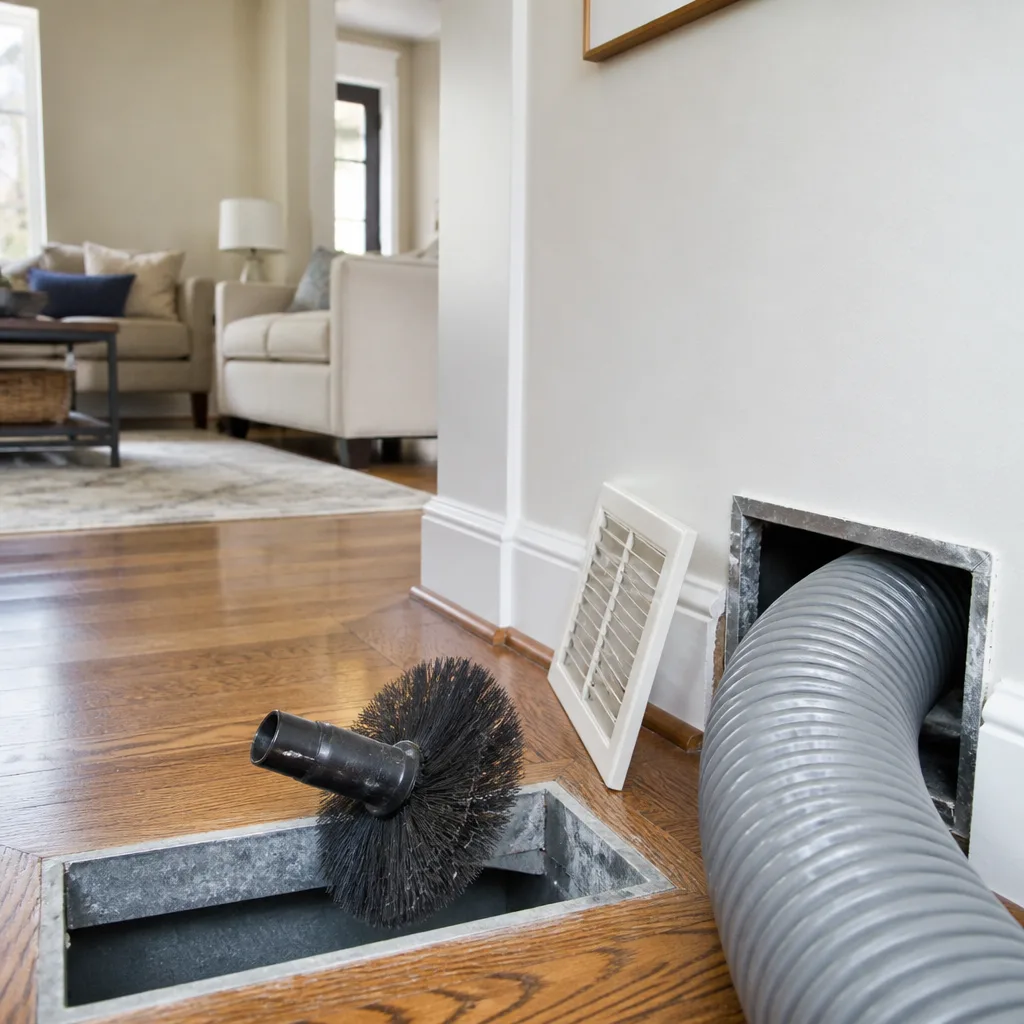 Whole-home duct cleaning
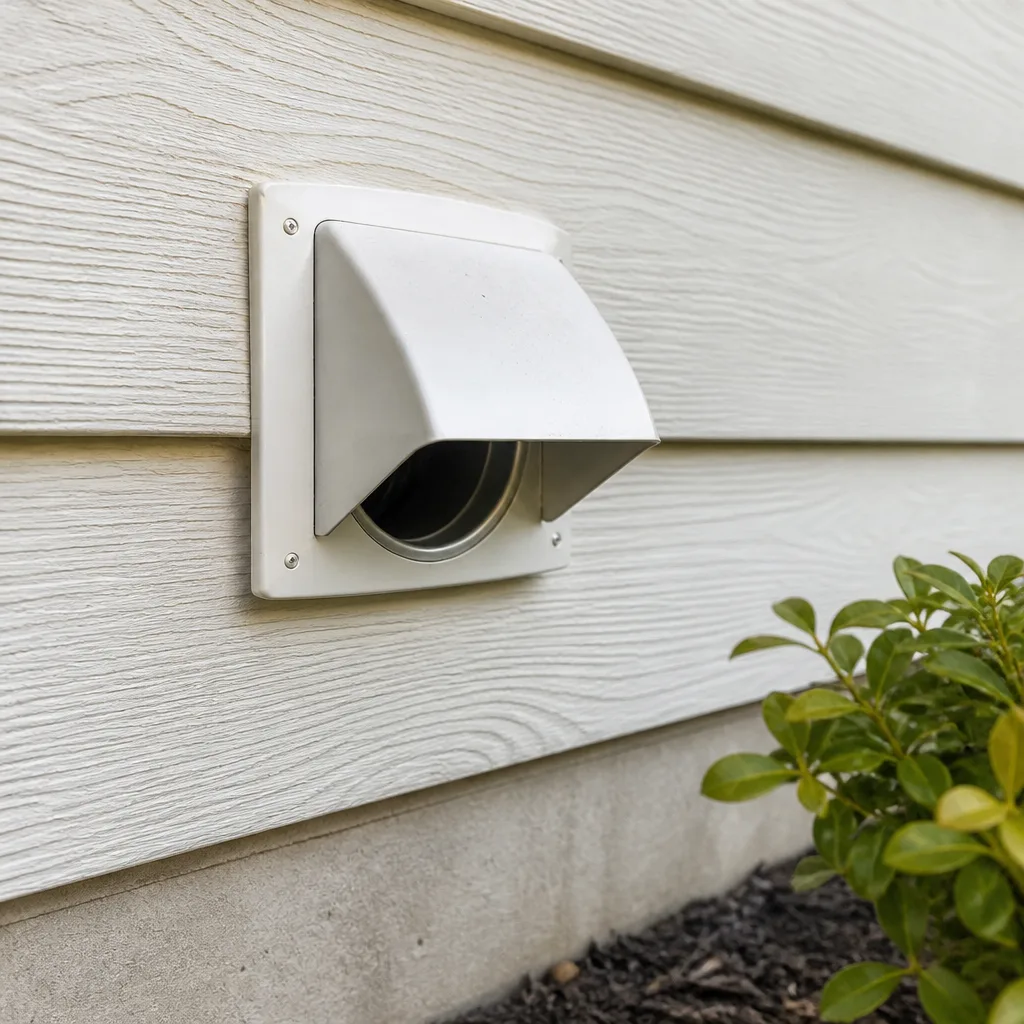 Dryer vent cleaning
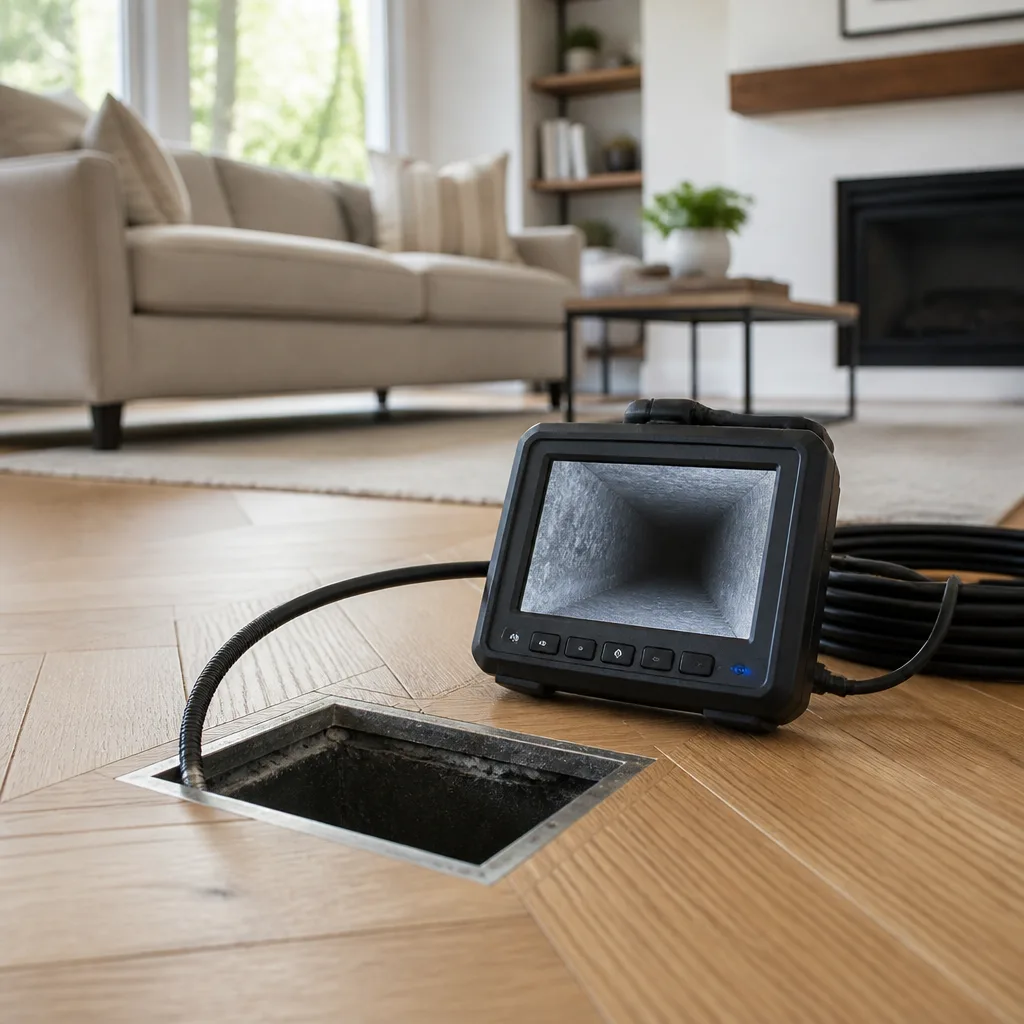 Camera inspection
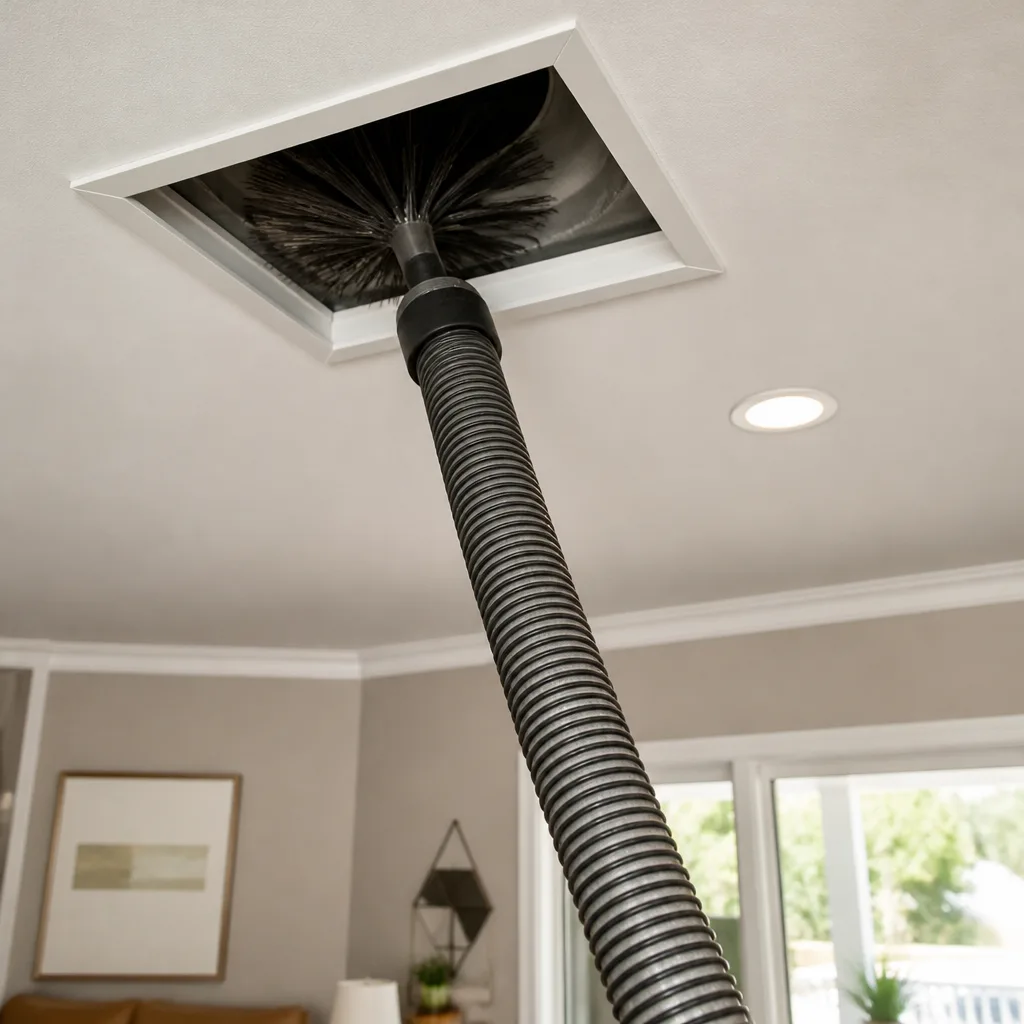 Sanitizing & deodorizing
Whole-system duct and dryer vent check with before-and-after photos - you see exactly what came out of your vents
That "$99 whole-house special" is a bait ad - the real number appears once they are in your hallway, or the "clean" is a shop-vac at the register. We photograph the inside of your ducts before and after instead.
DIY vs Professional Air Duct Cleaning: The Newport News Homeowner’s Decision Guide
Here’s the part most DIY guides skip: the brush kit and shop vac you can rent or buy cleans roughly the last foot of your duct system. The trunk lines, main plenums, and blower housing, where most of the debris mass actually settles, sit behind walls and inside mechanical chases that no consumer tool can reach. That’s not a knock on your ability. It’s a physical limit built into the equipment. This guide breaks down, honestly, what consumer-grade tools can and cannot do, the narrow cases where DIY register cleaning earns its keep, and how to weigh a Saturday of your own labor against a professional cleaning in Newport News.
Quick Answer
DIY air duct cleaning is worth doing only on the registers, return grilles, and short accessible runs you can reach by hand. A professional cleaning is the only way to reach the trunk lines, plenums, and blower housing, because it takes commercial negative-air equipment and rotary brushes to agitate and capture debris down the whole system. For most homes in Newport News, especially older homes with metal ductwork, professional cleaning delivers a result no shop vac can match.
Styles & brands we work with
- Whole-home duct cleaning
- Dryer vent cleaning
- Camera inspection
- Sanitizing & deodorizing
Table of Contents
- What DIY Duct Cleaning Equipment Can and Cannot Reach
- When DIY Register Cleaning Is Genuinely Worth It
- Where Displaced Debris Goes Without Negative Pressure
- Why Older Newport News Homes Need a Careful Approach
- The Honest Cost-Benefit Framework
- What a Professional Cleaning Actually Involves
- How to Inspect Your Own Ducts Before You Decide
What DIY Duct Cleaning Equipment Can and Cannot Reach
The typical consumer duct brush is a flexible rod that feeds a few feet into a register boot before it binds on a corner, a joint, or a change in duct size. In our experience, most homeowners get about 18 inches past each opening before the tool stops making useful contact. That reach covers the register boot and the very start of the branch run. Everything past that point is a guess.
A residential shop vac moves air, but not the kind of air volume that pulls debris out of a long horizontal run. To move settled dust and lint through a duct system, you need sustained negative pressure at the main trunk while the debris is mechanically agitated loose. Equipment that generates 4,000+ CFM of negative pressure is what makes that happen. A shop vac doesn’t come close, and a spinning brush on a drill extension just sends dust downstream where it re-settles.
Here’s the practical breakdown of what each level of equipment handles:
- Register covers and return grilles: Fully doable by hand. Remove, wash, dry, reinstall.
- First 12 to 18 inches of each branch run: Reachable with a consumer brush kit, though effectiveness drops fast on turns.
- Horizontal branch runs: Out of reach for consumer tools on most layouts.
- Main trunk lines: Requires rotary brush systems and access points a homeowner doesn’t have.
- Supply and return plenums: Sealed and pressurized during professional cleaning; not a DIY space.
- Blower housing and evaporator coil area: Requires technician access and containment.
The reason this matters is scale. In most homes, the debris that actually circulates sits in the trunk lines and plenum, not the last foot of branch duct. Cleaning the reachable foot feels productive because you see dust come out. But the mass you’re worried about is upstream, and that’s a professional equipment problem, not a motivation problem.
When DIY Register Cleaning Is Genuinely Worth It
There are three real scenarios where picking up a brush kit and a vacuum yourself makes sense, and we’d rather you know them than pretend every case needs a truck in the driveway.
Post-renovation dust in accessible runs. If you just finished a bathroom remodel or a drywall repair, fine gypsum dust coats the register boots and the first stretch of visible duct. Wiping the covers and vacuuming the reachable stub cuts down on the visible puff every time the system kicks on. It’s a stopgap, though, not a cleaning. The fine dust that migrated into the trunk is still there.
Isolated register covers clogged with pet hair. If you have a shedding dog or cat, the return grille can mat up fast. That’s a cover problem, not a duct problem. Pop the grille off, wash it, vacuum the boot, and you’ll notice improved airflow at that register right away.
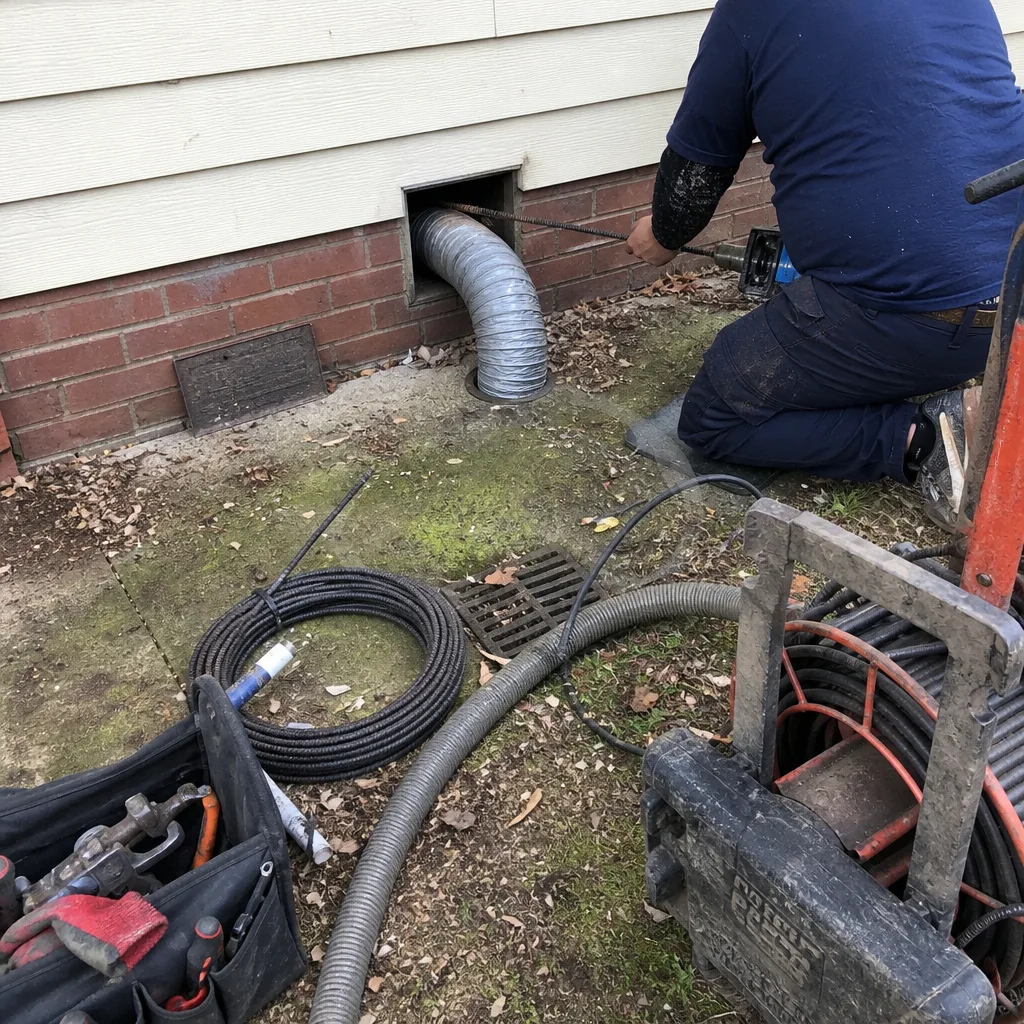
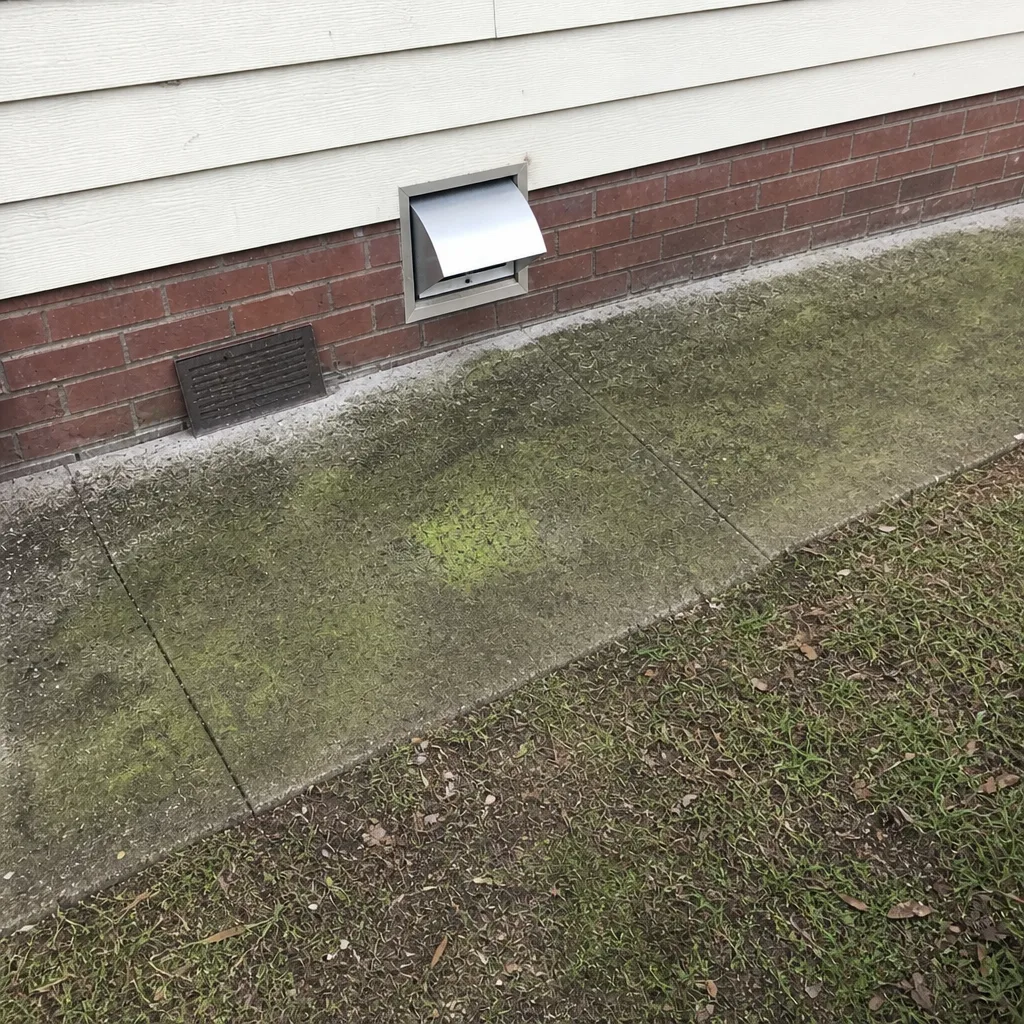
Dryer vent lint maintenance. This one is genuinely homeowner-friendly and worth doing carefully. Pull the flexible connection behind the dryer, vacuum out loose lint from the exterior vent hood, and check the run isn’t crushed. Anything past a short, straight section, though, needs a proper rotary brush and vacuum, and we’d rather see that scheduled than improvised. Dryer vent cleaning isn’t optional maintenance – it’s a fire-prevention service, and the lint trapped deep in a long run is the part that burns.
Those three cases share one trait: the debris is on a surface you can reach. The moment the problem moves past the register boot, DIY stops being useful.
Where Displaced Debris Goes Without Negative Pressure
This is the failure mode most DIY guides never mention. When you brush or blow dust loose in a duct system without holding negative pressure on the whole assembly, that debris doesn’t disappear. It moves. And where it moves is decided by airflow, not by you.
- Downstream into branch runs. Loosened dust gets carried toward the register you were trying to clean, then drops out at a joint or a low spot in the run.
- Into the plenum and blower housing. Fine particles that stay airborne get pulled back into the return and settle on the blower wheel. A coated blower wheel is harder to clean than the original dust.
- Onto the evaporator coil. Debris that rides back to the air handler can build up on the coil fins, which reduces cooling efficiency and creates a damp surface where biological growth takes hold.
- Into the room air. Without HEPA-rated capture at the source, some fraction of what you loosen ends up as airborne dust on your furniture and in your lungs before it settles.
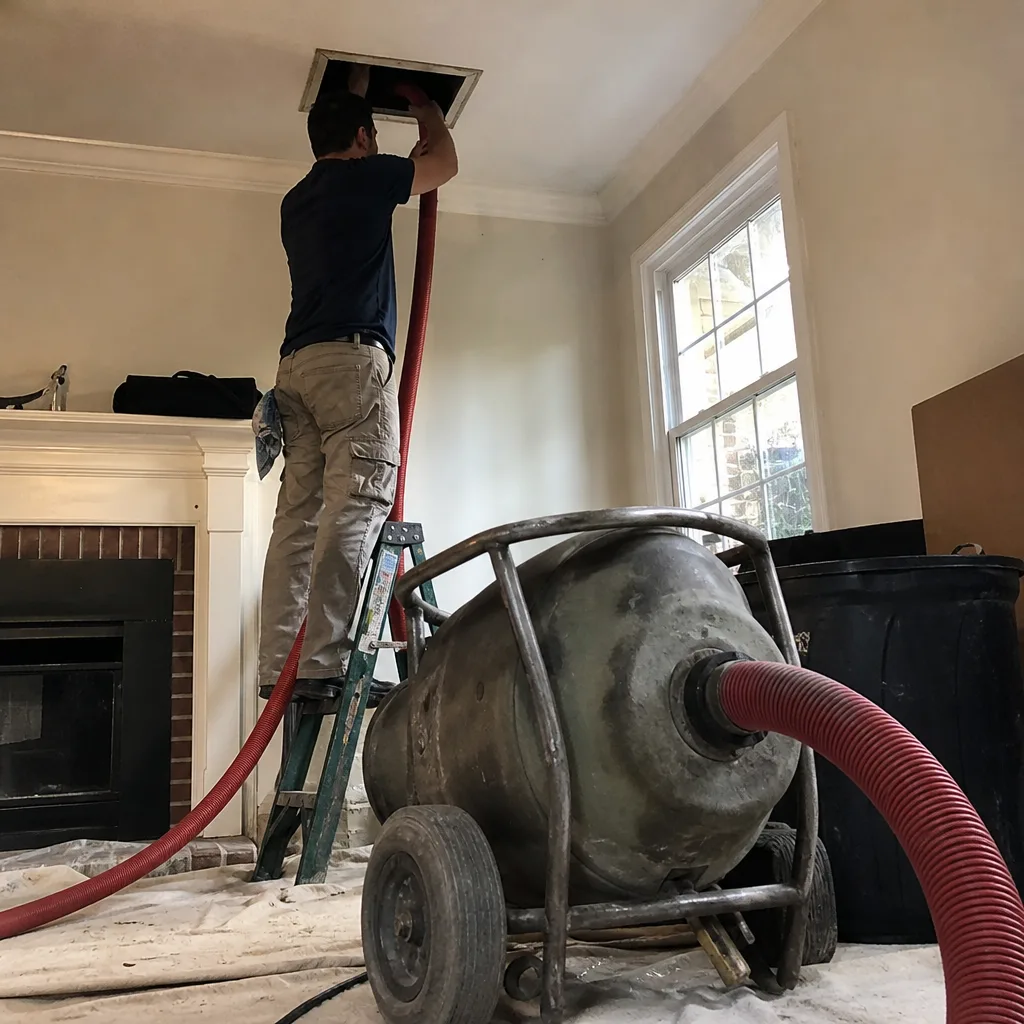
The professional answer to this is negative-air containment: the workspace and duct system are held under vacuum so displaced debris gets captured, not redistributed. Denali uses Abatement Technologies negative-air equipment, the same class of machinery used in professional remediation work, alongside Nikro HEPA-rated vacuums that capture dislodged debris at the source. That’s a contamination-control standard, and it’s the structural reason DIY brushing can make a dusty system worse before it gets better.
Why Older Newport News Homes Need a Careful Approach
Newport News has housing stock built across a long stretch of decades, and that matters when you’re deciding whether to clean ducts yourself. Homes in Hilton Village and the East End in particular often have older metal duct systems. Metal is durable, but the insulation wrapped around it or lined inside it may not be.
When you feed a consumer brush into a decades-old duct, you can’t see what you’re contacting. Here’s what can go wrong on older metal systems:
- Deteriorating insulation. Aging internal duct liner can be brittle. A stiff brush can break it loose, and now you have fiberglass fragments in the airstream that weren’t circulating before.
- Loosened joints. Older duct systems are held together with tape, screws, and friction fittings. Brushing dislodges dust and also shakes joints. A small leak that was barely leaking becomes a real one.
- Dislodged sealant and mastic. Cracked mastic at seams can fall away during brushing and travel downstream.
A professional assessment before cleaning is what catches these problems. That’s part of why we offer air duct repair as a core service rather than an afterthought. If a technician finds compromised ductwork in a Newport News home, we can diagnose and fix it rather than document the problem and leave. Cleaning a compromised system without inspecting it first is how a routine job turns into an air quality problem.
Homes here also run their systems hard in the humid summer months, which means condensation is a factor and dust that coats a damp duct interior clings harder than it would in a dry climate. That adhesion is one more reason consumer brushes struggle here.
The Honest Cost-Benefit Framework
Here’s where most “DIY vs professional” articles go wrong. They frame the choice as expensive versus free. It isn’t. It’s the cost of equipment, your time, and the likelihood of doing the job right once versus the cost of a professional cleaning and the certainty of outcome.
Let’s be honest about what DIY actually costs you. A consumer duct brush kit and a decent shop vac run a real amount of money. If you’re tackling your dryer vent too, add a vent brush kit. Then add a half-day of your time, plus the risk of loosening insulation or disturbing a joint you can’t see. If the result is still a system that circulates dust, you’ve spent money and time to fix part of the problem.
The professional side of the ledger offers something specific: a written estimate before work starts, commercial-grade equipment sized to the actual job, and a before-and-after record of the work. That’s a different product than a brush on a drill extension, and it’s fair to compare them that way.
A simple framework to decide:
- Debris is only on register covers or short reachable stubs? DIY is a fine choice.
- You’re dealing with a dryer vent run longer than a few feet? Have it professionally cleaned; the fire risk of deep lint isn’t worth improvising.
- You suspect debris in the trunk lines, a musty smell, an allergy trigger, or a recent renovation? Professional cleaning is the right call.
- Your home is older and you can’t see the duct interior? Have it inspected before anyone brushes it, including you.
- You’ve DIY-cleaned before and the system still seems dusty? That’s the tell that the reachable foot wasn’t the problem.
When the gap between DIY cost and professional cost narrows because you’re renting equipment or buying supplies you’ll use once, the outcome difference usually makes the decision for you.
What a Professional Cleaning Actually Involves
A professional cleaning isn’t one tool and one motion. It’s a sequence, and the sequence is what makes the results repeatable. Here’s generally how a job goes:
- Inspection and access. The technician locates access points, checks the duct layout, and identifies any compromised sections before cleaning begins.
- Containment setup. Negative-air equipment is positioned so the whole system is held under vacuum, and surface protection goes down to guard your floors and finishes. We use Guardsman surface-protection products for this.
- Mechanical agitation. Rotary brush systems are run through the ductwork to break debris loose from the walls. The Rotobrush system is standard on every job because contact agitation is what actually removes clinging dust rather than just moving air past it.
- Capture at the source. Nikro HEPA-rated vacuums collect the dislodged debris as it comes loose, so it doesn’t get redistributed through the house.
- Repair as needed. If the inspection turned up a loose joint, a crushed run, or deteriorated insulation, the same crew can address it. Air duct repair is a core service for us, not an upsell tacked on at the end.
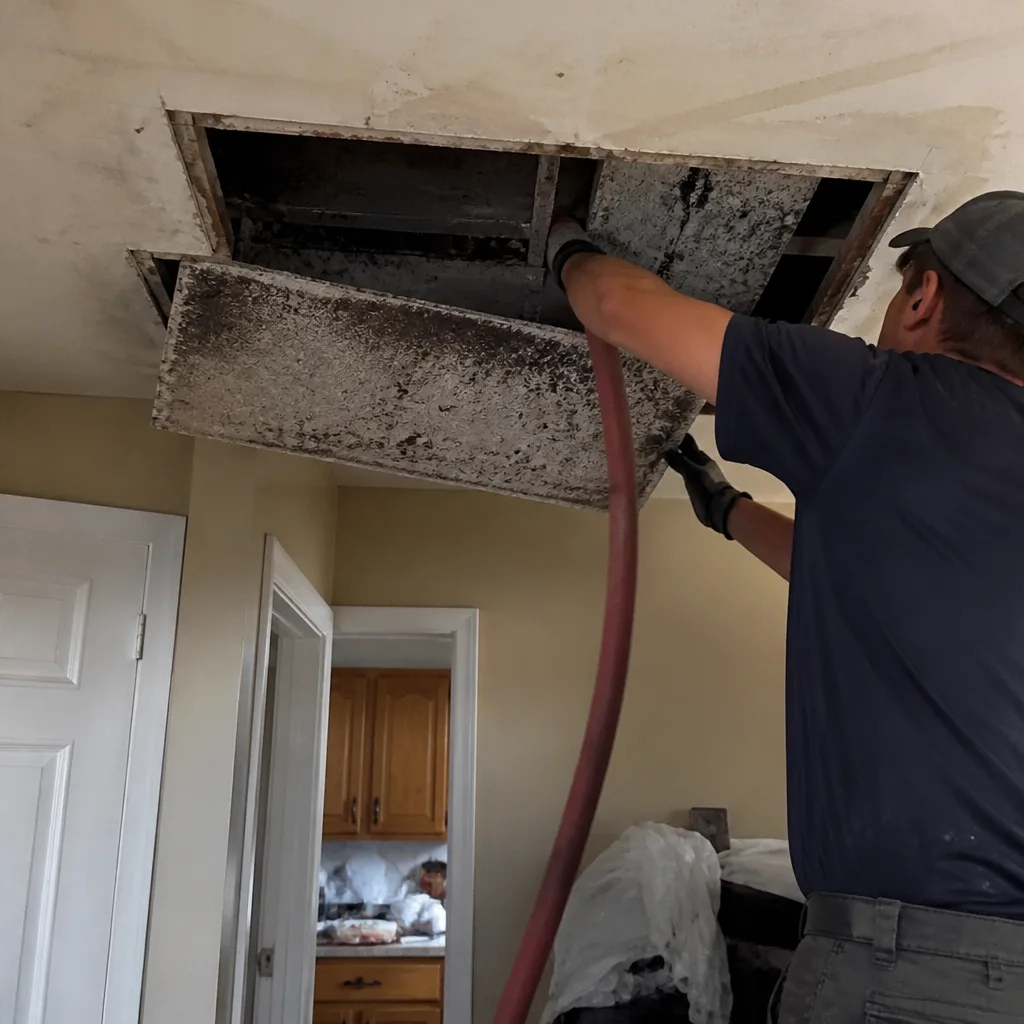
- Documentation. Before-and-after photos of your system, taken during the job, so you can see what changed.
For a Newport News home with older metal ducts, that inspection step often reveals insulation or joint issues that a DIY brush would have worsened. Cleaning and, if needed, repair in one visit is the honest way to approach an older system.
How to Inspect Your Own Ducts Before You Decide
Before you buy a brush kit or book a cleaning, do a walkaround. You can learn a lot about your system in twenty minutes without touching a tool.
- Shine a light into a register boot. If you see a mat of dust or hair in the first foot, that part is DIY-able. If the dust continues as a haze deeper into the run, that’s the hidden problem.
- Check for musty or stale odor when the system kicks on. A smell at startup suggests debris or moisture somewhere you can’t see, which points to professional work.
- Look at the return grille for matting. Mats of pet hair or lint on the cover are a cover problem; clean it and move on.
- Look at visible duct runs in a basement or crawlspace. Sagging runs, disconnected joints, or torn insulation wrap mean the system needs inspection before cleaning, not after.
- Note recent renovations. Drywall dust migrates further than you’d think. If you’ve remodeled lately, the debris isn’t only at the covers.
- Ask how long since the ducts were last cleaned. If you don’t know, that’s your answer: schedule an inspection.
If your walkaround turns up any of the last four items, it’s time to stop researching brushes and start researching cleaners. Our team at Denali Air Duct Cleaning handles air duct cleaning, dryer vent cleaning, and air duct repair, and a professional inspection is the honest way to decide which of those your home actually needs. If a post-cleaning air-quality upgrade would help, we can discuss Honeywell and Aprilaire solutions in the same visit.
Common Mistakes to Avoid
- Assuming a shop vac reaches the trunk. It doesn’t. A shop vac pulls air at the hose opening, but it can’t hold negative pressure across a whole duct system, so dust settles downstream.
- Brushing old metal ducts without inspecting first. Older homes in Hilton Village and East End often have brittle insulation and fragile joints that a stiff brush can damage. Inspect before you brush.
- Skipping containment. Cleaning without negative-air capture redistributes dust into your rooms, which is the opposite of the goal. If you’re going to clean, contain.
- Treating the dryer vent like a duct. Dryer vent lint is dense, flammable, and accumulates deep in the run. Improvising with a shop vac on a long vent leaves the risk in place.
- Judging by the register boot. A clean boot and a dusty trunk can look identical from the register. Don’t let the easy-to-see part fool you into thinking the whole system is clean.
- Buying equipment you’ll use once. Consumer duct kits aren’t cheap, and if you’re using them once to do an incomplete job, the money is better spent on a professional cleaning with a documented result.
- Ignoring a musty odor. Smell at system startup usually means moisture or debris you can’t reach. Masking it with an air freshener doesn’t clean anything.
See the difference
 Before
 After
 Before
 After
 Before
 After
When to Call a Professional
Call a professional when the debris is past the register boot, when the system smells musty at startup, when someone in the home has allergy symptoms that get worse indoors, or when you’ve just finished a renovation that pushed drywall dust through the returns. Call when your home is older and you don’t know the condition of the duct interior, because inspection should come before cleaning, not after. Call when a dryer vent run needs cleaning and the lint is deeper than a few feet. Call when the system is still dusty after a DIY attempt. Denali Air Duct Cleaning offers free estimates in Newport News – call (866) 942-7630. We answer 24/7. Fast dispatch from 7am to 7pm, Sunday through Friday.
Frequently Asked Questions
Yes, for register covers, return grilles, and short reachable pieces of branch duct. Those areas are safely cleanable with a brush kit and a vacuum, and it’s worth doing after a renovation. What DIY can’t do is clean the trunk lines, plenums, or blower housing, so it’s a partial fix, not a full cleaning. For the rest of the system, call (866) 942-7630 for a free estimate.
Cost depends on the size of the system and its condition, which is why we don’t quote a number before we’ve seen the ducts. What we do commit to is a written estimate before work starts, so you know the price before anyone touches the system. Call (866) 942-7630 – estimates are free.
Usually because the cheaper quote covers less work: a quick pass with a portable vacuum, no agitation, and no containment. A real cleaning agitates debris loose with rotary brushes and captures it with HEPA-rated vacuums under negative-air containment, which takes more equipment and more time. Ask any cleaner what equipment they use before you compare prices. Call (866) 942-7630 for a free estimate from us.
Ask for before-and-after photos of your own duct system, taken during the job. We document each job that way so you can see the change for yourself. If a cleaner can’t show you what they did, that’s your answer. Call (866) 942-7630 to schedule a documented cleaning in Newport News.
There’s no universal schedule. Homes with pets, recent renovations, allergy sufferers, or older duct systems tend to need it more often than homes without those factors. A practical approach is an inspection every few years, or whenever you notice the signs: odor at startup, visible dust at registers, or higher dust levels in the house. Call (866) 942-7630 for a free estimate.
Yes, it can. Homes in neighborhoods like Hilton Village and East End often have older metal systems with insulation that’s become brittle and joints that aren’t as tight as they once were. A stiff brush applied without inspection can break insulation loose or open a joint. Have the system inspected before anyone brushes it, including you. Call (866) 942-7630 for a free estimate.
The Bottom Line
DIY duct cleaning isn’t dangerous in most cases, but it’s structurally limited. It cleans the last foot or so of each register boot and nothing upstream, where the actual debris mass lives. Use it for covers, short reachable runs, and dryer vent lint you can reach. For trunk lines, plenums, blower housing, and older metal systems in Newport News, you need rotary brushes, HEPA-rated capture, and negative-air containment, and that’s a professional tool set. The decision usually comes down to whether you want the reachable part or the whole system cleaned.
Get a Free Estimate in Newport News
If you’re ready to move past the register boot, our team at Denali Air Duct Cleaning handles air duct cleaning, dryer vent cleaning, and air duct repair across Newport News. We run commercial-grade equipment in your home – Rotobrush rotary brushes, Nikro HEPA-rated vacuums, and Abatement Technologies negative-air containment – and we clean it and, if needed, fix it. Our technicians have up to 11 years of experience. Call (866) 942-7630 for a free estimate. We answer 24/7. Fast dispatch from 7am to 7pm, Sunday through Friday.
Written by the team at Denali Air Duct Cleaning.