
Last updated November 15, 2026
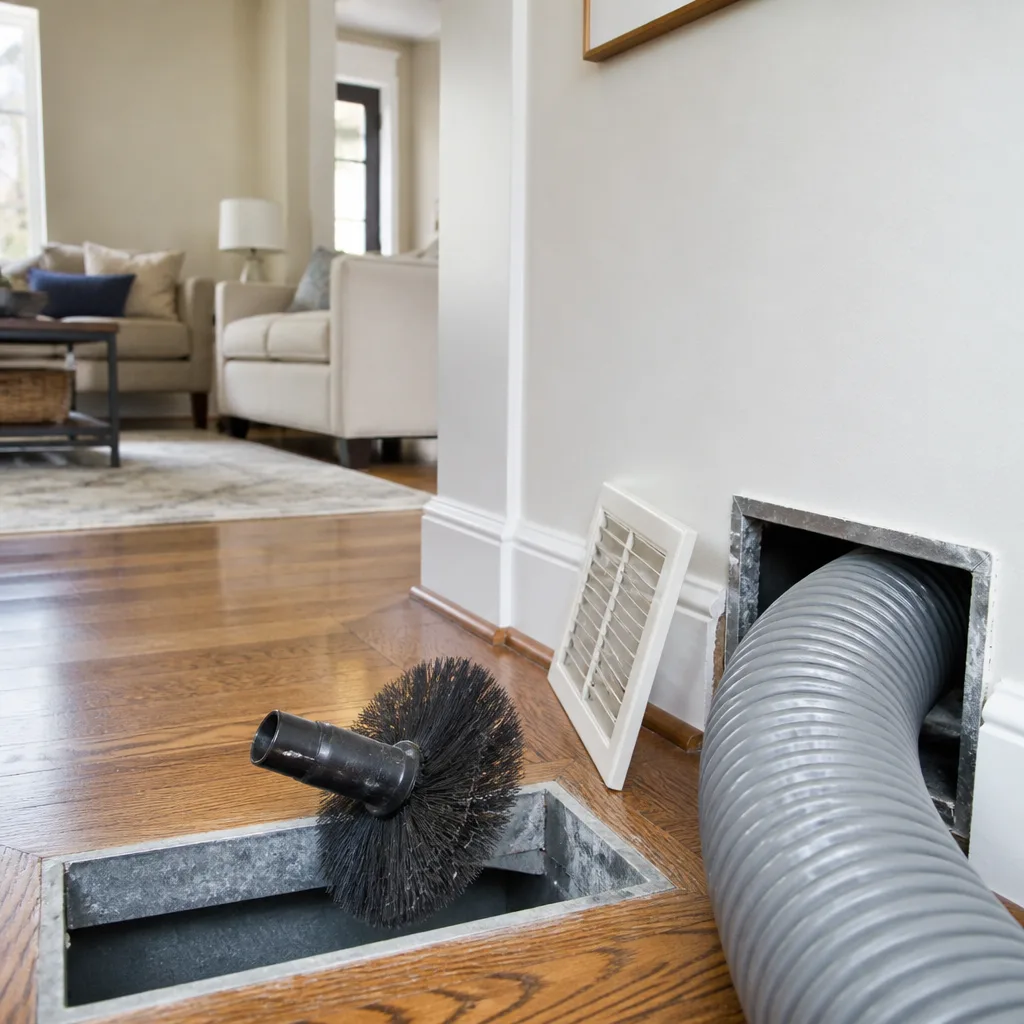 Whole-home duct cleaning
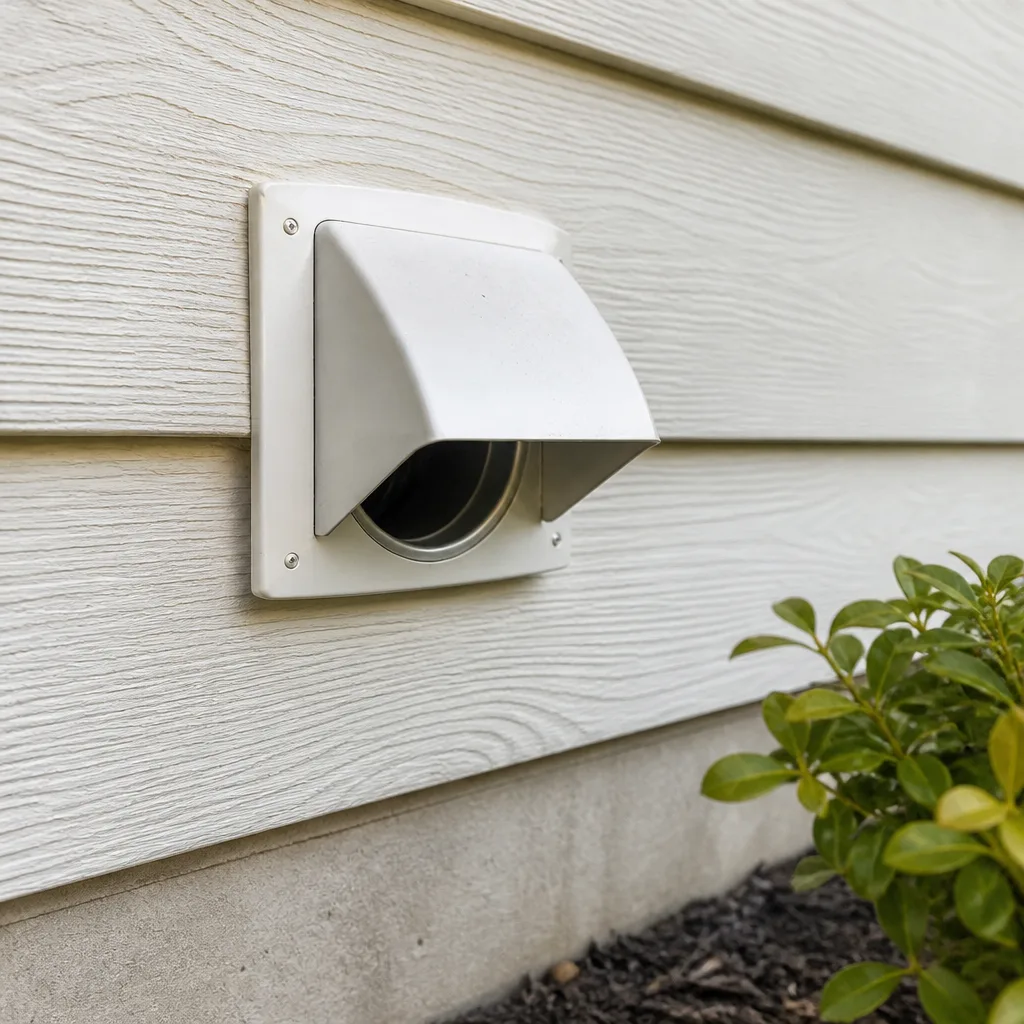 Dryer vent cleaning
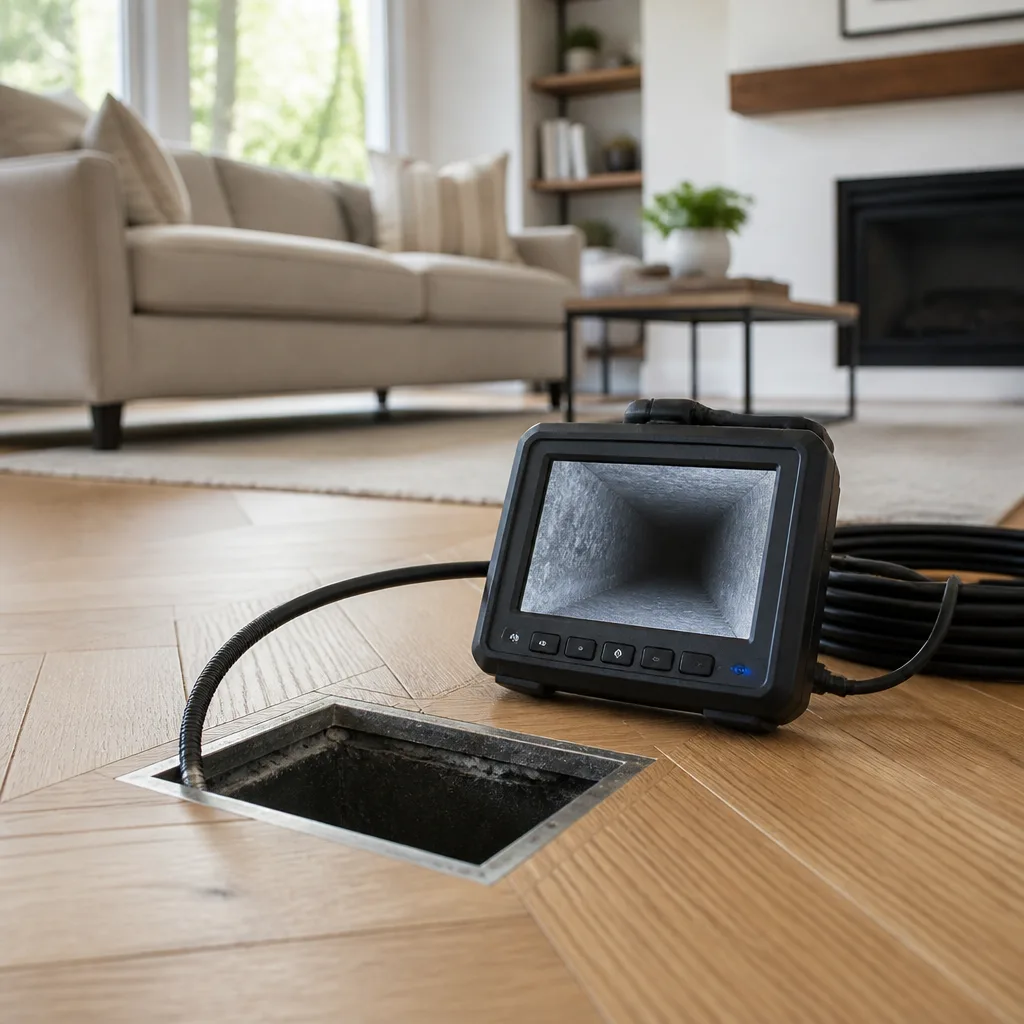 Camera inspection
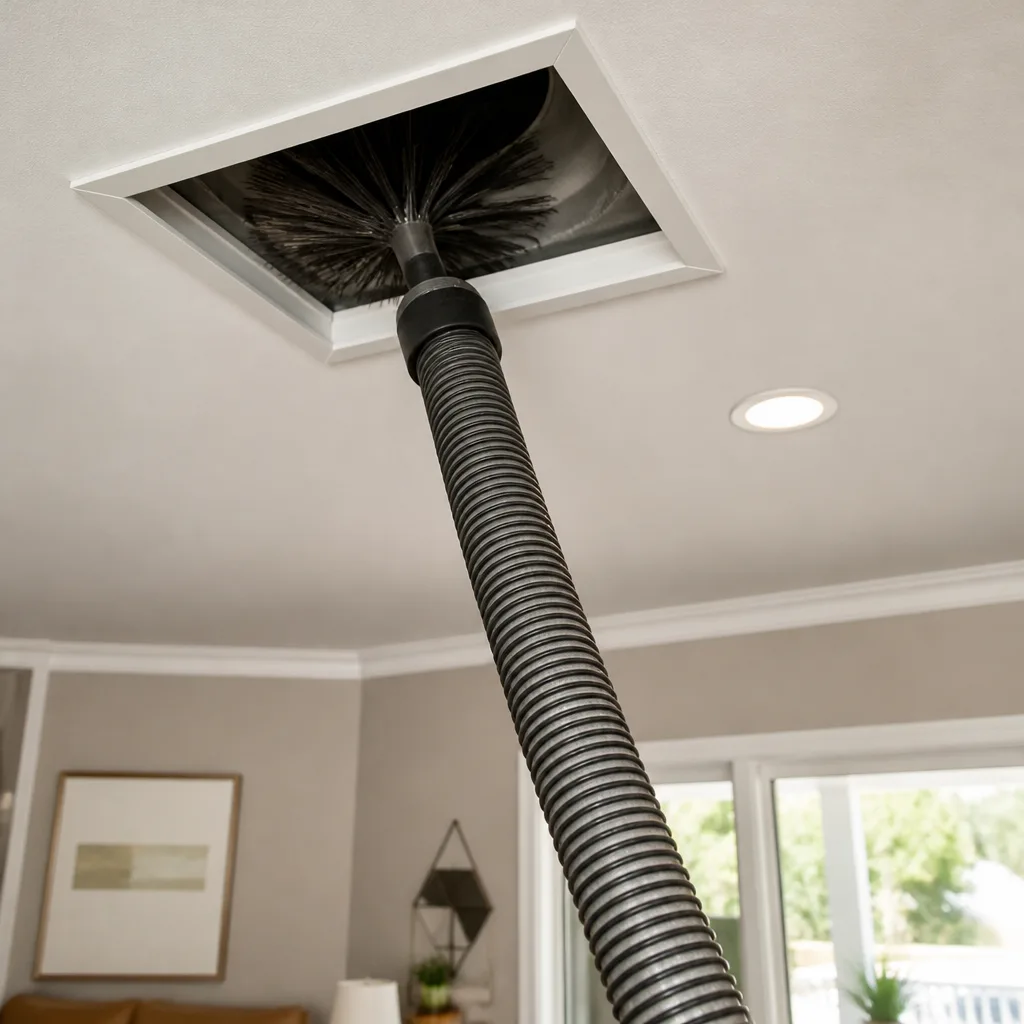 Sanitizing & deodorizing
Whole-system duct and dryer vent check with before-and-after photos - you see exactly what came out of your vents
That "$99 whole-house special" is a bait ad - the real number appears once they are in your hallway, or the "clean" is a shop-vac at the register. We photograph the inside of your ducts before and after instead.
The Complete Guide to Air Duct Cleaning in Newport News
Most air duct cleaning guides you find online were written for Phoenix or Chicago. Newport News has nothing in common with either. This city sits roughly 12 feet above sea level, and the average relative humidity here stays above 70% for about half the year. That single fact changes what grows inside your ducts, how fast it grows, and why the vent work that’s routine in a dry climate barely touches the problem here. If you’ve been told your ducts are “fine” by someone who ran a shop vac through two registers, that advice was built for a different house in a different place. This guide maps the actual cleaning process to what Newport News homes face: the humidity, the clay-heavy soil, the 1980s-through-2000s construction, and the low-lying neighborhoods where recontamination happens fast.
Quick Answer
Air duct cleaning in Newport News means removing built-up debris, dust, and microbial growth from the inside of your duct system using source-removal methods under negative pressure. Denali Air Duct Cleaning does this with a Rotobrush rotary-brush system and Nikro HEPA-rated vacuums, contained with Abatement Technologies negative-air equipment so dislodged material leaves the system instead of settling back into your rooms. Homes here need it more often than the national average because the local humidity feeds biological growth inside flex duct most of the year.
Styles & brands we work with
- Whole-home duct cleaning
- Dryer vent cleaning
- Camera inspection
- Sanitizing & deodorizing
Table of Contents
- Why Newport News Humidity Changes the Duct Cleaning Conversation
- What Hampton Roads Humidity Does to Flex Duct in 1980s-2000s Homes
- Commercial-Grade Equipment vs. a Portable Shop Vac
- Source Removal vs. a Duct Blow-Out: How to Tell What You’re Buying
- Waterfront and Low-Lying Neighborhoods: Faster Recontamination
- How a Professional Cleaning Actually Runs, Step by Step
- What Cleaning Fixes, What It Doesn’t, and When to Replace
- Air Duct Repair: When Cleaning Isn’t Enough
Why Newport News Humidity Changes the Duct Cleaning Conversation
Humidity is the biggest difference between air duct cleaning in Newport News and the same job in a dry city. When relative humidity sits above 70% for months at a stretch, the inside of a duct system stops being a dry dust-collection area and starts behaving like a damp, dark, nutrient-rich environment. Dust, skin cells, pet dander, and construction particles collect on the duct walls regardless of climate. What the humidity adds is the moisture that lets mold spores and bacteria colonize that dust film instead of just sitting in it. Heat and air conditioning running through the same ductwork cycles that moisture and temperature up and down all year.
You see the results in ways that aren’t always dramatic. A faint musty smell that shows up when the system first kicks on. Family members whose allergies act up indoors more than outdoors. Static and dust settling on furniture within days of cleaning a room. Those are the everyday signals that the ducts themselves are holding material the air handler can’t filter out. In a dry climate, that same buildup tends to stay biologically inert. Here it doesn’t.
What this means for timing
The national advice of “every three to five years” is a starting point, not a rule for Newport News homes. Houses with pets, recent renovations, or occupants with allergies or respiratory sensitivity land on the shorter end of that range. Homes that run the system constantly and sit in the low-lying parts of the city often need attention sooner than the calendar suggests, because the material inside the ducts gets re-wetted and re-colonized faster. The reliable marker isn’t a number of years. It’s what the return side of the system looks like when someone actually opens it and inspects. That inspection is the first thing a real cleaning service should do.
What Hampton Roads Humidity Does to Flex Duct in 1980s-2000s Homes
A large share of Newport News housing was built between the 1980s and early 2000s, and the duct systems in those homes lean heavily on flex duct. Flex duct is a flexible plastic tube with a wire helix inside and a thin inner liner. It’s cheap, quick to install, and it runs through attics and crawlspaces where rigid metal ducting would be awkward. It’s also the material most vulnerable to humidity in this region. The inner liner is textured, and that texture grabs dust. In a dry climate, flex duct stays mostly dry. In Hampton Roads, flex duct running through an attic or a vented crawlspace goes through daily temperature swings and picks up condensation on the outside and, when seals fail, moisture on the inside.
Once the liner stays damp in patches, the dust film turns into something biological, and no amount of spot cleaning reaches all of it. Flex duct also sags. Where it sags, airflow slows, and where airflow slows, more dust settles. That’s why a cleaning in a Newport News home built in this era usually reveals the same things in the same order: heavy dust on the return plenum and main trunk, mold staining on the liner of the flex runs nearest the air handler, and crushed or kinked sections where a hanger has failed or a previous installer did a sloppy job.
Why this matters before anyone quotes you
The age and material of the duct system decide what’s realistic to clean and what isn’t. Flex duct that’s merely dirty can be cleaned well with a rotary brush and HEPA vacuum. Flex duct whose liner is degraded, torn, or saturated in a way that won’t dry out is a different conversation, and it’s one a specialist should have with you before taking your money for a cleaning that won’t hold. That’s why we open the system and look before we sell a job. If the ducting needs repair rather than a cleaning, we say so.
Commercial-Grade Equipment vs. a Portable Shop Vac
Here’s where a lot of the industry hides the difference between a real cleaning and a show. Two companies can both say “we use a vacuum,” and mean wildly different things. The cheap version is a portable shop-vac-style unit with a hose and a spinning brush. It has enough pull to lift loose debris off the surface it touches. It doesn’t have the airflow or the containment to hold the whole system under suction while someone agitates every run. When that’s the setup, dislodged dust goes back into the house, and the homeowner gets a visible improvement in the first few vents with nothing changed deeper in the system.
Denali runs a different class of equipment. The Rotobrush rotary-brush system agitates debris off the duct walls from the inside. The Nikro HEPA-rated vacuum captures what the brush frees before it can recirculate. And the Abatement Technologies negative-air equipment holds the work area under containment, the same category of machine used in professional remediation work, so the pressure in the system is pulling inward the whole time rather than releasing material into the room. Guardsman surface-protection products go on your trim, flooring, and finishes first so the equipment work doesn’t cost you a scuff on the way through.
What to ask a company before you hire them
- What vacuum are you bringing, and what’s its HEPA rating? A real source-removal job runs a HEPA-rated vacuum, not a shop vac.
- Are you holding the system under negative pressure while you clean? If the answer is vague, the debris is going somewhere, and it’s not all up the hose.
- Will you show me before-and-after photos of my own ducts? Not stock photos. Yours.
- Do you inspect and fix duct damage on the same visit? Cleaning a cracked or disconnected run is a waste of the money you just spent.
- Is the price per system or per vent? A flat per-system price agreed before the work starts is the honest way to quote it.
Those five questions separate a focused duct cleaning specialist from a generalist HVAC company that treats duct cleaning as a side job. If a company can’t answer them clearly, ask them to prove the equipment on a site visit before you commit.
Source Removal vs. a Duct Blow-Out: How to Tell What You’re Buying
The industry has two very different versions of “duct cleaning,” and only one of them actually cleans anything. Source removal is the standard the National Air Duct Cleaners Association (NADCA) sets out: contact the entire interior surface of the ductwork, agitate the debris off it, and capture it with negative pressure and HEPA filtration so it leaves the system and the house. A duct blow-out is a cheaper cousin. Compressed air, or a quick pass with a spinning whip at the main trunk and a couple of visible vents, knocks the loose dust off the nearest surfaces and sends some of it up the return. It looks dramatic for an hour or two. Deeper in the system, nothing has changed, and in a humid Newport News house, some of it lands on a damp patch of flex liner and quietly grows back.
How to tell which one you’re being sold
- Time on site. Source removal in a typical home runs a couple of hours or more, because every run and every register is worked. A blow-out is done in under an hour.
- Equipment visible. You should see a HEPA-rated vacuum, brush equipment, and either negative-air containment or a sealed setup at the air handler. A shop vac and a shop compressor is a blow-out.
- Access to every run. A real clean opens access points at the trunk and near each register. A blown “cleaning” works the trunk and calls it done.
- Before-and-after evidence. A source-removal job leaves visible evidence: photos inside the duct before and after, of your system. Ask to see them.
- Price per vent. When a company quotes per vent rather than one flat price for the whole system, the incentive is to spend a few seconds on each register and move on.
What we recommend to Newport News homeowners is the flat per-system price with before-and-after photos of your own ducts. You get to judge the job with your own eyes rather than on a technician’s word. That’s a large reason we clean on the NADCA source-removal standard, not the fast-pass version.
Waterfront and Low-Lying Neighborhoods: Faster Recontamination
Not every part of Newport News carries the same duct-cleaning burden. Homes closer to the James River waterfront and in low-lying neighborhoods like Denbigh tend to run a faster recontamination cycle than homes on higher, drier ground. The reasons are practical. Low elevation means more persistent ground moisture around the house and under the crawlspace. More ground moisture means more ambient humidity at the very level where a lot of the flex duct runs. And when the humid air of a Hampton Roads summer pushes outside relative humidity into the 70s and higher for weeks, the crawlspace and attic air feeding the duct system is right there with it. Dust that settles onto a damp duct surface doesn’t sit inert. It takes on moisture and becomes the substrate for biological growth.
That’s why in our experience cleaning a home in Denbigh on a schedule that would be generous elsewhere often turns up more material than expected. The same physical duct cleaning on two homes, one on a rise above the York and one in a low pocket near the river, will hold its condition longer in the second. And it’s not only the air. Ground disturbance from ongoing construction around the city kicks up fine clay-heavy soil particles, and a system that pulls in outside air through leaky ductwork can carry those particles straight into the supply runs. Older housing stock adds to the picture: original windows, unsealed HVAC penetrations, and duct connections that were never quite tight let that outside air in.
What to do about a faster cycle
- Inspect more often than the calendar suggests. If your home sits low or near the water, look at the return plenum and a couple of accessible runs every year or so rather than every three.
- Seal what can be sealed. Duct repair on loose joints, disconnected collars, and torn flex liner stops the outside air from bringing more into the system.
- Manage the humidity at the source. A properly sized dehumidifier in the crawlspace changes the moisture the ducts sit inside.
- Add filtration where it counts. A whole-home air cleaner integrated into the system extends the value of a cleaning into the years that follow. Where a home is ready for that step, we install and service Aprilaire and Honeywell air-quality equipment as part of the same visit.
How a Professional Cleaning Actually Runs, Step by Step
Any Newport News homeowner who knows what a proper cleaning looks like will never be talked into a blow-out again. Here’s how we run it, in the order the steps occur.
- Inspect the system first. We open access points, look at the duct material and condition, and check the air handler, return plenum, and a sample of the supply runs. If something is damaged enough that cleaning would be wasted, we flag it before starting.
- Protect the finishes. Guardsman surface-protection products go on your trim, flooring, and any furniture we have to shift. No surprises on the way out.
- Open access and connect containment. Abatement Technologies negative-air equipment holds the work area under suction. From this point, anything we dislodge is moving inward, not into your living space.
- Agitate the duct walls. The Rotobrush rotary-brush system works each run from inside, breaking debris off the liner and surfaces that a vacuum alone can’t reach.
- Capture with HEPA filtration. Nikro HEPA-rated vacuums pull the freed material into the vacuum so it doesn’t recirculate into the room.
- Work the trunk, branches, registers, and air handler side. Every access point and register involved in the system gets attention. A cleaning that skips a run isn’t a cleaning.
- Repair what needs repair. Where we find loose joints, crushed flex, disconnected collars, or a compromised liner, we fix it on the same visit rather than handing you a list of problems to chase down separately.
- Photograph before and after. We show you what we found and what it looks like now. Your ducts, your evidence.
- Review the outcome with you. Either the system is clean and held to the standard we’re after, or we tell you where it fell short and what the next step is.
That’s how a focused air duct cleaning in Newport News should feel: contained, methodical, and verifiable, not a two-hour mystery where a technician disappears into your crawlspace and comes out with a story.
What Cleaning Fixes, What It Doesn’t, and When to Replace
Realistic expectations separate a good duct cleaning company from a glad-handing one. Cleaning removes what’s physically in the system at the time. That’s a lot, and in a Newport News home with years of humidity-driven buildup, it’s a real improvement. It’s not a renovation. Here’s how we frame it.
What a proper cleaning fixes
- Loose and settled debris in the ducts themselves. The dust, dander, and construction particles that have accumulated on the duct walls come out.
- Musty odors sourced from the ducts. When the smell is coming from material inside the system, removing that material removes the smell.
- Airflow blocked by debris. Cleaning opens up runs that had been narrowed by buildup, and that can help the system deliver air the way it was designed to.
- Contaminated returns. The return side of the system usually carries the heaviest load, and a source-removal cleaning addresses it directly.
What cleaning doesn’t fix
- Ongoing moisture. If the duct system sits in a damp crawlspace or an attic that runs wet, cleaning doesn’t change the conditions that caused the growth. Humidity control does.
- Compromised duct material. A saturated or degraded flex liner can be cleaned but won’t stay clean. That’s a repair or replacement conversation.
- A dirty air handler and coil. Those are separate components. We clean the duct system, not the whole HVAC appliance, and we’ll say so plainly if the problem is upstream.
- Air quality problems unrelated to the ducts. A cleaning won’t fix a source of contamination elsewhere in the home. Adding Aprilaire or Honeywell filtration can help, but it’s an upgrade, not a substitute for finding the actual source.
When to have the replacement conversation instead
We reach for repair or replacement when the ductwork itself has failed, not when it’s merely dirty. The triggers to watch for:
- A flex liner that’s torn, collapsed, or degraded past the point where cleaning will hold.
- Runs that are crushed flat or disconnected for reasons no amount of cleaning will change.
- Ducting that’s sized wrong for the system, or routed through an unconditioned space that stays wet.
- Rebuilds and additions where the original layout no longer makes sense.
Where replacement is the right answer, we say so. Cleaning a system that needs replacing charges you for a fix that won’t last.
Air Duct Repair: When Cleaning Isn’t Enough
Most companies that offer duct cleaning leave the repair to someone else. We don’t. Newport News homes carry a lot of small duct failures that go unnoticed because the system still runs: a flex run disconnected at a collar in the attic, a joint that let go years ago, a crushed section behind a knee wall, a liner torn during a previous renovation. Cleaning those without fixing them wastes the cleaning. The debris that just came out gets pulled straight back in through the open joint. That’s why air duct repair isn’t an upsell for us. It’s the second half of the same job.
What we handle as part of the repair service is best diagnosed with eyes on the system. Loose and disconnected joints, torn or crushed flex duct, failed connections at the plenum, and duct runs that were never sealed well in the first place. The same trained crew that runs dryer vent cleaning and duct cleaning handles the repair side, which matters if you’d rather deal with one specialist than coordinate three trades. That integration is part of why we’re set up the way we are.
One more piece fits here: the Newport News market of homeowners we work with tends to want a fix that holds, not a quick cosmetic pass. The Denali approach is to clean to a standard, repair what’s failed, and stay honest about what each step can and can’t deliver. That’s the peak-air-quality framing we hold the work to. Not the minimum acceptable result, but the credible one.
Common Mistakes to Avoid
- Buying on price alone. The cheapest quote in the market is almost always a blow-out with a per-vent price that grows on site. You end up paying twice: once for the cheap job and again for the real one. Ask what vacuum they’re bringing and whether they hold the system under negative pressure before you sign.
- Not asking for before-and-after photos of your own ducts. A cleaning is a physical outcome. If a company can’t show you what they found and what it looks like now, you have no way to know the work was done. Stock photos tell you nothing about your home.
- Cleaning a system with duct damage and calling it done. In a humid Newport News house, a disconnected flex run or a torn liner recontaminates the cleaned system fast. Fix the damage on the same visit or the cleaning is short-lived.
- Ignoring the moisture the ducts sit inside. Cleaning that doesn’t touch the crawlspace or attic humidity will see the same growth return. That’s a property condition problem, and it’s worth addressing alongside the cleaning, not after.
- Assuming the air handler is part of the cleaning. Duct cleaning covers the duct system. The air handler and coil are separate components and need their own attention. A company that muddies that up is either confused or hoping you don’t ask.
- Treating dryer vent cleaning as optional. A clogged dryer vent is a fire risk, not just an inefficiency. The same crew handles it, and it’s worth doing at the same time as the ducts when both are due.
- Skipping filtration when the ducts are already being cleaned. If the same particles come straight back in through a low-efficiency filter, the improvement drains away. Where the system supports it, an Aprilaire or Honeywell whole-home air cleaner is a sensible follow-on step.
See the difference
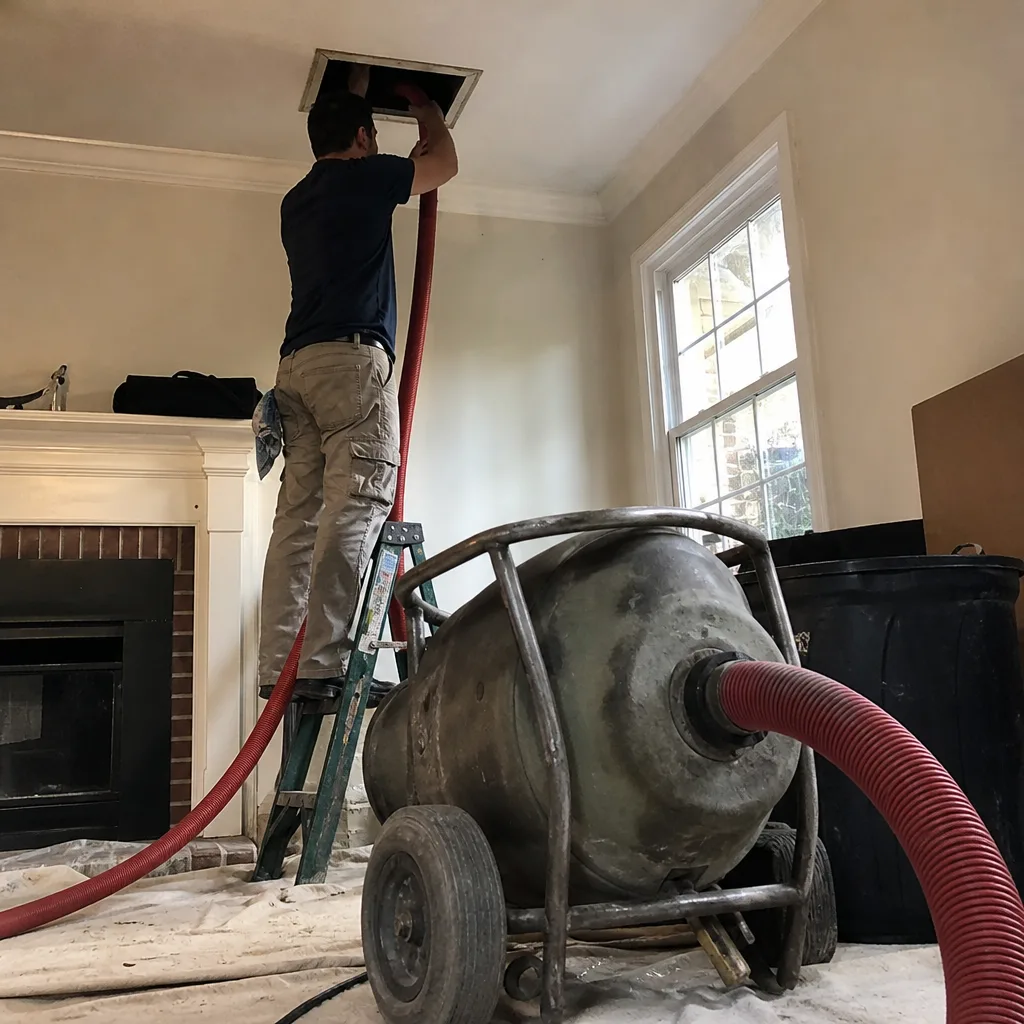 Before
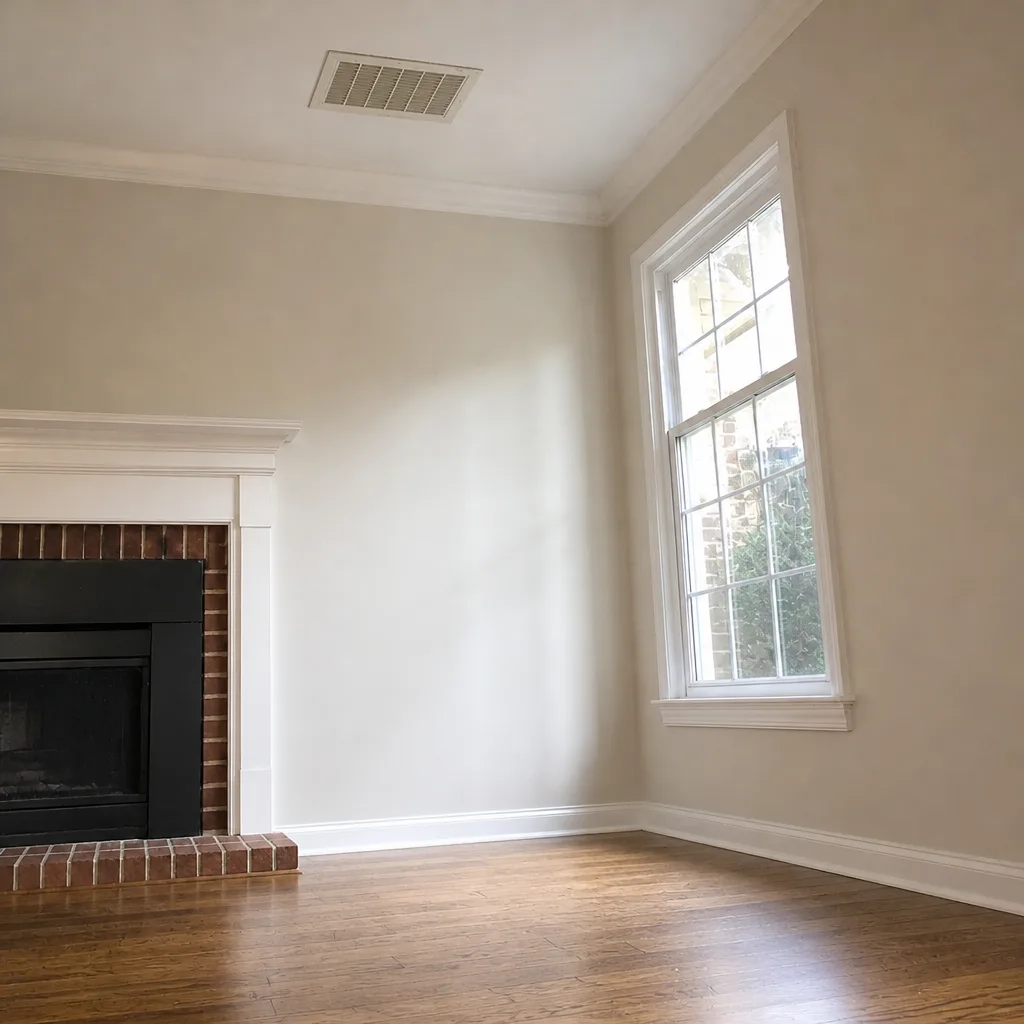 After
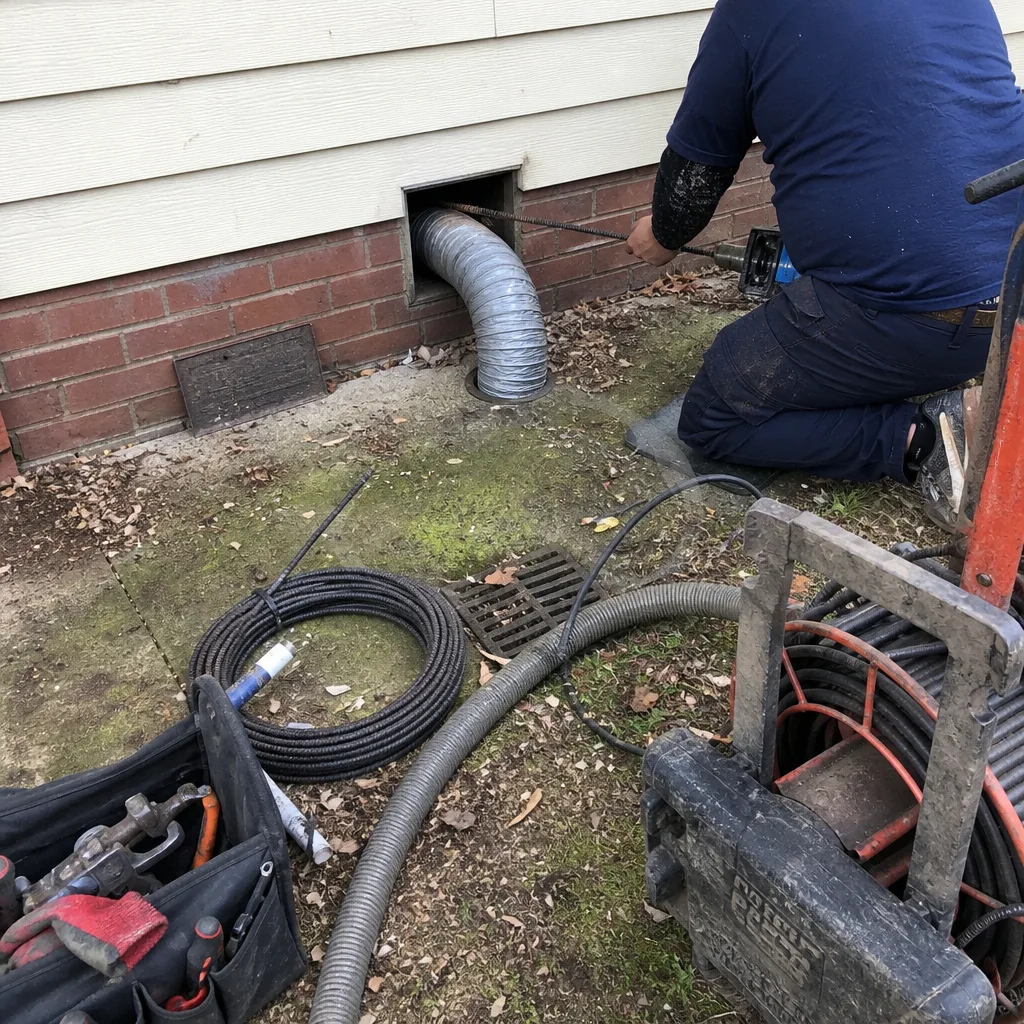 Before
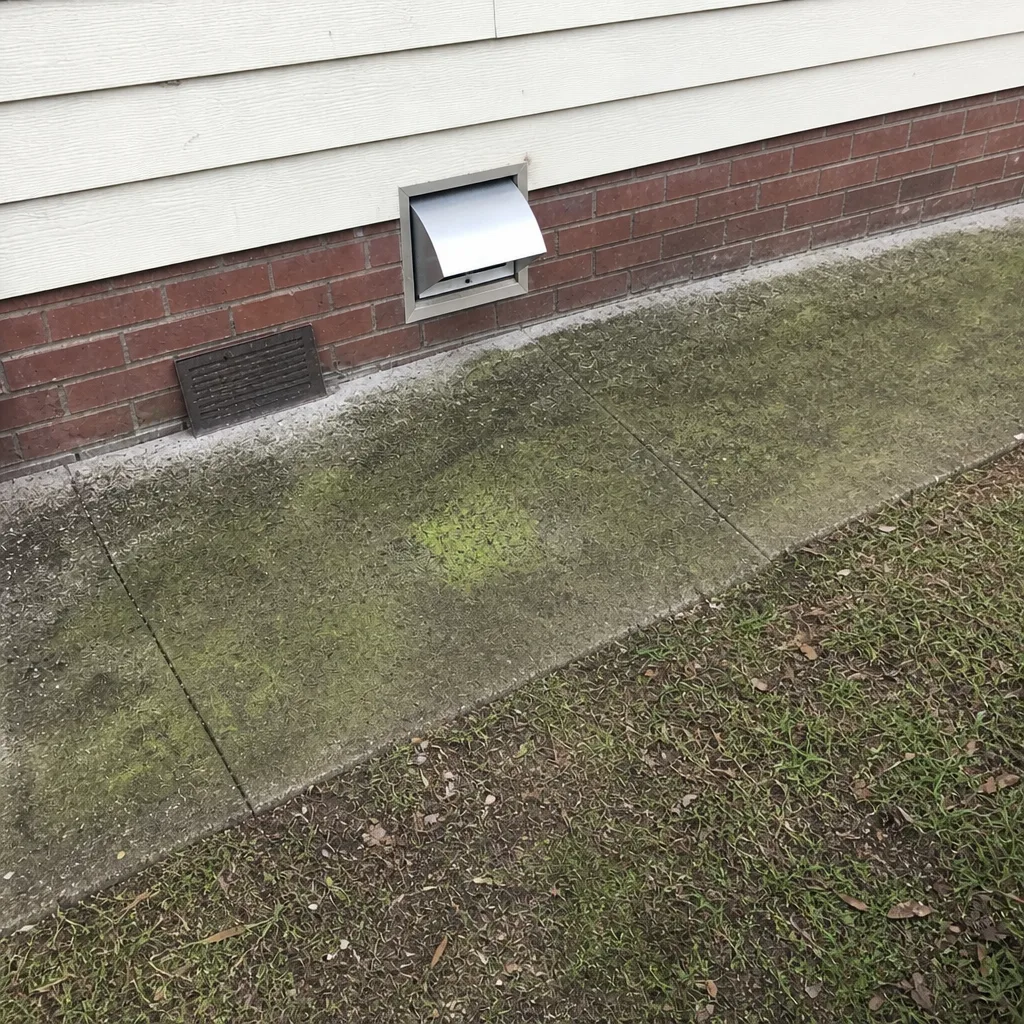 After
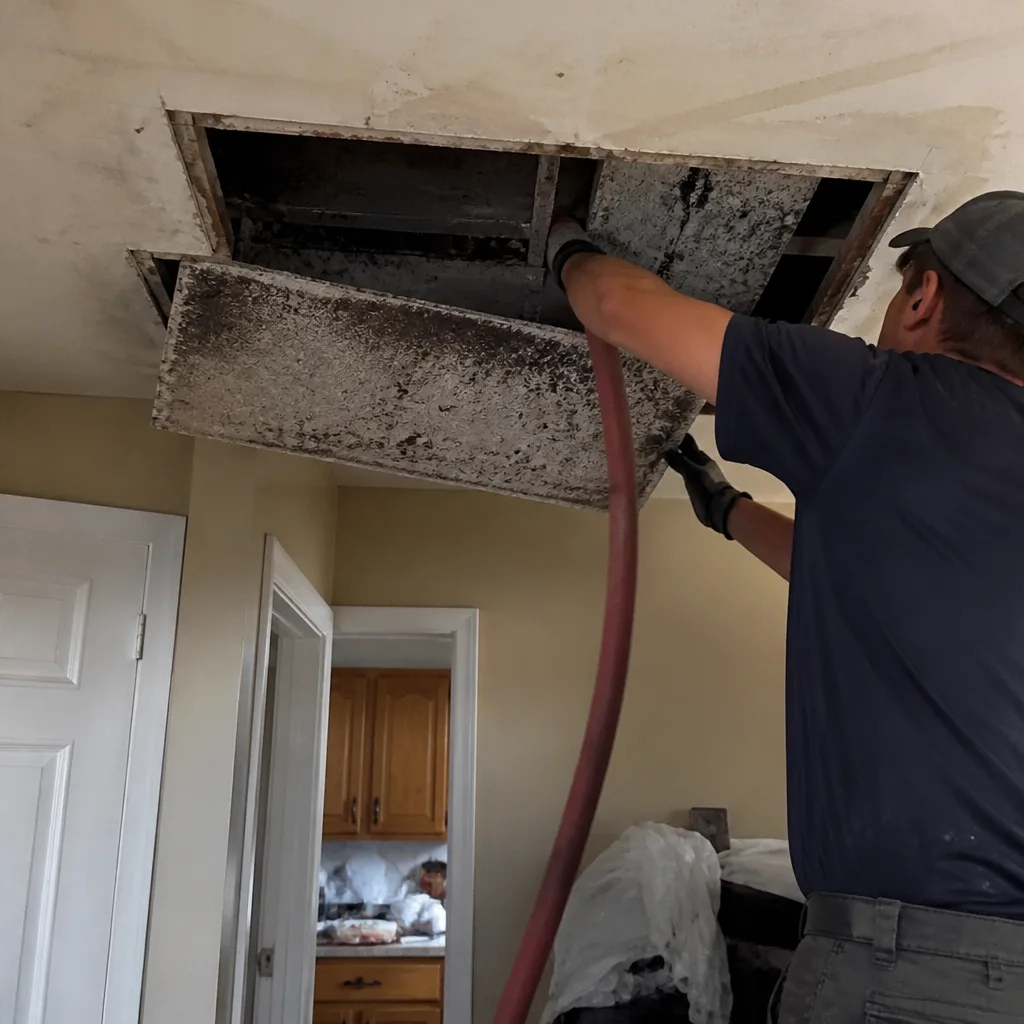 Before
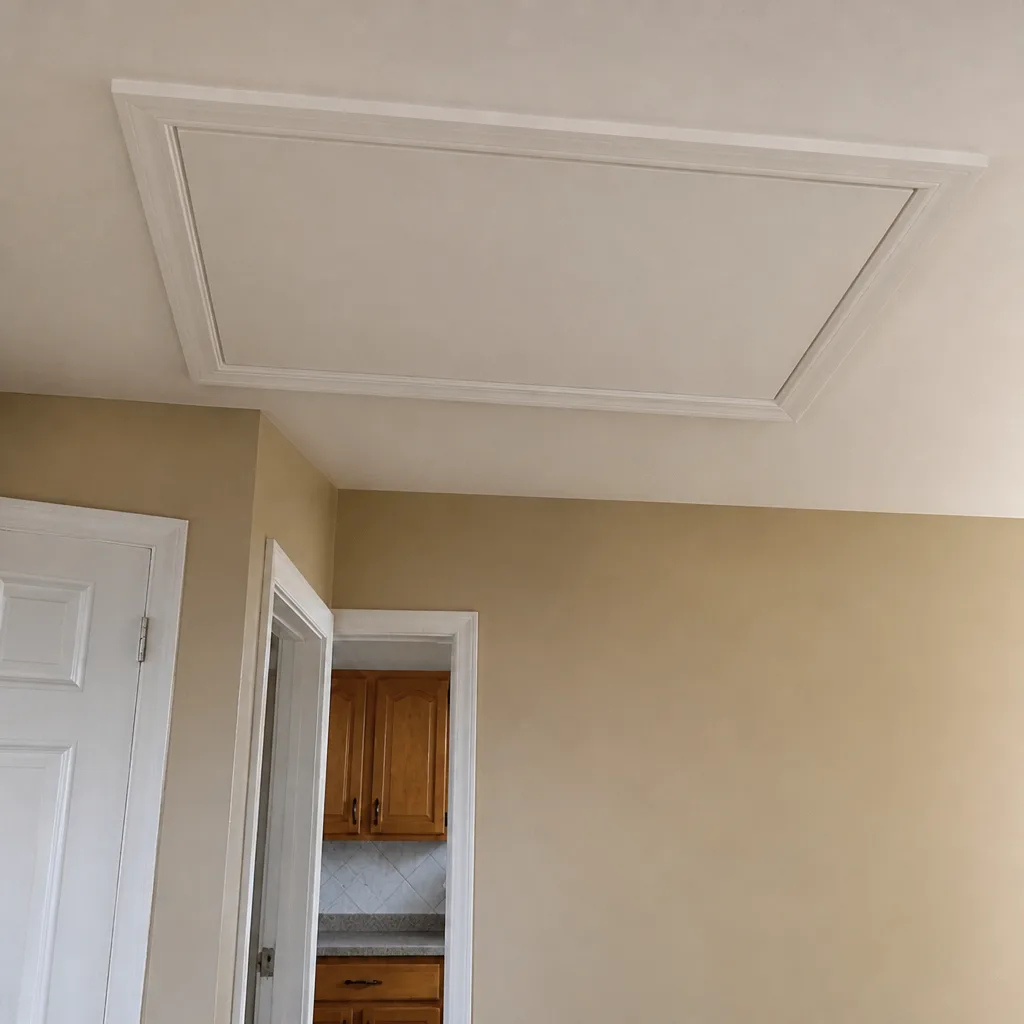 After
When to Call a Professional
Some duct conditions respond well to a cleaning and some point to something deeper. Call a professional when you notice a musty smell coming from the registers that doesn’t clear after a day, visible dust or debris blowing out of a return or supply, family members whose allergies get worse indoors than out, a recent renovation that likely sent construction dust through the system, or visible mold inside the supply ducts or around the air handler. Call when a section of flex duct has come loose or been crushed, or when your dryer isn’t drying as fast as it used to and the vent line hasn’t been cleaned on schedule. Denali Air Duct Cleaning offers free estimates in Newport News – call (866) 942-7630. We answer 24/7, and fast dispatch runs 7am to 7pm, Sunday through Friday.
Frequently Asked Questions
The honest answer is a flat price per system rather than a per-vent number, because the work should be the same either way: every run worked, contained, and photographed. A per-vent quote creates the wrong incentive, and it’s the setup behind most bait-and-switch complaints in this trade. We give one flat price per system, agreed before the work starts, with the written estimate setting the final number. Call (866) 942-7630 for an exact quote – estimates are free.
A cheap quote almost always means a duct blow-out, not a source-removal cleaning. Compressed air and a quick pass through the visible vents takes an hour and costs little because the company didn’t do the deep work. In a humid Newport News home, that pass barely touches the buildup on the flex liner, and the growth returns fast. Ask what equipment they’re bringing and whether the system is held under negative pressure. Call (866) 942-7630 to talk through what a real cleaning involves.
Before-and-after photos of your own ducts, taken during the job. Guardsman surface protection on your finishes is a sign the company expects to be in the house long enough to matter. Negative-air containment running during the work is a sign the system is under suction, which is the only way dislodged debris leaves. If you got a quick in-and-out visit with no evidence, ask for photos before you pay. Call (866) 942-7630 to see ours.
More often than the national every-three-to-five-year rule, given how much of the year Newport News spends above 70% relative humidity. Homes with pets, recent renovations, or allergy-sensitive occupants land on the shorter end. Homes nearer the water or in low-lying neighborhoods like Denbigh tend to need attention sooner because recontamination happens faster. The reliable check is an inspection of the return plenum and a couple of accessible runs. Call (866) 942-7630 to schedule one – estimates are free.
Repair happens on the same visit as the cleaning. We run three services – air duct cleaning, dryer vent cleaning, and air duct repair – with the same trained crew, so a disconnected flex run or a crushed section gets fixed while we’re already set up. Cleaning a system with damage still in it wastes the money you spent. Call (866) 942-7630 to discuss what your system needs.
It can reduce what’s in the ducts, and in a humid Newport News house that means less of the material that feeds allergen and odor problems. It doesn’t fix conditions outside the ducts, like a damp crawlspace or an air handler that needs attention. Where the system supports it, we install and service Aprilaire and Honeywell air-quality upgrades that extend the improvement into the years after the cleaning. Call (866) 942-7630 to talk through your situation.
The Bottom Line
Air duct cleaning in Newport News isn’t the same job it is elsewhere. The humidity, the age and material of the local housing stock, and the low-lying neighborhoods that recontaminate fast all change which approach actually works. Source removal with commercial-grade equipment, held under negative pressure and backed by before-and-after photos of your own ducts, is what a cleaning should look like. A per-vent blow-out at a teaser price isn’t. Repair what’s failed while the crew is already on site, and next time expect the same standard without being asked. That’s how the work holds.
Get a Free Estimate
If you suspect your ducts are past their useful cleaning window, or you’ve been quoted a per-vent price that didn’t inspire confidence, we’d like to hear from you. Denali Air Duct Cleaning connects Denali Air Duct Cleaning homeowners in Newport News with experienced technicians who run professional equipment and put the process in front of you rather than asking you to trust a brochure. Our technicians have up to 11 years of experience, and the estimate is free with the price set per job by the written estimate. Call (866) 942-7630. We answer 24/7. Fast dispatch from 7am to 7pm, Sunday through Friday.
Written by the team at Denali Air Duct Cleaning.