
Emergency Air Duct Cleaning Near Me: What Newport News Homeowners Should Do First
If smoke, mold, or a sewage smell is coming from your vents right now, your first call probably shouldn’t be to a duct cleaning company. That surprises people. The most common “duct emergency” we hear about in Newport News turns out to be an HVAC problem, a plumbing problem, or a moisture problem that duct cleaning alone won’t solve. Getting the order of operations right saves you money and, in some cases, keeps a small issue from becoming a repair bill. Here’s how to triage it before you pick up the phone.
If you’d rather skip the troubleshooting and get an expert opinion, call (866) 942-7630. We answer 24/7. Fast dispatch, 7am-7pm, Sunday through Friday.
Why “Emergency Duct Cleaning” Is Usually the Wrong First Call
Duct cleaning removes accumulated dust, debris, and biological growth from a duct system. It does not stop an active leak, extinguish a burning motor, or fix a broken sewer line. When a homeowner in Newport News calls us describing smoke, sewage, or sudden mold, the honest answer is often that a different trade needs to be there first.
We’ve seen this pattern enough to recognize it. A smell gets labeled a duct problem because the vents are where it comes out, but the vents are just the exit. The source is elsewhere: a failing blower motor, a dry P-trap, a roof leak feeding moisture into the attic. Cleaning the ducts before the source is corrected means the problem comes back, sometimes within weeks. That’s money spent twice.
Think of duct cleaning as the final step in a remediation process, not the opening move. Once the source is fixed and the space is dry, a proper cleaning makes sense. Before that, it’s treating a symptom.
The Triage Chart: Match the Smell or Sign to the Right Trade
Use this as a quick reference. Each scenario points to the trade that should be first on scene, with duct cleaning’s role noted where it applies.
- Burning or electrical smell from vents: Call an HVAC technician first. A burning smell usually points to a failing blower motor, overheated wiring, or a belt issue inside the air handler. Shut the system off at the thermostat and don’t run it until someone inspects it. Duct cleaning comes later, after the mechanical cause is resolved and any smoke residue is assessed.
- Sewage smell from vents: Call a plumber first. Sewer gas entering the ductwork typically traces back to a dry P-trap, a cracked vent stack, or a blockage in the drain system. A plumber identifies and corrects the source. Once that’s done, duct cleaning can address any odor that settled into the system.
- Visible mold at a register or supply grille: Determine the moisture source before cleaning. Mold needs water. Until you know where the water is coming from (a condensate leak, high humidity, a roof or plumbing leak), cleaning just resets the clock. An HVAC technician or a moisture specialist identifies the source. Cleaning follows once the space is dry.
- Post-flood or post-water-damage contamination: Call a water damage remediation company first. Floodwater in ductwork is a contamination-control situation, not a routine cleaning. Remediation crews handle extraction, drying, and containment. Duct cleaning is part of the restoration scope, sequenced after the structure is dry.
- Musty odor with no visible water problem: This one often is a duct issue. Start with an inspection. A camera inspection of the duct interior tells you whether the odor is coming from biological growth, debris, or a disconnected run pulling air from a crawl space.
None of these are guesses. They’re the sequence we walk Newport News homeowners through on the phone before we ever schedule a visit. Getting the order right is the whole job.
The Cost of Cleaning Before the Source Is Fixed
Cleaning ducts while an active moisture intrusion is present is a documented waste. Mold spores need moisture to colonize, and duct interiors are a favorable environment: dark, often humid, and lined with dust that serves as a food source. Remove the growth without removing the water, and the conditions for regrowth are unchanged.
In practical terms, that means a cleaning can look successful on the day it’s done and show visible regrowth within a few weeks. That’s not a failure of the cleaning. It’s a failure of sequencing. We’d rather tell a Newport News homeowner to wait than take a job that will need repeating.
The same logic applies to odors. Smoke residue, pet odor, or biological smell that’s been absorbed into duct lining will return if the source is still active. A sewage smell doesn’t fade because the ducts were cleaned; it fades when the P-trap is refilled or the vent stack is repaired. A burning smell doesn’t go away because the ducts were cleaned; it goes away when the motor is replaced.
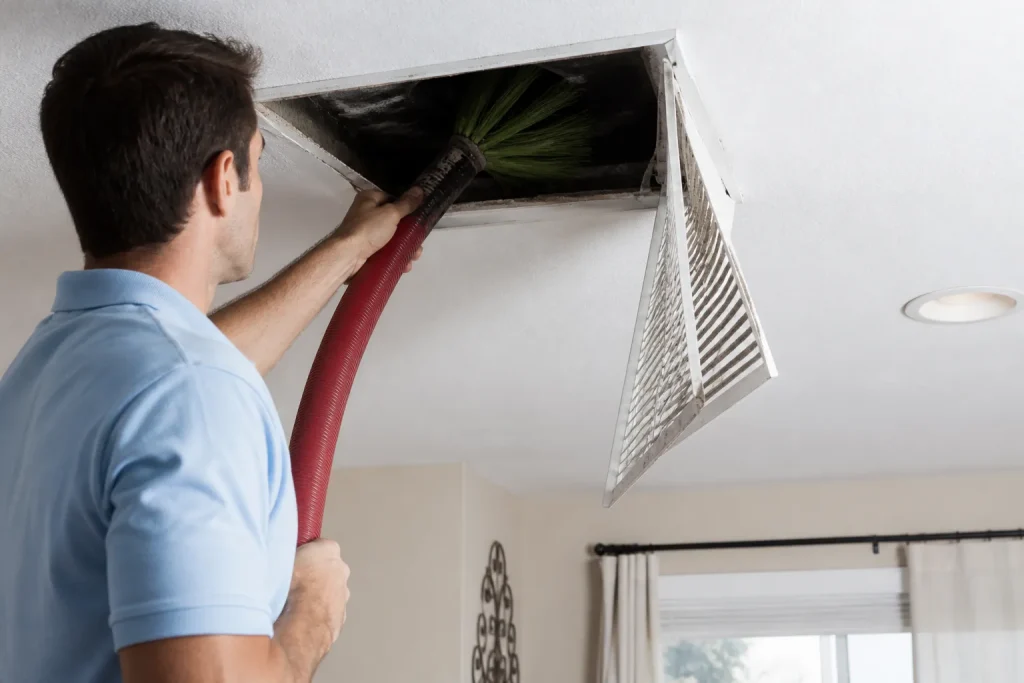
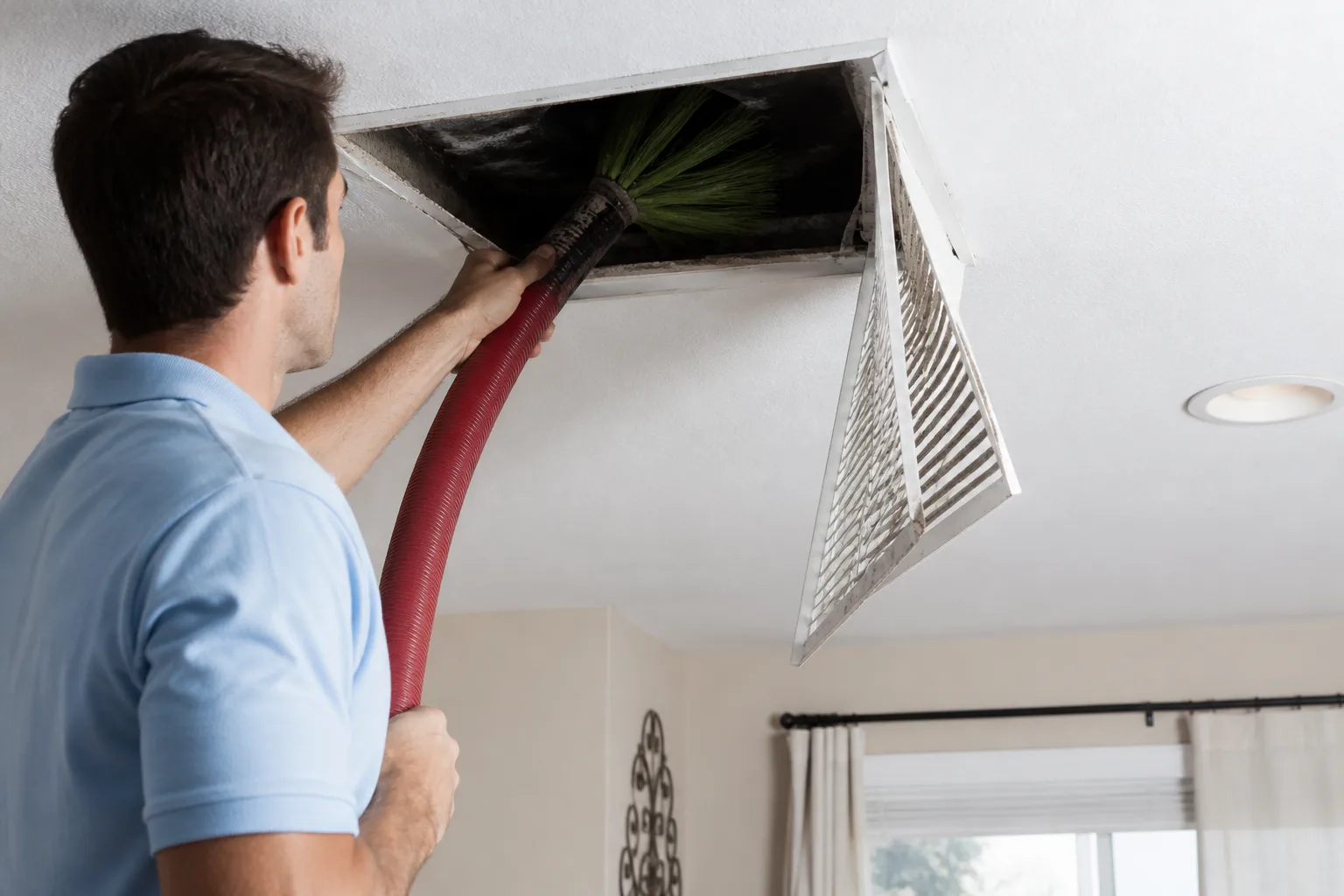
When we do a cleaning, the equipment matters for the result. Rotobrush rotary-brush systems agitate debris loose from duct walls, and Nikro HEPA-rated vacuums capture it at the source rather than recirculating it into the room. Abatement Technologies negative-air equipment holds the work area to containment standards. That’s the right tool for the job. But no equipment compensates for cleaning at the wrong time.
What to Photograph and Document Before Anyone Arrives
Documentation protects you. Whether the first trade on scene is an HVAC technician, a plumber, or a duct cleaning company, photos give everyone a shared starting point and prevent disputes about what was or wasn’t there. In Newport News, where crawl spaces and older duct layouts vary block by block, this matters.
Before anyone arrives, capture:
- Each register and return grille with visible debris or discoloration. Include a wide shot showing the room and a close-up showing the register detail.
- Accessible crawl space sections. Photograph the duct runs you can see, especially any sections that look disconnected, crushed, or resting on the ground.
- The air handler compartment. Open the access panel only if it’s safe and you know how. Photograph the blower, the filter slot, and the interior of the cabinet. If you’re not comfortable opening it, skip this one.
- Any moisture evidence. Water stains on ceiling tiles, condensation on ducts, rust at connections. These photos help the first trade identify the source faster.
- The filter itself. A photo of the filter before you change it tells a technician a lot about what’s been circulating.
One more thing: write down when the smell or symptom started and whether it’s constant or intermittent. “Only when the heat runs” is a useful clue. So is “worse in the morning.”
On Response Time: What to Expect From a Legitimate Duct Cleaning Company
Most legitimate commercial duct cleaning companies don’t do same-day emergency calls, and that’s by design. Duct cleaning is scheduled work. It requires equipment setup, containment, and a few hours on site. It isn’t a drop-everything call, and a company that markets it that way is usually selling something other than a thorough cleaning.
What that means for you: if you have an active emergency, the interim period matters. Here’s how to manage it safely while you wait for the right trade or for a scheduled cleaning.
- Turn the system off. If there’s a burning smell, visible mold near the air handler, or a suspected contamination event, stop circulating air through the system. A running fan spreads the problem.
- Ventilate. Open windows if the outdoor air quality is reasonable. Use a box fan to move air out of the affected space.
- Keep the affected area clear. Don’t sleep or spend long periods in a room with a strong chemical, sewage, or burning smell.
- Don’t seal vents with tape. It seems logical, but it can pressurize the system and push contaminants into other parts of the house.
- Document the timeline. Note when symptoms started and when you made each call. It helps the next trade.
If you do call us, we’ll tell you honestly whether duct cleaning is the right next step or whether you need a different trade first. Call (866) 942-7630. We answer 24/7. Fast dispatch, 7am-7pm, Sunday through Friday.
When Duct Cleaning Is Genuinely the First and Correct Call
Not every situation needs triage. Some problems really are duct problems, and cleaning is the right opening move. In our experience working throughout Newport News, three scenarios come up again and again where cleaning is step one.
Post-fire smoke odor remediation. After a contained fire or a kitchen smoke event, smoke residue settles into duct lining and recirculates for months. Once the fire department has cleared the scene and the structure is safe, duct cleaning removes the residue before it spreads further. This is a case where cleaning early prevents a longer odor problem.
Confirmed rodent intrusion. Droppings, nesting material, and debris in ductwork create a contamination situation that needs removal, not just odor masking. A professional cleaning with HEPA capture and containment is the correct response. We use Nikro HEPA-rated vacuums for exactly this reason.
Post-renovation debris. Drywall dust, sawdust, and construction debris get pulled into the return system during a remodel. Cleaning after the work is complete but before you move back into the space removes the load before it coats the blower and the coil.
In each of these, the source event has already happened and the space is stable. That’s the difference between cleaning as step one and cleaning as step four.
When to Call a Pro
You know it’s time to call a professional when the smell or symptom persists after the obvious source has been addressed, or when you can see visible debris, growth, or damage inside the duct system. A camera inspection answers the question in minutes. If the inspection shows compromised ductwork, air duct cleaning and repair should be handled together, not sequenced across two visits from two companies. We offer air duct repair as a core service for that reason: we can diagnose and fix a disconnected run the same visit rather than documenting it and leaving.
If your concern is lint buildup or slow dryer performance rather than the HVAC ducts, dryer vent cleaning is the right service, and it’s worth treating as fire prevention rather than optional upkeep. For a full picture of what we do across the city, start at Denali Air Duct Cleaning.
The Bottom Line
If you take one thing from this guide: match the symptom to the right trade before you schedule a cleaning. Burning smell, call an HVAC technician. Sewage smell, call a plumber. Visible mold, find the moisture source. Post-flood, call a remediation company. Photograph everything before anyone arrives, and know that legitimate duct cleaning companies schedule rather than sprint. Duct cleaning is the right first call for post-fire smoke, confirmed rodent intrusion, and post-renovation debris, and it’s the right later step for everything else.
If you’re in Newport News and need help, Denali Air Duct Cleaning offers free estimates. Our technicians have up to 11 years of experience, we run commercial-grade Rotobrush and Nikro equipment with Abatement Technologies negative-air containment, and we’ll tell you honestly if your situation needs a different trade first. Call (866) 942-7630. We answer 24/7. Fast dispatch, 7am-7pm, Sunday through Friday.
Frequently Asked Questions
A smell that only appears when the system runs, with no visible moisture or mechanical issue, is often a duct problem. A smell that’s constant regardless of the system, or accompanied by visible water damage, is usually a source problem elsewhere. Start with the triage chart above and call the trade that matches the symptom.
Cleaning can remove surface growth, but mold returns if the moisture source isn’t corrected. Do not schedule a cleaning until a technician has identified and fixed the water source feeding the growth. Cleaning before that step is a documented waste.
Because duct cleaning is scheduled work that requires equipment setup and containment, not a drop-everything call. A company that advertises same-day emergency duct cleaning is usually selling a quick surface pass, not a thorough job. Turn the system off, ventilate the space, and book a proper cleaning once the source is confirmed.
Cleaning removes accumulated debris; repair fixes ductwork that’s disconnected, crushed, or leaking. If an inspection shows a compromised run, both are needed, and they’re best done on the same visit by the same team. Cleaning a leaking system without repairing it just re-contaminates the space.
Written by the team at Denali Air Duct Cleaning.
Need Air Duct Cleaning Help?
Call Denali Air Duct Cleaning - licensed & insured, here with fast help in Newport News.
(866) 942-7630